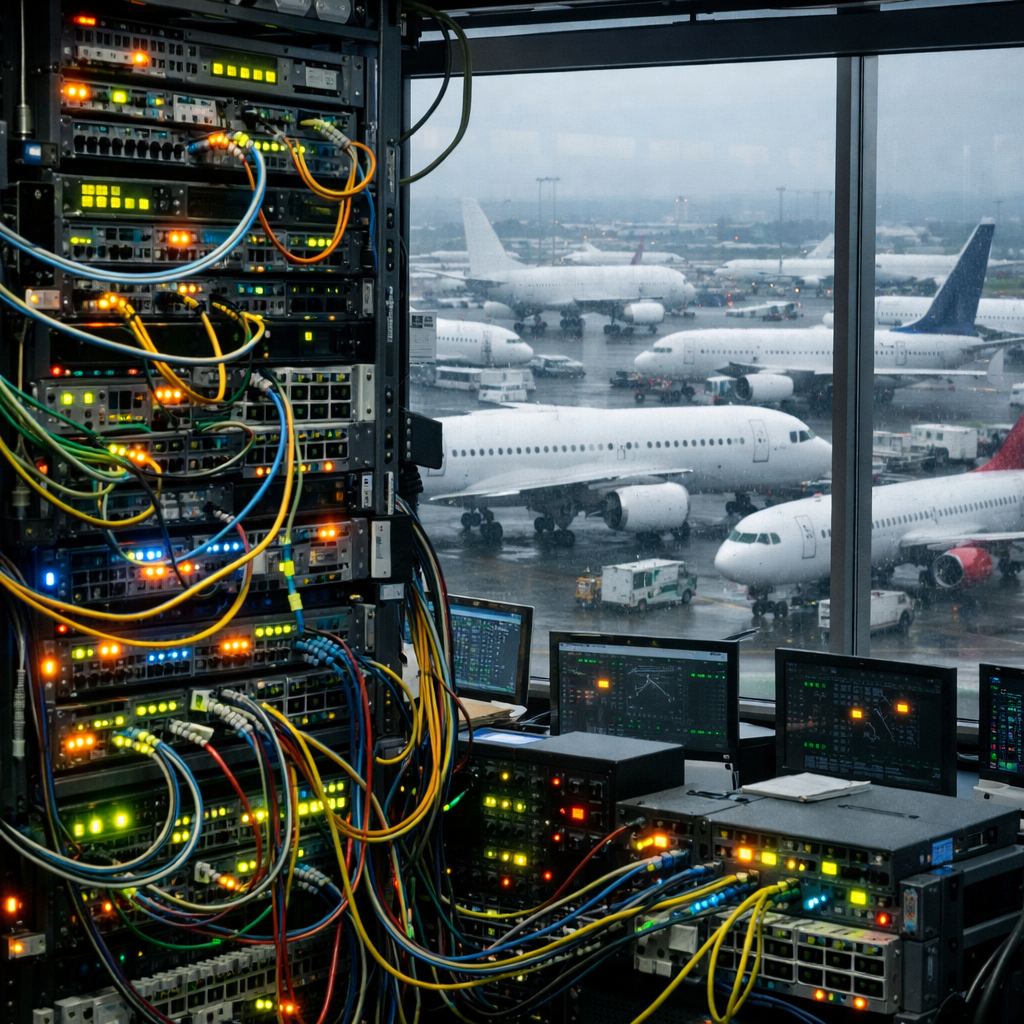
A major disruption rippled across U.S. skies when a nationwide ground stop grounded all flights on November 13, 2026. The Transportation Secretary, Sean Duffy, has attributed the stoppage to a “routine” maintenance upgrade that went awry, turning what seemed like simple infrastructure work into a national aviation crisis.
The trouble began when L3Harris, a contractor for the Federal Aviation Administration (FAA), replaced copper wire with fiber optic cable at a remote communications facility. The new router installed there overloaded a crucial component of the FAA’s communications network, sparking disturbances so severe that the agency forced a ground stop — halting takeoffs across the country. Acting FAA Chief Technology Officer Rebecca Guy later confirmed that two nodes in the network were generating excessive connection messages — about a thousand every four to five seconds — which strained system stability. These nodes were disabled immediately, and the FAA is now working to identify whether the cause was faulty equipment or improper installation.
How Big Was the Impact?
This was only the third time in the 21st century that the U.S. has imposed a nationwide ground stop. The fallout was significant: over 8,200 flights were canceled on Friday evening alone, according to aviation data analysts, and more than 3,000 additional cancellations followed when traffic resumed. Given that air travel is tightly scheduled, the delay ripple effects lasted well beyond the initial stoppage.
Questions were raised about timing: the equipment switch happened at 3 p.m. on a Friday. Secretary Duffy defended the decision, saying that upgrades at primary airports are often scheduled during night hours, but remote installation work commonly takes place during daytime. He indicated this practice will be reevaluated in light of Friday’s events.
Was AI Involved?
Speculation surfaced that artificial intelligence tools might have played a role, especially since the FAA had just rolled out an AI system for air traffic controllers the day before. However, FAA Administrator Bryan Bedford dismissed any connection, stating there is “zero evidence of anything AI-related,” and that the incident stemmed from an equipment fault. When pressed, other federal officials echoed that stance, emphasizing that this was purely a technical problem, not a system driven by AI or misconduct.
Meanwhile, Secretary Duffy called for Congress to boost funding for modernizing aviation equipment. He stressed that investments are needed to prevent similar breakdowns in critical infrastructure. Federal authorities are launching a full root cause analysis to determine whether the fault lay with L3Harris’s installation practices or hardware quality.
What’s clear is that a seemingly standard upgrade exposed how vulnerable national flight operations are to infrastructure failures. The ground stop underscored how tightly woven the systems behind air travel have become — and how a single point of failure can grind everything to a halt.