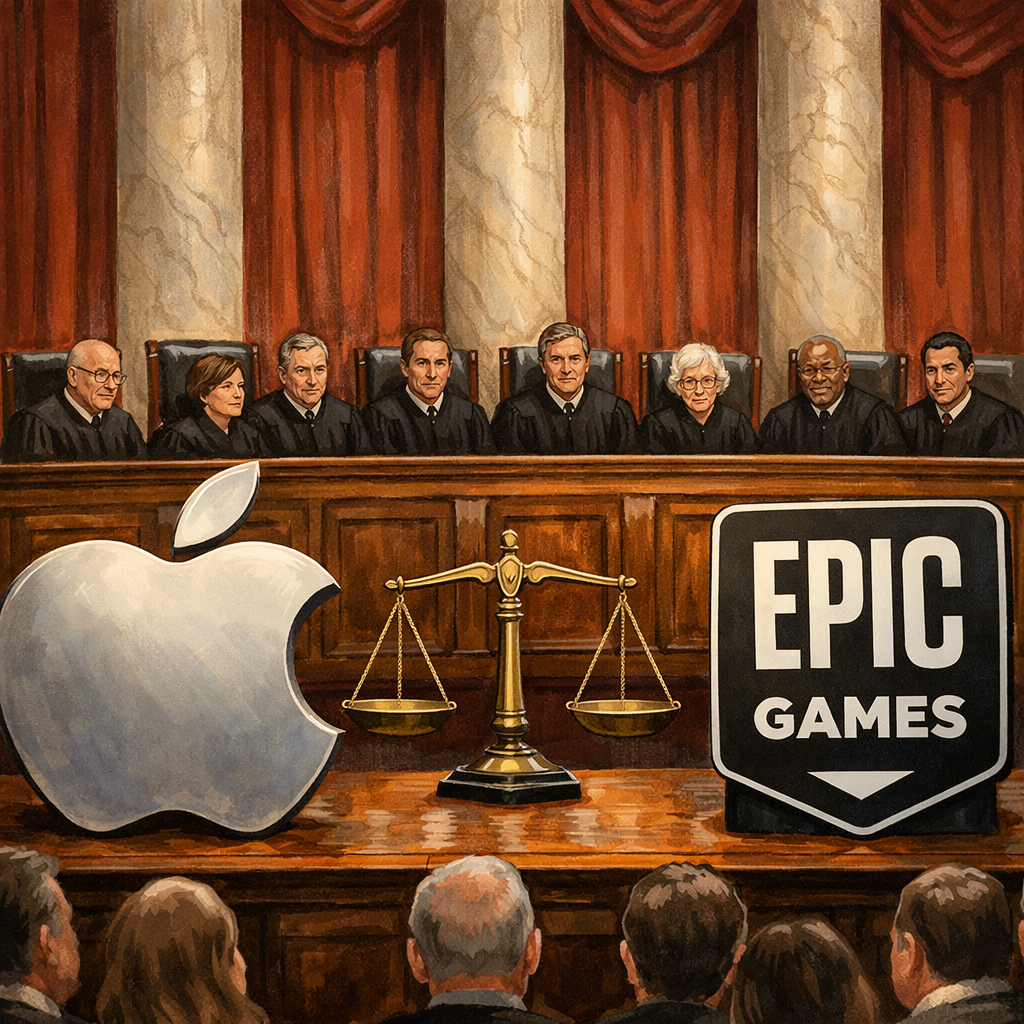
Epic Games has formally urged the U.S. Supreme Court to affirm a civil contempt ruling against Apple over its App Store payment policies, arguing the tech giant deliberately sidestepped a court order meant to bar payment restrictions and link-display limits. The move sets the stage for a major showdown over how far Apple can go in crafting platform rules while under judicial injunction.
Background of the Conflict
The legal dispute traces back to 2020 when Epic sued Apple after attempting to enable external payment options in Fortnite, violating App Store rules. A court ruling later deemed that Apple could no longer prohibit developers from guiding users to alternate payment methods outside its In-App Purchase (IAP) system. While Apple eventually permitted external links, it slapped on a 27% commission for transactions routed through those links and imposed stricter rules on how developers could present them. That led Epic to challenge Apple again, claiming these restrictions breached the earlier court order.
Legal Arguments and Supreme Court Filing
Apple argues that the original injunction didn’t explicitly forbid it from taxing external purchases or dictating how payment links are displayed. The company insists contempt findings require precise, clear-cut prohibitions in the wording of an injunction.
Epic’s response, filed in opposition, contends that Apple’s stance enforces an unrealistically narrow legal standard for contempt. The developer claims that Apple intentionally designed its external payment commission and link-display rules to defeat the purpose of the injunction, even if those new rules weren’t spelled out in the earlier order. Epic also accuses Apple of producing a “sham” economic analysis to justify the 27% fee and misrepresenting details under oath, particularly about when financial decisions surrounding the commission were made. Documents and testimony from a judge are cited in support of these accusations.
What Happens Next
With Epic’s brief now on file, Apple must submit its final arguments by December 14, 2026. Oral arguments are scheduled for January 11, 2027. The Supreme Court may choose to uphold the contempt ruling outright, clarify the required standard for finding contempt, or remand the case to lower courts for reconsideration under a clarified legal framework.
This battle is more than just a dispute over fees—it could redefine how court injunctions are enforced in fast-moving tech disputes. At stake is whether companies like Apple can tweak rules so they mimic banned behavior without technically breaching wording. The Court’s decision may set a precedent for how explicitly future injunctions must spell out prohibited practices to prevent regulatory or legal workarounds.