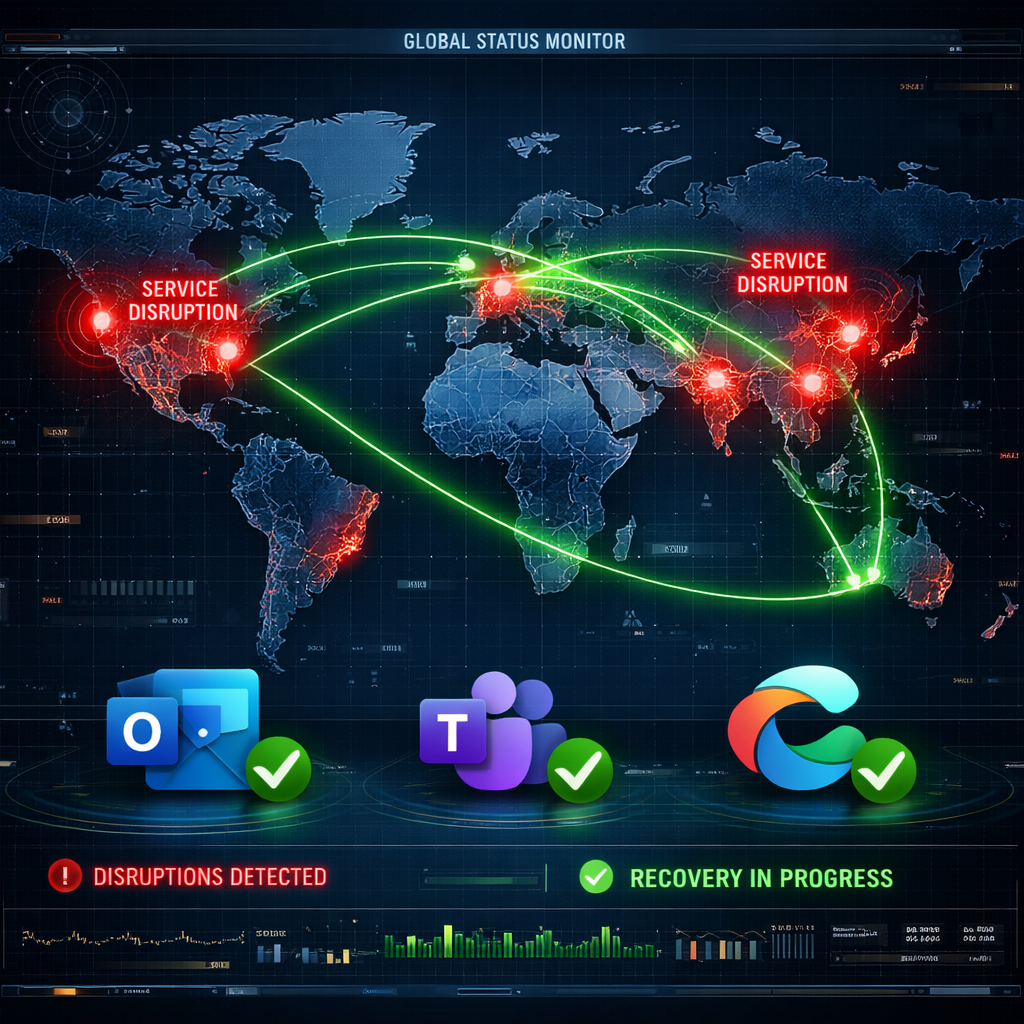
Microsoft 365 appears to be recovering from a widespread service outage that lasted nearly one full day. The disruption began Thursday afternoon, around 1 p.m. Eastern Time, impacting services like Outlook, Teams, and Copilot. As of Friday, the company reports the issue causing the downtime has been fixed and that most services are now recovering. Some regions and customers are still seeing partial disruption. Note: core functionality has resumed across major Microsoft 365 offerings.
What Went Wrong?
Services affected included Outlook email access, several Teams features, Copilot, and Exchange accounts accessed via Apple Mail. Most basic features — voice calls, meetings, and messaging — remained online, though some users could not schedule meetings or add items to their calendars. The company says the root cause was technical, unrelated to cyber threats or AI agents.
Specifically, the issue stemmed from recent network changes made during a capacity upgrade. That upgrade introduced instability, which triggered broader disruptions after another network alteration. Microsoft has affirmed it has located and addressed the underlying fault, and service restoration has been progressing steadily.
Response & Impact
Microsoft publicly apologized to its customers and partners for the inconvenience, emphasizing its commitment to reliability. To avoid further risk, the company opted for a gradual restoration process. This approach, while slower, ensured stability at each step, reducing the chance of fresh issues during recovery.
A full after-action report is promised once the investigation concludes. Regional issues linger, and Microsoft’s Service Health Status page still reflects that some services might not yet be fully operational.
Broader Context
This outage comes in the midst of sweeping changes at Microsoft. Just over two weeks prior, Microsoft revealed plans to reduce its global workforce by about 25% through voluntary buyouts. The restructuring is part of efforts to curb costs while intensifying investment in AI. These back-to-back developments — service disruptions and corporate downsizing — have raised questions about how technical health and employee morale are being managed.
For businesses, governments, and educational institutions that depend on Microsoft 365 for email, collaboration, and scheduling, this event reinforced how deeply these tools are embedded in daily operations. Even when core functionalities stay online, limitations in Calendaring or Teams features can still cause major setbacks across sectors reliant on remote or hybrid workflows.
What to Watch Next: Microsoft’s post-incident report will be key to understanding how an infrastructure upgrade spiraled into a nearly 24-hour service outage. Stakeholders will be closely monitoring how the company improves its change management and network upgrade protocols. With AI and cloud services shaping Microsoft’s strategic roadmap, uninterrupted uptime is more than a technical metric—it’s essential to trust.