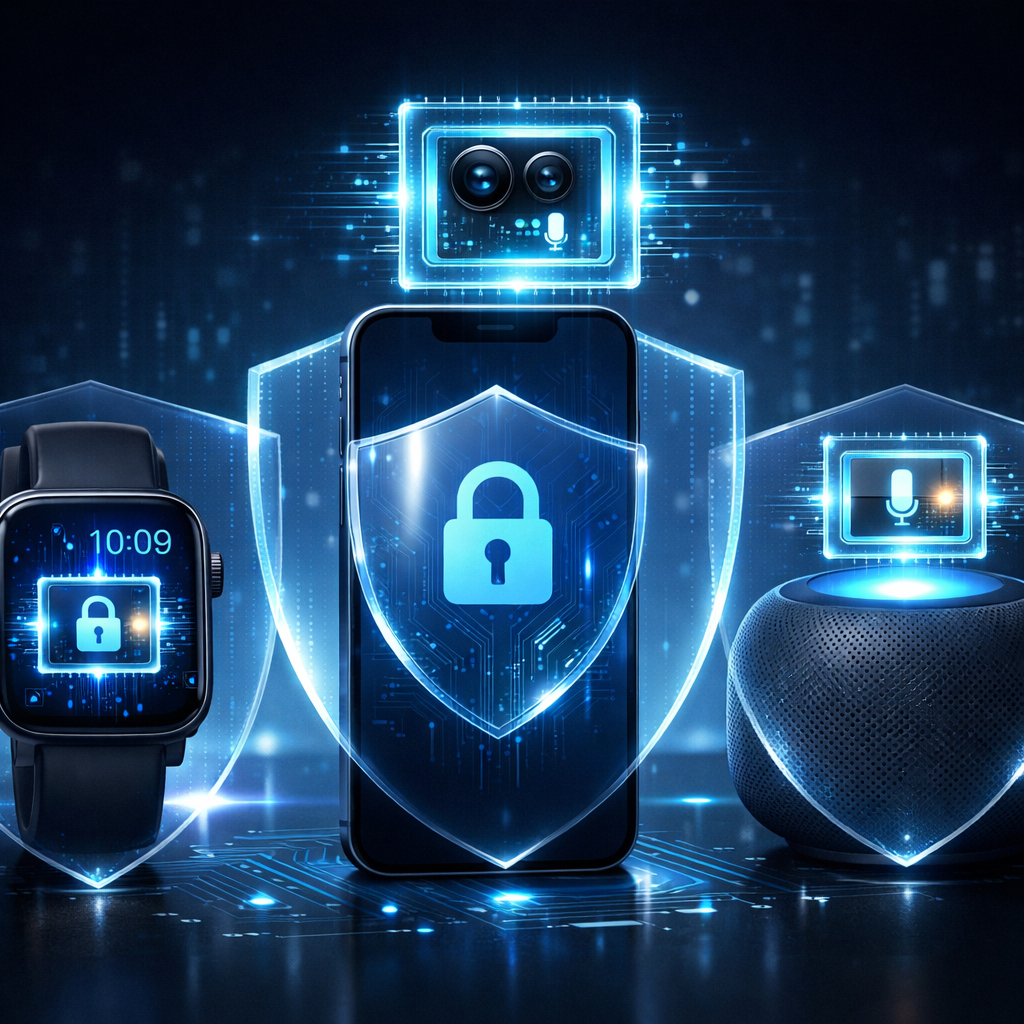
Apple has introduced a new security architecture called Secure Exclaves, designed to handle “ambient sensing”—features that continuously monitor your surroundings like person recognition or environmental audio. While Apple has long used always-on detection (such as when it listens for “Hey, Siri”), Secure Exclaves are meant to protect far more sensitive data flowing from cameras, microphones, and other sensors. The goal: process raw data locally, limit exposure, and discard everything but the minimal output the device actually needs. Visibility and user security—both front and center.
Why Apple felt the need for new protections
On today’s hardware, detecting wake words (think “Hey, Siri”) is handled by a small, low-power chip that works independently. Once the system believes you’ve triggered the assistant, the main operating system takes over to confirm and respond. That wake-word process is local, leaving no data behind. But newer features are much more demanding. Devices like the Apple Watch Series 12 and HomeView are being equipped with features like constant face and voice recognition, plus systems called Siri Recap and Live Rewind that keep a running sense of what’s been happening around you. That requires capturing ongoing sensor feeds—something Apple acknowledges introduces new privacy and security risks.
How Secure Exclaves work
Secure Exclaves (note the “x”) are isolated processors that run their own mini operating system separate from the device’s main OS. All raw audio or video data goes directly into this compartment. The exclave analyzes it and issues only simple, high-level outcomes—”this is Arin” or “that’s the wake word”—while everything else is securely discarded. Apple makes clear that the main OS, third-party apps, and even Apple itself can’t access the raw data processed inside the exclave.
Another new safeguard involves the activity indicators—those green dots or LEDs that show when the mic or camera is active. Previously, such indicators were controlled by software in many Apple devices. Now, on devices like the iPhone 18 Pro, iPhone Duo, and MacBook Neo, those status lights are hardwired inside the Secure Exclave. The result: even if the operating system is compromised, it won’t be able to disable or hide indicators, adding a layer of tamper resistance.
More speculative features are already being tied to this architecture. Rumors about future hardware, such as AirPods Pro units that might include inferred cameras, suggest that Secure Exclaves will become the foundation for privacy in devices that always listen or observe. Apple’s recent technical documentation indicates these protections aren’t coming later—they’re being built into upcoming devices from the ground up.
This shift feels like Apple laying down the groundwork for what’s next: a world where devices are always sensing, always aware—and doing so in a way that doesn’t compromise user privacy. Secure Exclaves constitute a major step toward that vision, ensuring that more invasive capabilities remain under tight control by design.
What to watch now: how broadly Secure Exclaves roll out across Apple’s product line, how well they stand up in independent security audits, and whether the company can balance power efficiency, real-world performance, and user trust. In ambient computing, trust will be the strongest asset.