Google, in collaboration with Samsung and eyewear brands Gentle Monster and Warby Parker, is unveiling its new Android XR smart glasses—branded as “Intelligent Eyewear”—designed to seamlessly serve as regular prescription glasses, not just novelty wearables. This marks Google’s second major attempt at smart eyewear, prioritizing subtle design, privacy, and everyday utility over spectacle-flaring features.
Designs that blend in
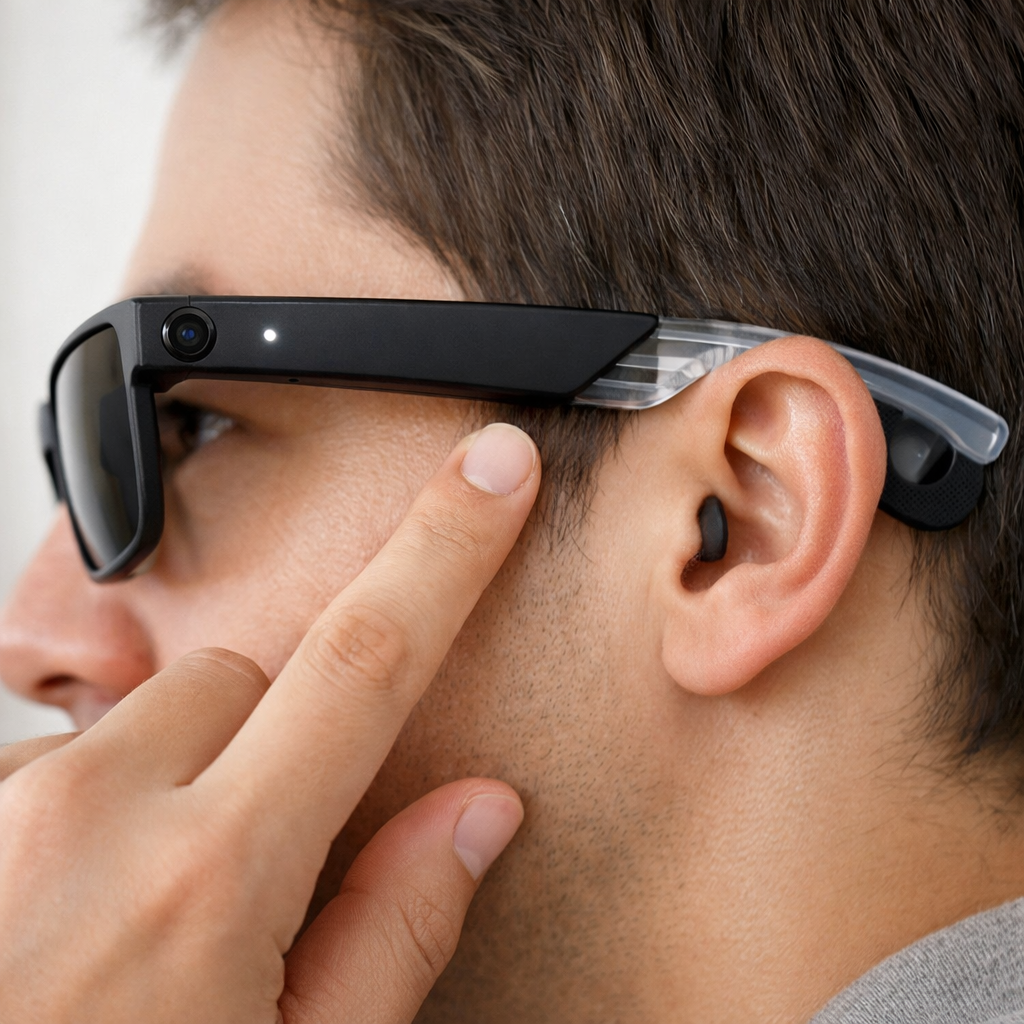
The latest prototypes feel much more like ordinary eyewear than most prior smart glasses experiments. They weigh just 41 grams and feature hardware elements—like translucent stem panels showing off internal components—that balance aesthetics with transparency. The glasses include a touchpad on the right arm for taps and swipes, a physical button for capturing photos and videos, and voice control with a newly introduced hotword: “Hey Gemini” (while “Hey Google” and “OK Google” still work). Integration with Galaxy Watch, Pixel Watch, and forthcoming gestures via Fitbit’s wearable platform rounds out the input options.
Camera, audio and privacy features
Photography is enabled by a 12MP camera capturing stills in 4:3 format and up to 90-second video clips. All photos are transferred immediately over Wi-Fi; videos are stored and transferred only when the glasses are charging to preserve battery life. The audio system includes open-ear speakers and a four-mic array with strong noise cancellation. Google claims that Gemini Live, the company’s conversational AI module, has been optimized for glasses to reduce latency and support fluid voice interaction.
A major thrust is privacy. Indicator lights make clear when media is being captured, and behavioral detection ensures users can’t disable recording by covering LEDs with tape or other markers—verification even occurs when the glasses are in their charging case. Visual queries to Gemini are not stored in history, used for ad targeting, or leverage image content for broader model training. In addition, faces of bystanders are automatically blurred, and ambient voices are filtered out before data ever leaves the phone for cloud operations. These safeguards aim to address trust concerns widespread since early smart glasses offerings.
Utility isn’t sacrificed for appearance. The glasses are engineered to shift much processing off-device—things like HDR photo pipelines and video stabilization rely on your phone. There’s also a robust companion app—similar in design on Pixel and Galaxy phones—that handles settings and controls without the extra bulk found in some rival “AI apps.” Early field impressions suggested that while gesture and touchpad control were initially preferred over voice, longer use shifted the balance toward speech commands.
When testing built-in voice interaction, response lag and software speed have noticeably improved vs earlier builds; some commands feel nearly instantaneous. The always-on camera offers fresh possibilities for capturing life from a first-person perspective—something Google believes will offer new use cases beyond what phones can do. After trying the current hardware, the view is that Intelligent Eyewear is one of the most promising entries yet in the smart glasses field.
The price and release date have not been detailed publicly, but Google describes the hardware and software combo as their most complete vision yet of what smart, everyday glasses could be. These aren’t just accessories—they’re potentially major tech shifts.
What this means: Google appears to have internalized the criticisms that plagued early smart glasses from rivals—especially around privacy, cursory utility, and intrusive design. Intelligent Eyewear’s emphasis on blending form with function, explicit consent, and multiple input methods makes it a noteworthy contender. For consumers, the question now is whether this iteration can push past hype and become genuinely adopted. Watch for finalized pricing, battery life in real-world use, and how neatly the AI tie-ins—Gemini Live, voice control, phone offloading—work in daily life to see if Google’s smart glasses can really live up to their “everyday wear” promise.