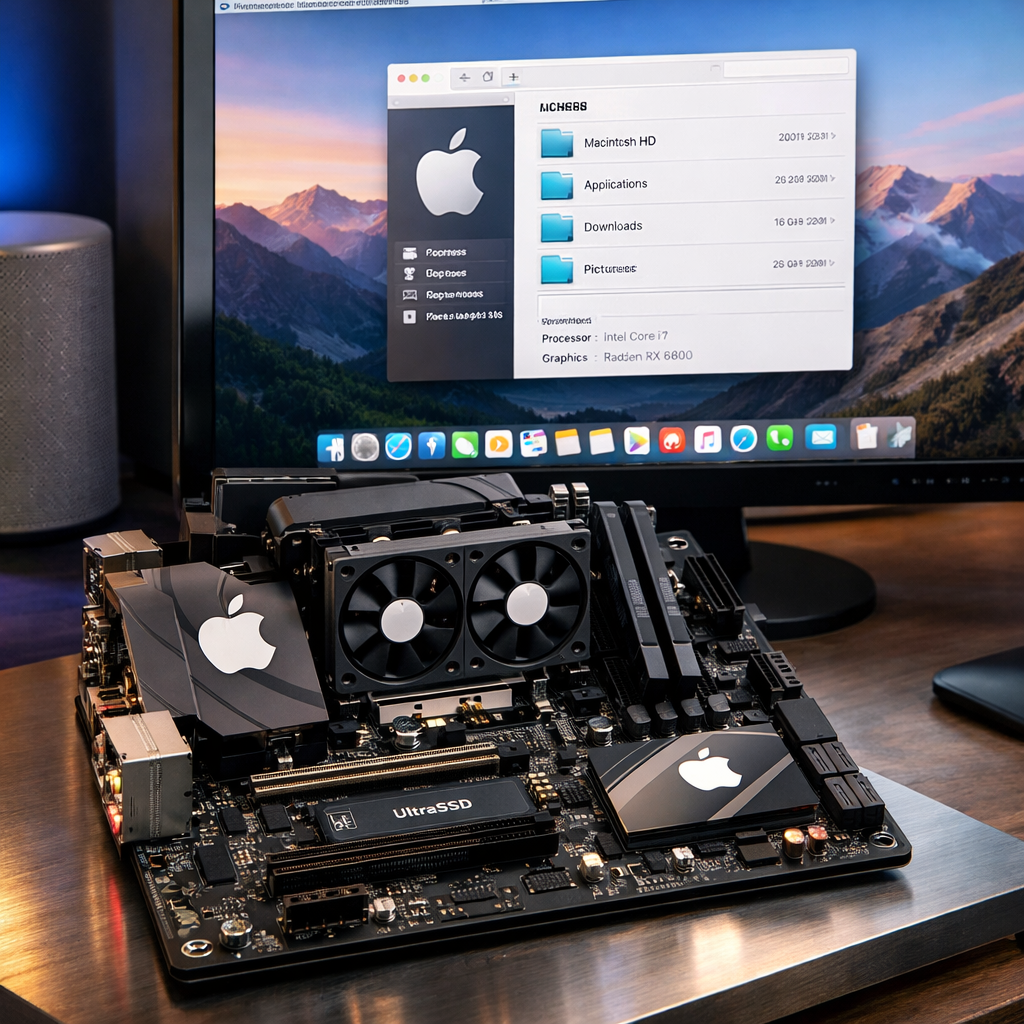
A new open-source project called Stela is aiming to bring macOS support back to standard x86-64 PCs. The idea is to let those machines boot macOS by translating Apple Silicon instructions to x86-64, paired with a few specialized driver components. It’s early days yet, but the first builds are already running apps.
How Stela Works
At its core, Stela builds on UEFI (the low-level firmware standard used during boot), adding an arm64-to-x86-64 translation layer to allow macOS images meant for Apple Silicon chips (which use the arm64 architecture) to run on devices with traditional x86-64 CPUs. To drive graphics on certain NVIDIA GPUs, Stela includes its own Metal driver tailored to match macOS’s graphics API needs.
In its current state, Stela is very experimental. Users report that macOS and many common apps do launch under Stela, but the performance is very slow—far from practical usability today. The project is still far from offering full feature parity, and many deliverables like battery management, power efficiency, and driver support remain works in progress.
What Changed — Why Now?
The macOS-on‐non-Apple‐Silicon world has often been limited by Apple’s transition away from x86 hardware back in 2020. Before that, Hackintosh builds thrived on older Intel Macs and x86 PCs. Once Apple sealed the system to run only its own chips—and added heavy checks—those workarounds waned significantly.
Stela represents a shift: instead of trying to trick Apple’s software into thinking it’s running on genuine Apple Silicon, it attempts to translate the instruction set in real time. That can sidestep many of the architecture mismatches, although at the cost of speed and compatibility. The inclusion of a custom Metal driver for GPUs like NVIDIA’s helps address one of the biggest previous hurdles—getting full graphics acceleration under macOS on non-Apple hardware.
That said, many of the low-level integrations remain fragile. Things like secure boot, firmware updates, advanced power features, sleep/wake, and full driver compatibility aren’t yet in a usable state. And current testers find Stela suitable for experimentation, not production.
There’s no official timeline for a stable release. The GitHub repo is active; developers are pushing code, gathering feedback, and continuously iterating. The community is watching closely whether the performance bottlenecks can be mitigated and how legal and licensing challenges will be handled.
Why This Matters & What to Watch
Restoring macOS functionality on x86 PCs opens up possibilities: more flexible hardware choices, potentially lower-cost builds, and breathing new life into older machines. For tech enthusiasts and tinkerers, Stela could reignite interest in Hackintosh-style setups under a fresh technical model.
On the flip side, this raises legal and licensing thorniness. Apple’s licensing terms and hardware-check mechanisms were designed to restrict macOS to its own machines. Any project that reanimates macOS on unsupported hardware must navigate intellectual property and end-user license agreement (EULA) complexities.
In short: Stela could mark the first credible path toward macOS on standard PCs again, but only if performance improves and legal risks are addressed. If the community succeeds, we might see a resurgence in the Hackintosh movement—though likely limited to hobbyists.