Apple’s first foldable, the iPhone Duo, offers stunning hardware but is suffering from a steeper software learning curve than most Android foldables. Users are pointing out that many apps, even those updated for the Duo, feel awkward or incomplete—overflow menus hide parts of the UI, essential buttons are difficult to reach, and familiar controls are shifted to the side in a way that’s jarring for those used to traditional layouts. These early pains echo Android’s early foldable missteps, showing just how far its ecosystem has matured.
Hardware glimmers, but software stumbles
The Duo’s outer screen is visually striking—Apple has aligned cover and inner display aspect ratios and introduced a nano-textured front to cut glare. Still, the front display often hides UI elements in overflow menus, making even well-optimized apps feel limited. Users expect the app ecosystem to adapt—but in the meantime, the Duo’s software feels less polished compared to what Android’s best deliver after years of iteration.
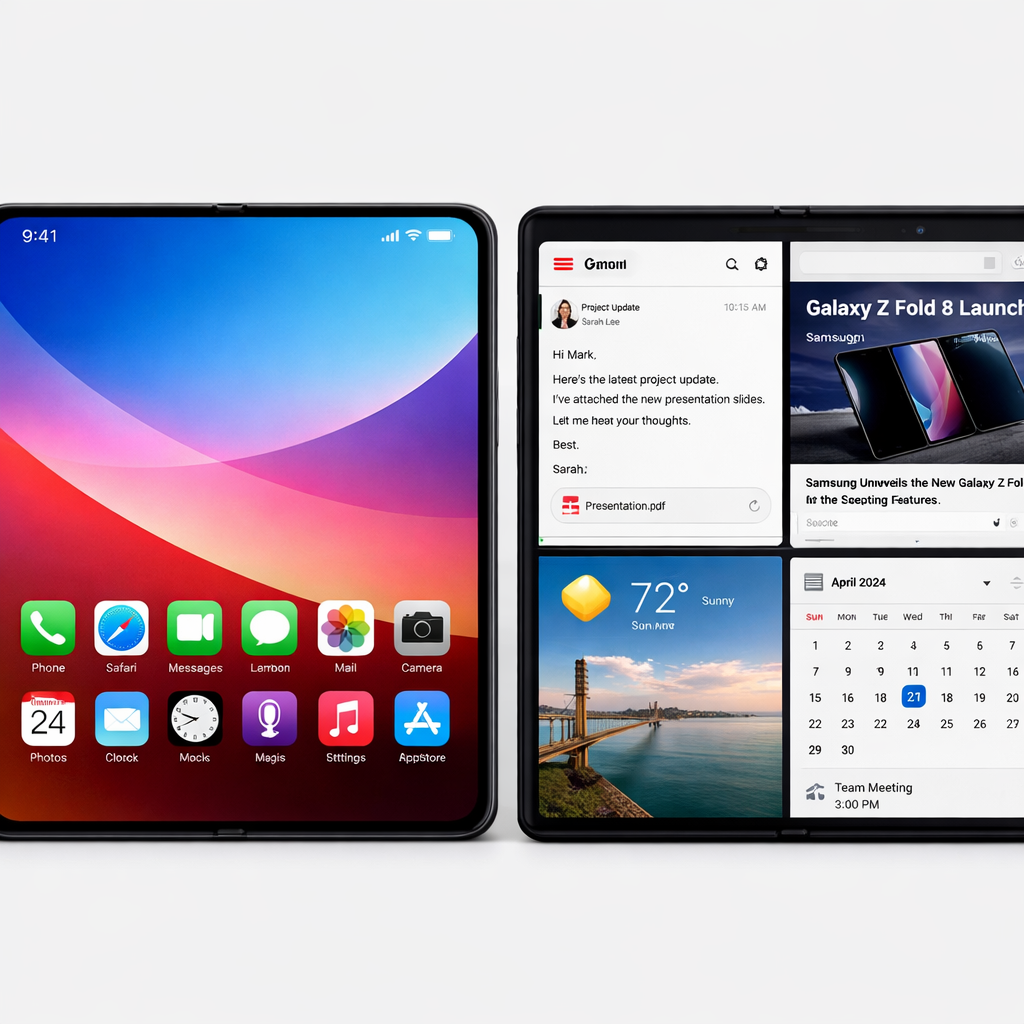
At the heart of the issue is how app controls are being handled. Apple has moved many UI elements to the sides instead of top and bottom, and its dock disappears once an app launches—so returning to the home screen becomes necessary just to access frequently used apps. Multitasking on the Duo also seems constrained: split-screen mode forces a rigid 50/50 split with no way to adjust proportions or enjoy flexible layouts, and rotating the device can cause the split view to collapse entirely.
What Android foldables are doing right
Samsung’s Galaxy Z Fold 8 provides a clear contrast. It allows separate layouts for inner and cover screens, gives constant access to its taskbar, supports three-app splits with adjustable window sizes, and introduces floating windows. The flexibility for rearranging workspace layouts and persistent multitasking options gives it a usability advantage. Android’s ecosystem is benefiting from both longevity and scale: many apps already support large or foldable displays, and accessory and software partners have shaped a smoother experience over time.
Even so, the Duo isn’t without its strengths. The display coating and matching aspect ratios make for consistent visuals, and early apps optimized for the Duo show promise. Apple’s approach prioritizes simplicity and polish—some user workflows benefit—and fans appreciate features like under-display inner camera design and display uniformity. What it lacks in breadth of multitasking, it may make up for in refinement.
The rocky launch underscores that form factor alone isn’t enough. Android’s foldables have had years of refining the software environment, learning from user feedback, and tightening up the UI/UX across both hardware and software. The Duo arrives late to the table, and while Apple has made strong choices, it must now catch up not just in hardware sheen but in usability and developer adoption.
Why this matters
The iPhone Duo is more than just Apple joining the foldable fold—it’s a turning point. Android already has options where the flexibility in multitasking and mature app support feels natural. For Apple, success depends on whether it can build critical mass among developers—and quickly fix the quirks that undermine its promise. What to watch for next: how iOS updates and third-party apps evolve, whether Apple opens more fine-grained control for multitasking, and whether the Duo’s software becomes as seamless as its marketing suggests.