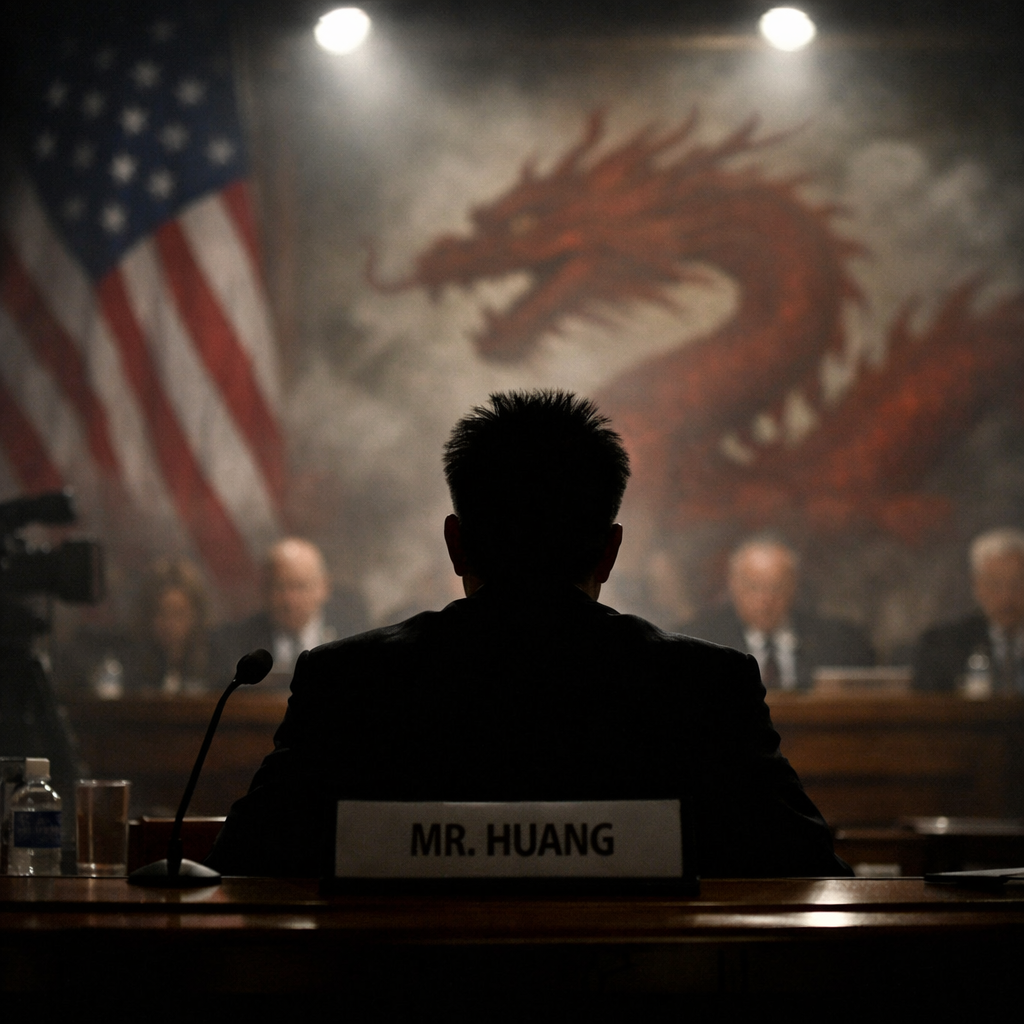
Congressional Republicans are moving to subpoena Nvidia CEO Jensen Huang unless he agrees to a closed-door briefing concerning allegations that he had a relationship with someone accused of espionage. The individual in question is Alice Huang, an executive at a company called Megaspeed, who has been labeled a suspected Chinese spy. The request follows a letter from three GOP lawmakers calling for Huang’s testimony by November 11, 2026. He has until the end of the business day to comply, or face legal compulsion.
What’s prompting the push
The concern arises from Huang’s alleged connection to Alice Huang, whose work with Megaspeed has drawn suspicion regarding ties to Chinese intelligence. House Republicans Brian Mast, John Moolenaar, and Rick Crawford formally asked for Huang to attend a joint session of their committees to discuss these allegations. The session would be closed to the public to address classified or sensitive questions.
John Moolenaar, who leads the House China committee, emphasized the urgency, declaring that if Huang doesn’t respond, he will be subpoenaed. Mast, chair of the House Foreign Affairs Committee, echoed that a subpoena is being drafted in anticipation of noncompliance. The countdown was clear: Huang must make a decision by end-of-day November 11, 2026.
Why this matters in the broader U.S.-China landscape
The probe underscores U.S. lawmakers’ expanding scrutiny of tech-sector relationships with China, especially when potential national security risks are involved. Nvidia remains central to America’s AI infrastructure, and its leadership’s connections are being examined more closely in light of geopolitical tensions over data, supply chains, and intellectual property.
The situation with Alice Huang and Megaspeed speaks to broader anxieties around foreign influence in domestic technology firms, especially those whose work could support critical infrastructure or sensitive computing capabilities. Any proven wrongdoing could carry serious consequences for Nvidia, including policy constraints, reputational damage, and possible regulatory or legal repercussions.
What happens next
First, the crucial moment will pass at the end of November 11, 2026—if Huang agrees, the closed-door session moves forward; if not, Congress will issue a subpoena. It’s not yet clear whether Huang intends to comply. Nvidia has not responded to requests for comment on this matter.
If the inquiry proceeds legally, questions will surface: What exactly is the nature of Huang’s relationship with Alice Huang? What role, if any, did sensitive Nvidia resources or AI capabilities play? Has any potential intelligence risk materialized?
The case will likely lead to intense scrutiny of how American tech companies manage foreign partnerships, and how executives’ personal ties could pose security concerns. Congressional oversight in this domain is escalating as national strategy evolves.
Trump-era legislation, export controls, and recent federal laws concerning AI safety show the U.S. government is increasingly uncomfortable with gaps in oversight. As tension continues to rise between U.S. regulatory goals and China’s global tech ambitions, this incident makes clear that Congress is ready to demand transparency—and take coercive steps if necessary.
At its core, this confrontation signals that the era of informal oversight is waning. As AI becomes more central to national security, Congress appears ready to lean on legal tools like subpoenas to gain access to information. What comes out of this could set precedents for executive accountability in high-stakes tech leadership—especially when cross-border implications are involved. We’ll be watching how Jensen Huang responds, what Congress uncovers, and what this means for Nvidia’s trust and operational latitude moving forward.