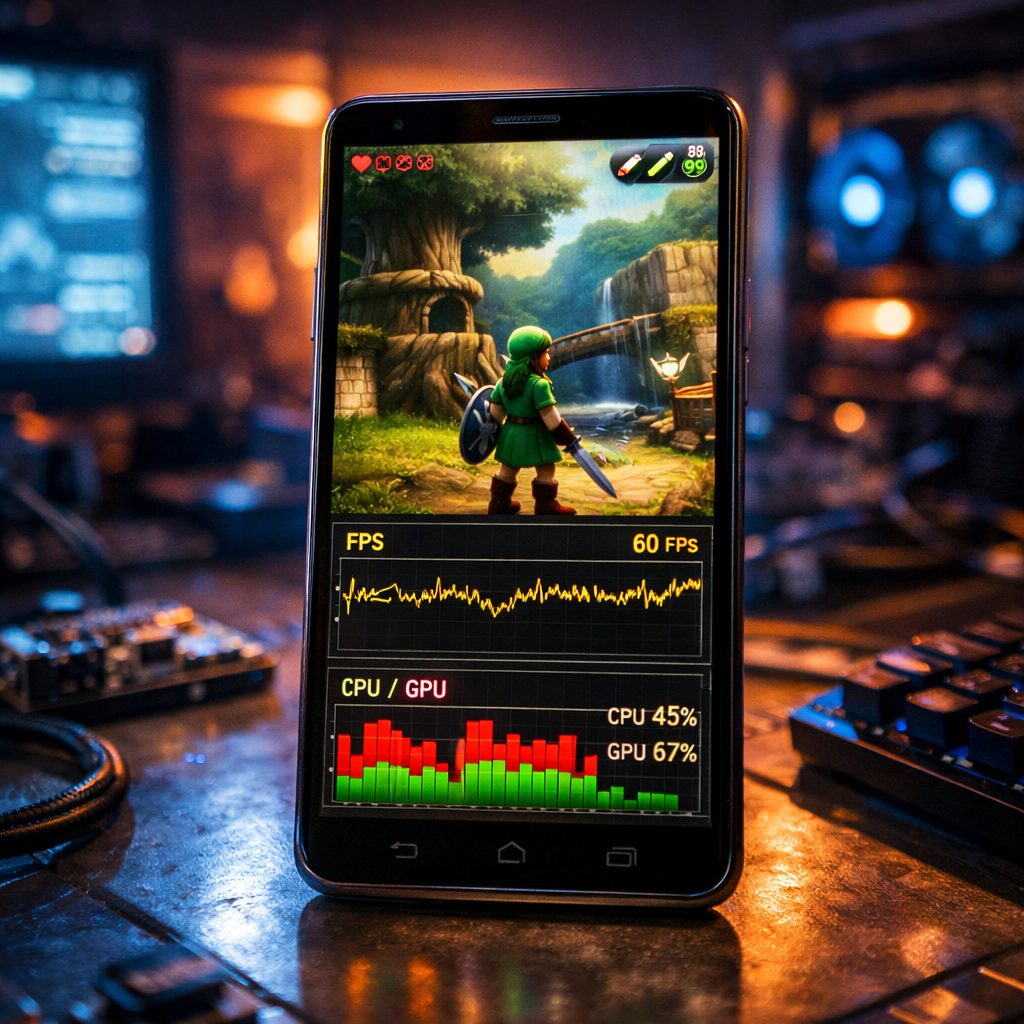
The Nintendo Switch 2 remake of The Legend of Zelda: Ocarina of Time has been made playable on Android devices—just one week after its release—thanks to a native-style emulator called Banana Native. Players have achieved what’s being called a milestone: the game appears to run at around 30 frames per second on phones using AI-powered frame generation, even though it’s actually rendering at about 15 FPS before upscaling.
How Banana Native Pulls It Off
Banana Native isn’t a typical emulator that simulates hardware. Instead, it leverages the game’s own ARM64 binary to run directly on an Android phone’s CPU. This approach bypasses low-level Switch emulation, and takes advantage of the similarity to mobile chip architectures—after all, the Switch 2 uses a mobile NVIDIA GPU—and then uses frame interpolation to make the visuals look smoother.
What Hardware Was Used, and What’s Possible
The test was performed on a Poco F7 Ultra—a phone featuring a Snapdragon 8 Elite (Gen 4) chip, which is now two generations old. Performance is promising, suggesting newer phones could push the experience even further.
However, Banana Native doesn’t yet support all phones. Driver compatibility remains a major hurdle, especially with the most recent chipsets. Newer Android emulation tools like Droid Deck and Game Native are also in development but still lack stable drivers on some newer hardware.
This isn’t the first time we’ve seen Android push the boundaries of emulation. A recent review of Droid Deck demonstrated that it allows legitimate streaming or playing of titles from platforms like Steam on mobile hardware—so the scene is rapidly evolving.
Being able to run the Zelda remake this soon marks a notable shift. With native-style emulators using game binaries rather than full hardware emulation, performance ceilings are being rethought. And with AI frame upscaling in play, even mid-range phones are showing capacity for demanding Switch 2 titles.
In sum: this development shows that emulation on Android isn’t just catching up—it’s starting to rival official platforms. Moving forward, driver support and hardware access will be the linchpins determining whether this becomes mainstream or stays niche.
Why this matters:When a Switch 2 exclusive can be played on Android within weeks of launch, it raises legal, technical, and competitive questions. Platform holders may want to double down on security, developers could more strongly demand platform protection, and Android’s ability to close the performance gap becomes a strategic game-changer.