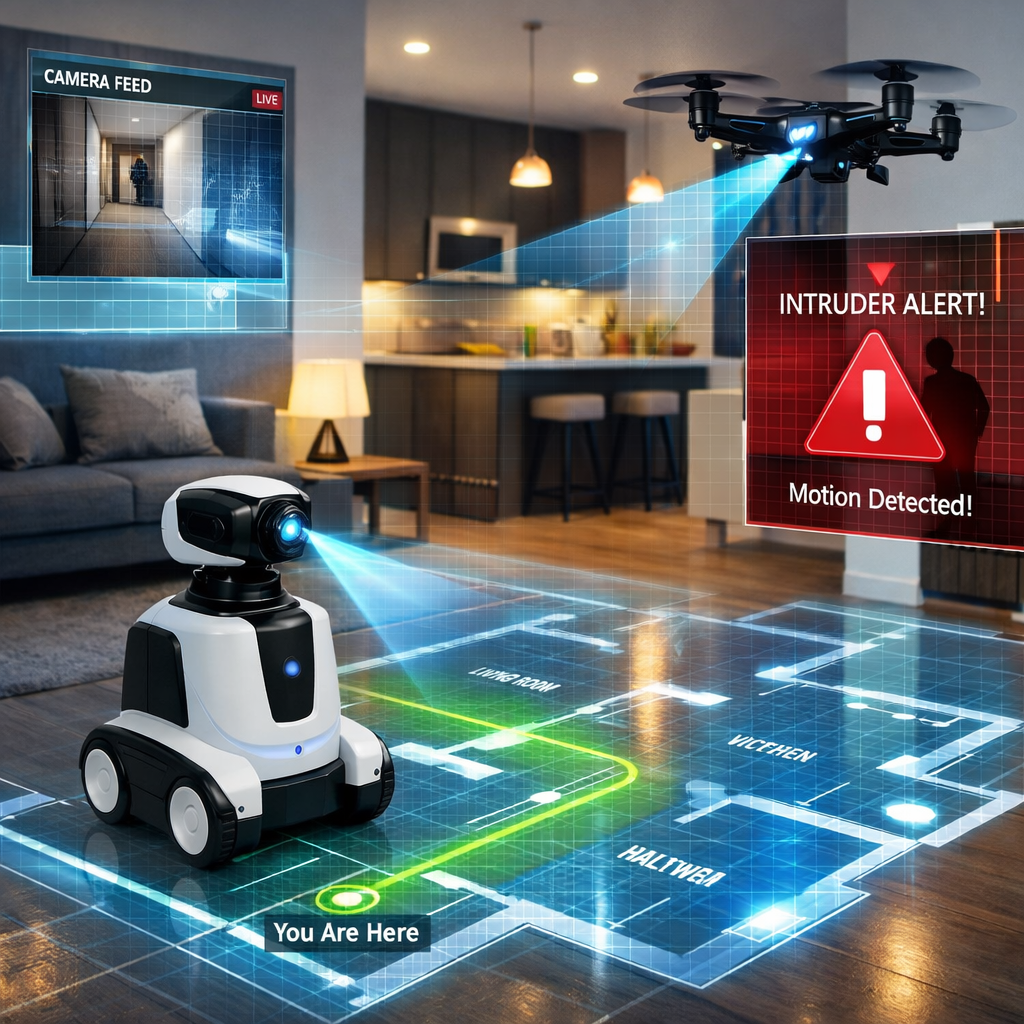
Ring is pushing forward in home surveillance with two new robotic devices—a flying drone and a wheeled rover—designed to patrol your property autonomously and respond to alarms. These are the first robotics products from the company, both running on a system called AI Pilot that combines onboard sensors, vision models, and cloud processing for real-time navigation. The Drone Cam and Rover Cam can move independently through your spaces to monitor suspicious activity, offering a dynamic alternative to static cameras.
How the New Robots Operate
Setup begins with letting either robot explore the layout of your home. While you carry the Drone Cam or allow the Rover to roll around, the device builds a detailed floor plan via AI Pilot. It identifies individual rooms and highlights key areas—doors, windows, entry points—for focused surveillance. When patrolling, the devices chart their paths to patrol points efficiently and adjust in real time to avoid obstacles like furniture. You can start patrols manually or let them trigger automatically in response to alarms or sensor alerts.
Pricing, Availability, and Features
Ring is positioning the Rover Cam as the more premium option, priced at $999.99. It’s set to begin shipping on December 16, with preorders already available. The Drone Cam is less expensive at $249.99 and is expected to ship in late January, though orders cannot be placed yet. Both devices include continuous motion detection—meaning the Rover will alert and record when it detects movement even when docked.
Powered by AI Pilot, these robots harness a combination of cloud services and onboard intelligence to see, interpret, and navigate autonomously. The system uses cameras, sensors, and vision models to help the robots map surroundings, identify high-risk areas, and react to real-time changes—making them capable of evaluating and responding to threats without direct supervision.
These products do more than simply capture video—they proactively inspect. By responding to door or window sensors, trip alarms, or triggered motion detectors, both devices can go to preset patrol points or navigate to the source of an alert. For example, if a sensor by a side door is triggered, the Rover or Drone can head there to provide live footage.
Design and schedule flexibility are built in. You can define your own patrol paths through the home, schedule patrols at set times, or rely on automatic triggers. Also, the system will pick up motion and sound even when the Rover is docked, so no moment of potential concern goes undocumented.
What it means for home security:Ring’s launch of the Rover and Drone Cam marks a shift from fixed surveillance to responsive, mobile monitoring. These robots add eyes everywhere—entering rooms, floating over staircases, navigating complex layouts—and offer new ways to catch threats in the act. But this also raises questions about privacy, indoor flight regulation, battery life, and long-term reliability in homes with pets, children, or many obstacles.
The Rover Cam is almost here—just two months away—while the Drone Cam follows shortly after. Once both are active in the market, comparisons with existing smart home surveillance—traditional alarms, fixed cameras, even pet-camera robots—will determine how much value users actually get vs. the higher cost and complexity.