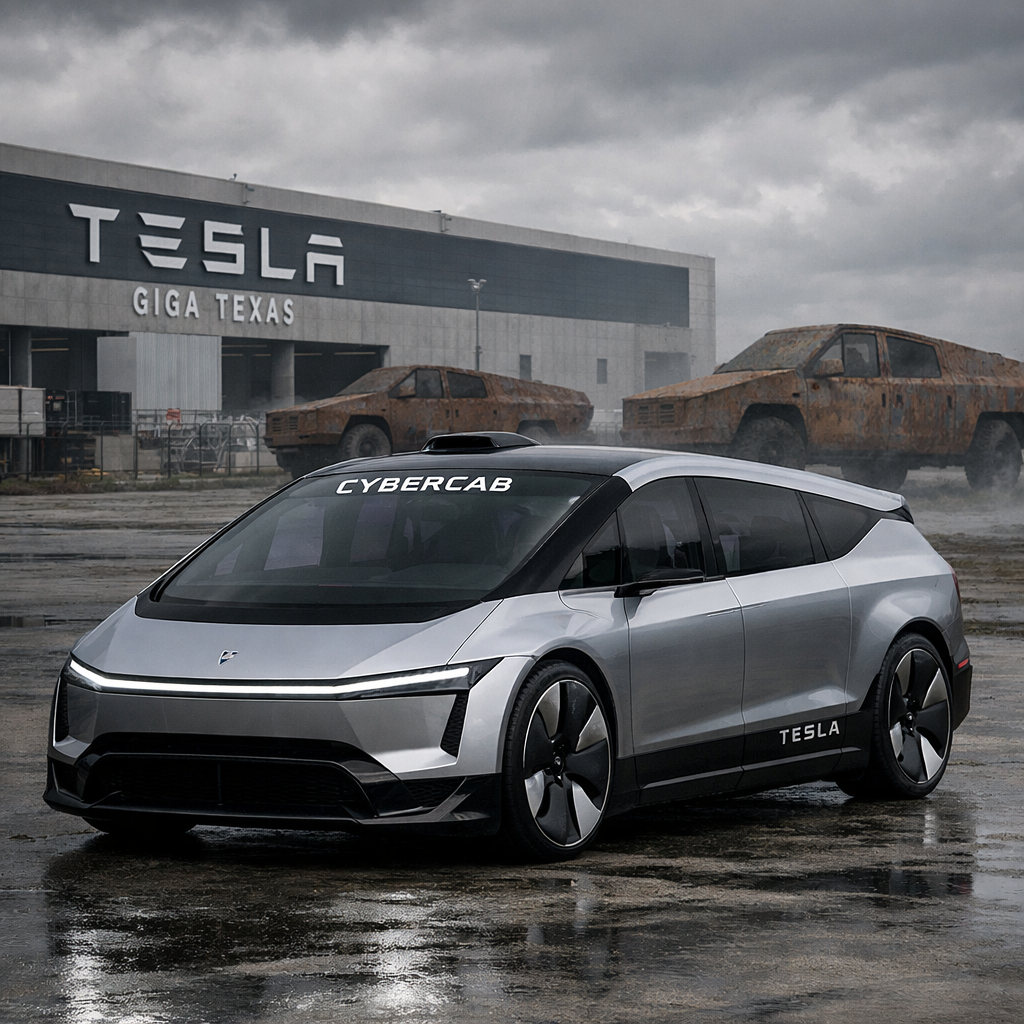
Tesla has confirmed it will stop producing the Cybertruck around mid-2027 and begin returning deposits to many customers. CEO Elon Musk stated the decision is driven not by profitability concerns with the truck itself, but by the “opportunity cost” of its complexity—resources devoted to the Cybertruck line, he argues, can be better used to build the new Cybercab robotaxi. The company plans to continue making as many Cybertrucks as possible before shutting down production.
Sales Fell Far Short of Ambitious Promises
When Tesla unveiled the Cybertruck, it claimed to have gathered over 1 million reservations and projected annual sales of up to 250,000 units. But the numbers never came close. Since deliveries began in late 2023, only about 71,000 Cybertrucks have been delivered.
The vehicle’s bold design and stainless-steel build drew both acclaim and criticism. However, it faced logistical and financial challenges: higher production complexity, regulatory snags, frequent recalls, and failure to reach price and range expectations. These issues compounded as demand lagged, especially outside the U.S., where export difficulties intensified the pressure.
Cybercab Takes Center Stage
Tesla’s new priority is the Cybercab, a purpose-built robotaxi with no steering wheel or pedals that already began operating paid rides in Austin this year. The company views the Cybercab as a core element of its future, expecting robotaxi deployments to grow substantially. Musk says freeing up factory capacity used by the Cybertruck will allow increased Cybercab production.
While the wind-down is scheduled for mid-2027 at Tesla’s Gigafactory Texas, Musk did not clarify whether production will shift to another plant, continue in a limited way, or end completely. Meanwhile, Tesla has consolidated its lineup earlier this year by discontinuing the Model S and Model X — moves that similarly freed up factory space for newer products.
Owners of existing Cybertrucks will continue to receive parts and service support. The refund plan will apply to many reservation holders who won’t get delivery because production is ending.
Why this matters:The Cybertruck’s winding down marks a symbolic turn for Tesla. It moves away from one of its boldest consumer-facing bets to double down on an autonomous, robotaxi-first future. That shift reflects what Tesla has been hinting at all year — an increasing focus on AI, autonomy, and robotics as its defining edge.