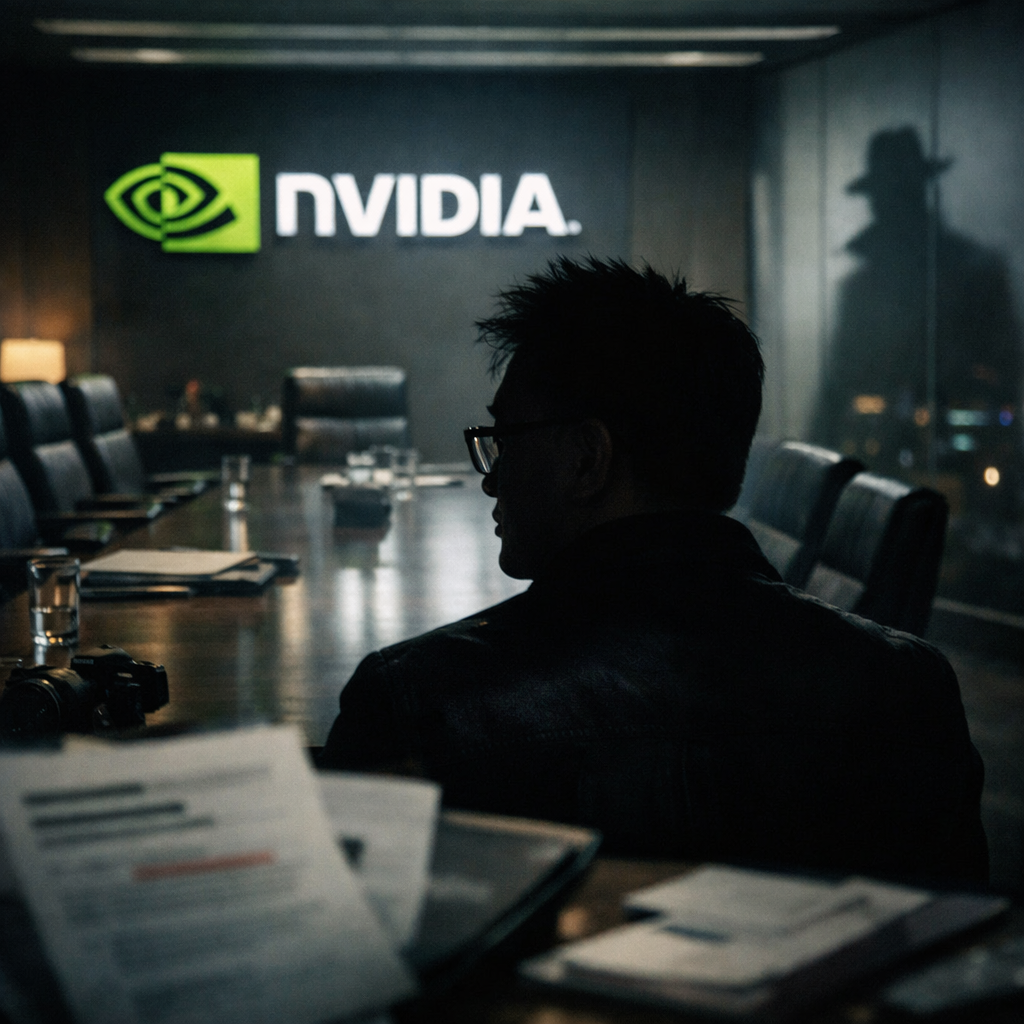
Nvidia’s board has initiated an independent investigation into the company’s CEO, Jensen Huang, following accusations of a romantic relationship with a former executive at a Singapore-based chip firm, who is alleged to have ties with Chinese intelligence. Earlier this year, U.S. government documents claimed the executive—referred to only as Alice Huang—was recruited by China’s Ministry of State Security to spy on Nvidia’s CEO.
In an internal communication made public, the CEO acknowledged the affair, apologizing to his family, the company, and board members. He emphasized that his conduct fell short of the standards expected of him and that he takes full responsibility for its impact. However, he also asserted that there is no evidence showing any breach of national security or compromise of confidential company information.
The board’s statement asserts they are acting through independent directors in collaboration with external legal counsel to ensure objectivity in the inquiry. Though Nvidia has not found any indication that trade secrets or security protocols were threatened, the board said Huang has pledged full cooperation with the investigation. Confidence in his leadership, the company said, remains intact—despite the serious nature of the claims.
Context: AI, China Relations, and Corporate Risk
The story unfolds against the backdrop of intensifying rivalry between the U.S. and China over AI and semiconductors—industries in which Nvidia plays a central role. Concerns over espionage, intellectual property theft, and foreign influence have become increasingly prominent for tech firms heavily involved in chip development and AI training.
Previously, Nvidia had characterized Huang’s interactions with the former executive as “not unusual” and highlighted that the company does not share classified information with customers. Meanwhile, the company has warned staff to remain vigilant for exploitation through romantic or sexual relationships—a tactic others have flagged as a preferred strategy for intelligence operations.
This case merges personal conduct with geopolitical risk at a moment when the board, employees, and U.S. policymakers are especially sensitive to foreign espionage. Information shared with government agencies earlier this year purported that the recruiter worked for China’s state security apparatus, putting Huang in a potentially compromising position—but no confirming evidence has been disclosed to date.
This guide to the situation also underscores how closely leadership conduct is scrutinized when company leadership intersects with national security. Nvidia, valorized for its GPU dominance, finds itself balancing its global innovation role with growing demands for transparency and risk management.
While personal mistakes do not automatically translate into corporate or geopolitical breaches, the stakes in this case are elevated. If evidence of espionage or technology transfer emerges, implications could ripple across international trade rules, export controls, and AI policy. For now, all eyes will be on the investigation’s findings and how Nvidia addresses questions about trust, oversight, and its role at the frontlines of the U.S.–China tech competition.