Apple’s latest offerings are raising eyebrows. Two developments stood out this week: one involves the iPhone’s hidden list of blocked words and phrases, the other is the rollout of Live Rewind and Siri Recaps in the watchOS 27.3 beta. Both show how Apple is pushing the boundaries of user control and privacy—even if it makes some users uncomfortable.
The secret blacklist behind your keyboard predictions
A site called Swipeblocked recently shed light on thousands of English phrases the iPhone keyboard never suggests—some for good reason, some more surprising. Words tied to insults, racial slurs, political phrases like “dictator Trump” or “sleepy Joe,” topics like “Tibetan independence,” and even certain names and historical events are baked into this unseen filter.
The blocking happens in both predictive text and swipe typing. If you try swipe-typing a blocked phrase, the keyboard often substitutes something else. However, you can still type anything you want letter by letter. Behind the scenes, Apple uses labels like vulgar, offensive, or sensitive for single words. Some of those never surface in suggestions; others need to be manually used a few times before showing up.
Live Rewind and Siri Recaps: Memory tools or privacy risk?
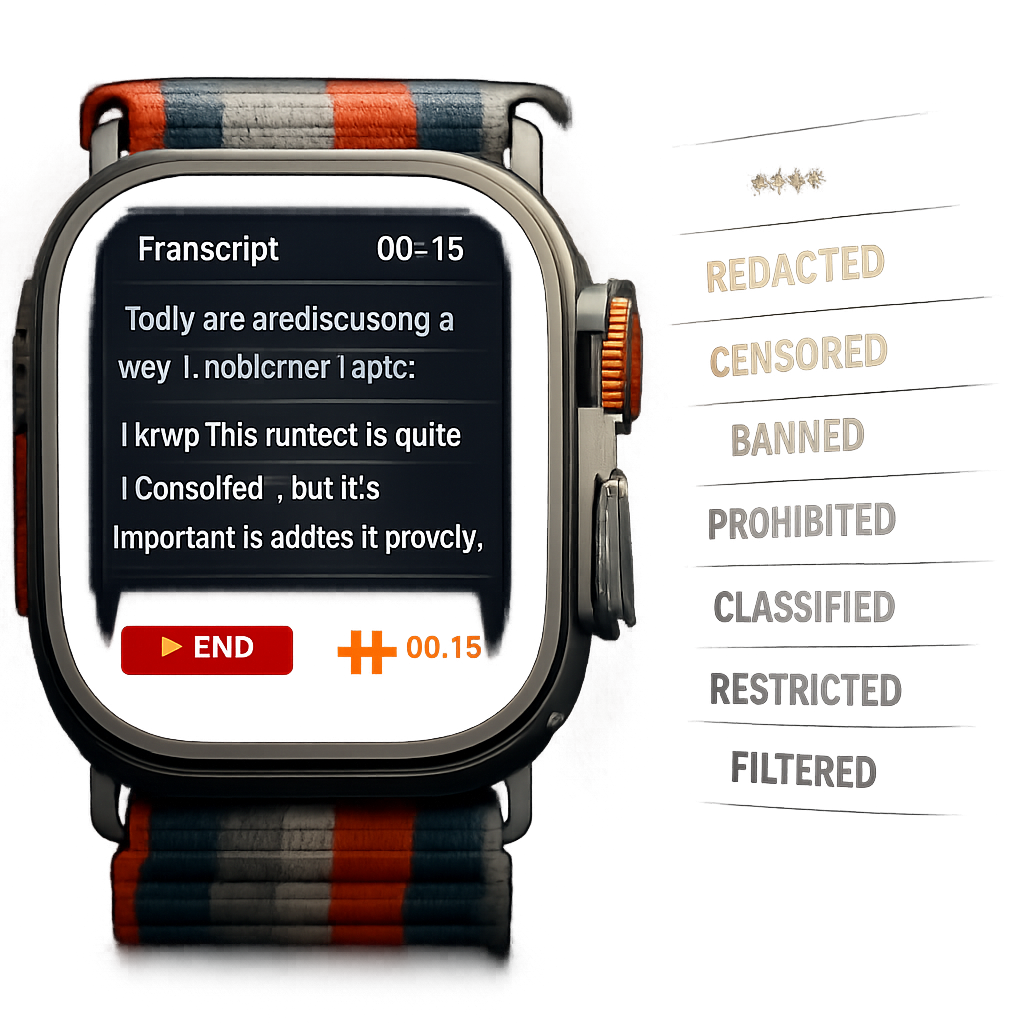
This fall, Apple rolled out the Audio Intelligence suite for Apple Watch Series 12 and Ultra 4 models. Two of the more discussed features—Live Rewind and Siri Recaps—are now available in the watchOS 27.3 beta. Live Rewind lets you double-press the Digital Crown to see a transcript of the last 15 seconds of speech around you. Siri Recaps works in the background, summarizing longer conversations with key points and titles.
Apple stresses these features are privacy-first. Audio is processed in the Secure Enclave on-device. Speech isn’t attributed to particular people, and raw audio is deleted once used for transcription or summary. Live Rewind is only active with a manual trigger, comes with visible and audible indicators (like a chime and mic icon), and no continuous recording continues beyond the 15-second buffer. Siri Recaps can be scheduled by location or time—and both features are opt-in. Summaries vanish after seven days if not saved.
When tech becomes time travel—or surveillance
Both the keyboard blacklist and these listening features tap into something deeper: how much control we cede to devices meant to make life easier. The blocked-phrases list demonstrates how even language—something we feel we control—is curated outside our view. Live Rewind and Siri Recaps use AI to keep track of what we said or heard—albeit with guardrails.
The broader context: Apple launched the Watch Ultra 4 with powerful sensors, advanced health tracking, and these new AI tools. These tools are part of Apple Intelligence’s growing ecosystem. Beyond wearables, they signal long-term ambitions around ambient computing where devices anticipate context and memory.
But there’s a fine line between assisting and surveillance. Users rightfully worry about when the device listens, and what it does with that data. Even with all the tech safeguards in place, perception matters as much as implementation.
In the end, these features may prove useful—for accessibility, memory aid, and privacy-aware recording—but they’re also a reminder that we’re entering a new chapter where our gadgets remember our words more than we do. What’s key now is oversight and transparency: users deserve both.