Apple is changing how it builds iOS 28, iPadOS 28 (internally “Bell”), and macOS 28 (“Poppy”)—shifting schedules to give engineers more breathing room for feature innovation earlier in the process.
What’s shifting in the development cycle
Every year, Apple rolls out major updates to its core operating systems through a sequence of milestones labeled M1, M2, and M3. Each stage has historically stretched over eight weeks, split evenly: four weeks for coding new features and four weeks for convergence—when those features are absorbed and integrated.
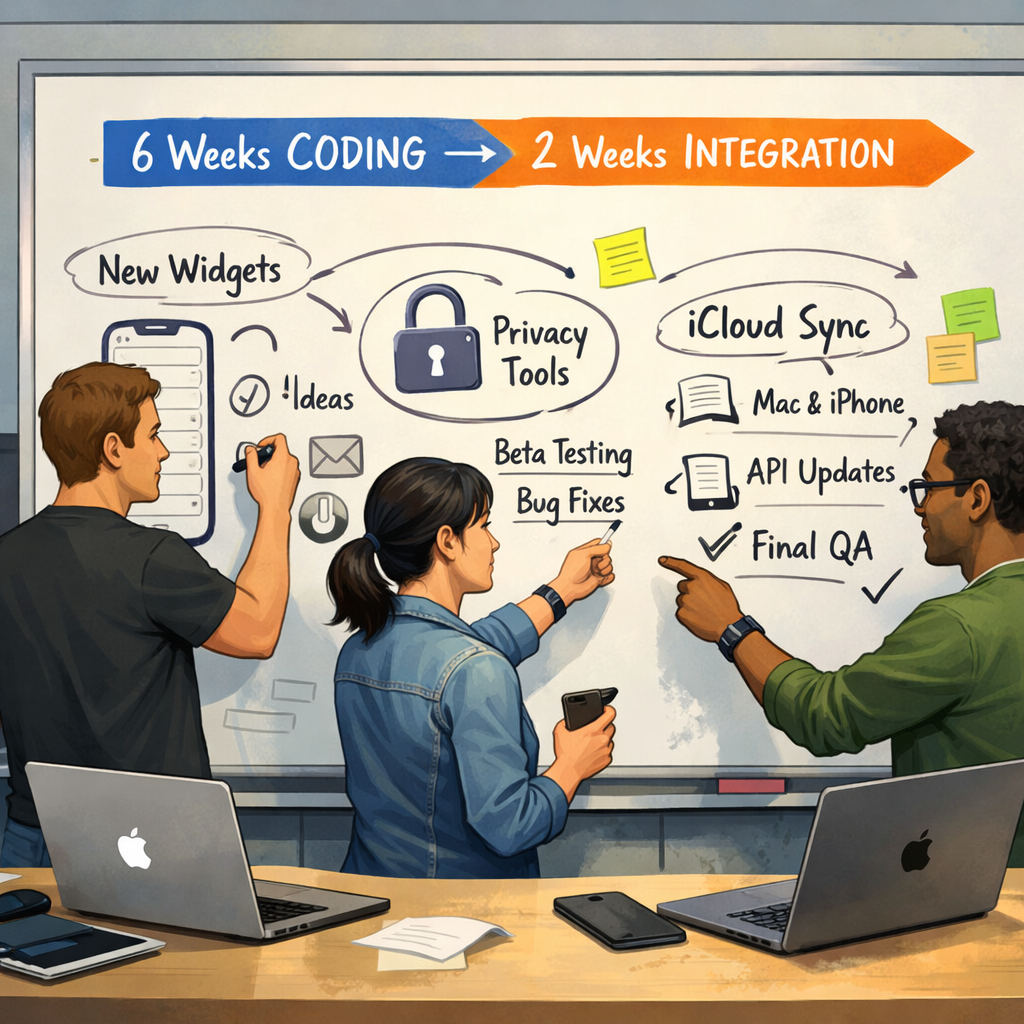
With the work on iOS 28 and its siblings, Apple pushed more time into the early coding phase of M1. Instead of the usual 4 weeks of coding and 4 weeks of convergence, this cycle gives engineers 6 weeks to develop new ideas and only 2 weeks to merge them into the OS.
Why it matters—creativity, not just deadlines
Engineers reportedly welcome this new schedule. The longer coding window means more opportunity to experiment, iterate, and refine features before they’re locked down. Rather than rushing toward convergence, they have space to explore what might work best.
Later in the development year, convergence still plays a critical role—aligning earlier work, ensuring stability, and final polishing—but that comes after innovation has had more time to breathe. By frontloading ideation, Apple aims for higher quality and more ambitious features coming out of earlier experimentation.
This scheduling tweak isn’t just about being nicer to engineers—it’s part of how Apple balances innovation and reliability across its product cycles. What gets conceived early shapes what gets polished later. Giving engineers more room early on signals that Apple is prioritizing creativity without sacrificing integration.
Analytically, this shift could mark a subtle but important change in how Apple competes. In an era when users expect bold OS features—whether in AI, privacy tools, or seamless device continuity—the difference between a good release and a great one often comes down to how much risk and creativity a company allows early in development. With iOS 28 through this new M1 structure, Apple may be positioning itself to deliver more standout ideas instead of merely refining what’s already safe. What to watch next: whether this schedule holds strong through to shipping, and whether features developed in that extended window end up making a bigger splash than their predecessors.