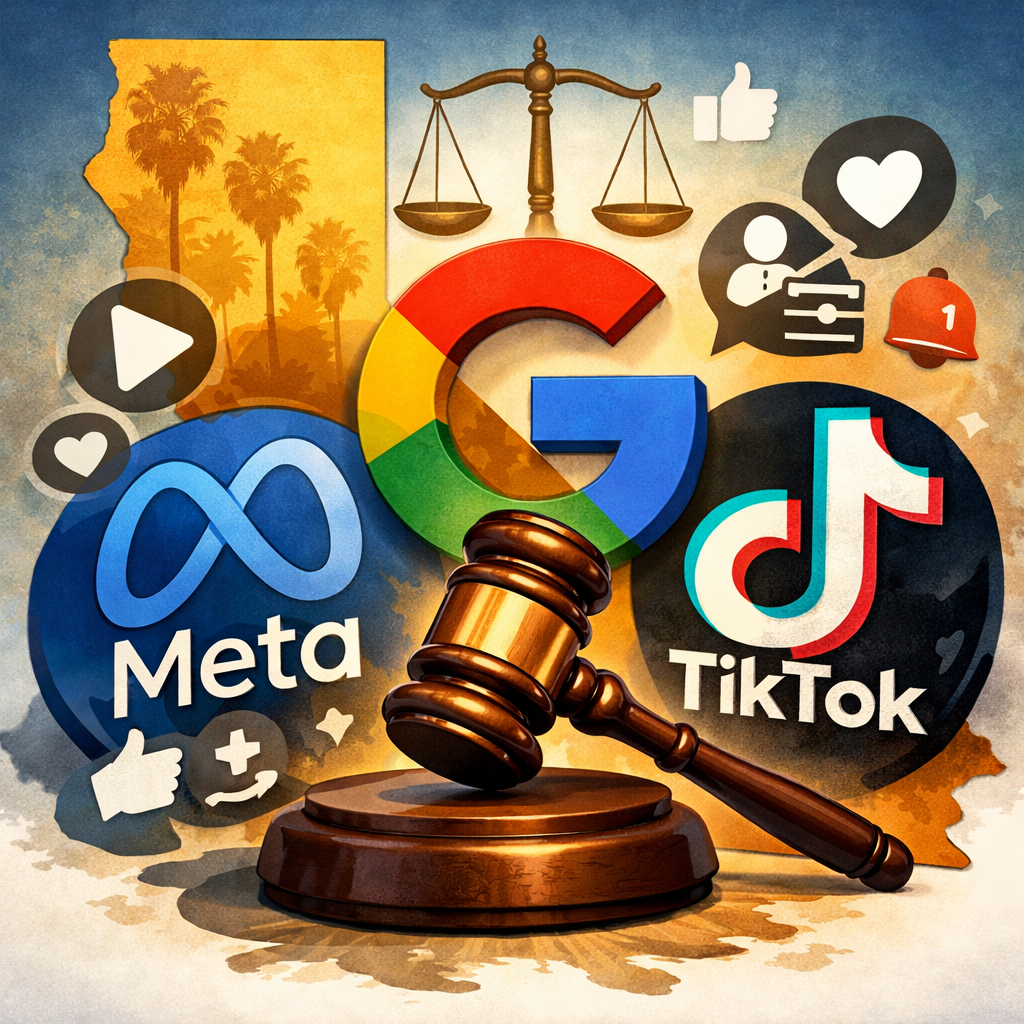
Meta, Google and TikTok have launched legal challenges against a new California law designed to restrict features deemed addictive for users under 16. The companies sued Attorney General Rob Bonta, arguing that the law, known as AB 1709, infringes on free speech rights and other constitutional protections.
Governor Gavin Newsom signed AB 1709 in September, and it’s scheduled to take effect on January 1. The law mandates that social media platforms disable autoplay videos and personalized content feeds for those under 16. Additionally, it requires platforms to delete user accounts of minors if these settings aren’t disabled. Penalties could reach $50,000 per underage user for non-compliance.
Arguments from the Tech Giants
Meta, Google, and TikTok contend that AB 1709 violates the First Amendment by commandeering editorial decisions about content presentation. They also claim Section 230 of the Communications Decency Act preempts the law’s constraints. Under AB 1709, platforms would be banned from displaying personalized content recommendations or autoplay videos to users under 16 — or risk having those minors’ accounts deleted.
Google emphasized that it already disables autoplay on YouTube by default for minors and offers parental controls for video content including Shorts. Meta and TikTok echoed concerns that the law oversteps, stripping away user preferences and limiting content curation practices that are standard across media like books or streaming platforms.
Broader Impacts & Criticisms
Digital safety advocates warn that enforcing AB 1709 could compromise privacy by requiring platforms to collect more identifying information, potentially threatening anonymity for all users. Concerns include how age verification systems will work and what data they’ll collect, with critics saying this increases surveillance rather than protecting children.
Some experts also argue that such restrictive laws could silence younger users, cutting them off from important public issues — activism like #MarchForOurLives or global climate organizing. Critics insist that by broadly limiting social tools for teens under 16, AB 1709 risks stifling youth voices under the guise of protection.
AB 1709 is part of a global wave of legislation seeking to limit teen social media usage in response to rising concerns around mental health. In December 2025, Australia banned social media use entirely for children under 16. France attempted a similar move, but its highest court nullified it, citing free speech issues.
California’s platforms argue that this law also interferes with parental authority. They maintain that parents are better situated to decide what content or features are appropriate for their children. Meanwhile, California’s Attorney General has pledged to defend the law, describing it as a reasonable measure to safeguard young people online.
Why this matters: The lawsuits bring into sharp relief the tension between protecting youth and preserving constitutional rights like free expression. If courts uphold the platforms’ claims, tech companies will likely gain strong protections against similar restrictive legislation. If the law survives judicial scrutiny, it could spark an overhaul in content moderation, age verification, and platform design nationwide. Watch for how courts balance privacy, freedom of speech, and regulatory authority in the months ahead.