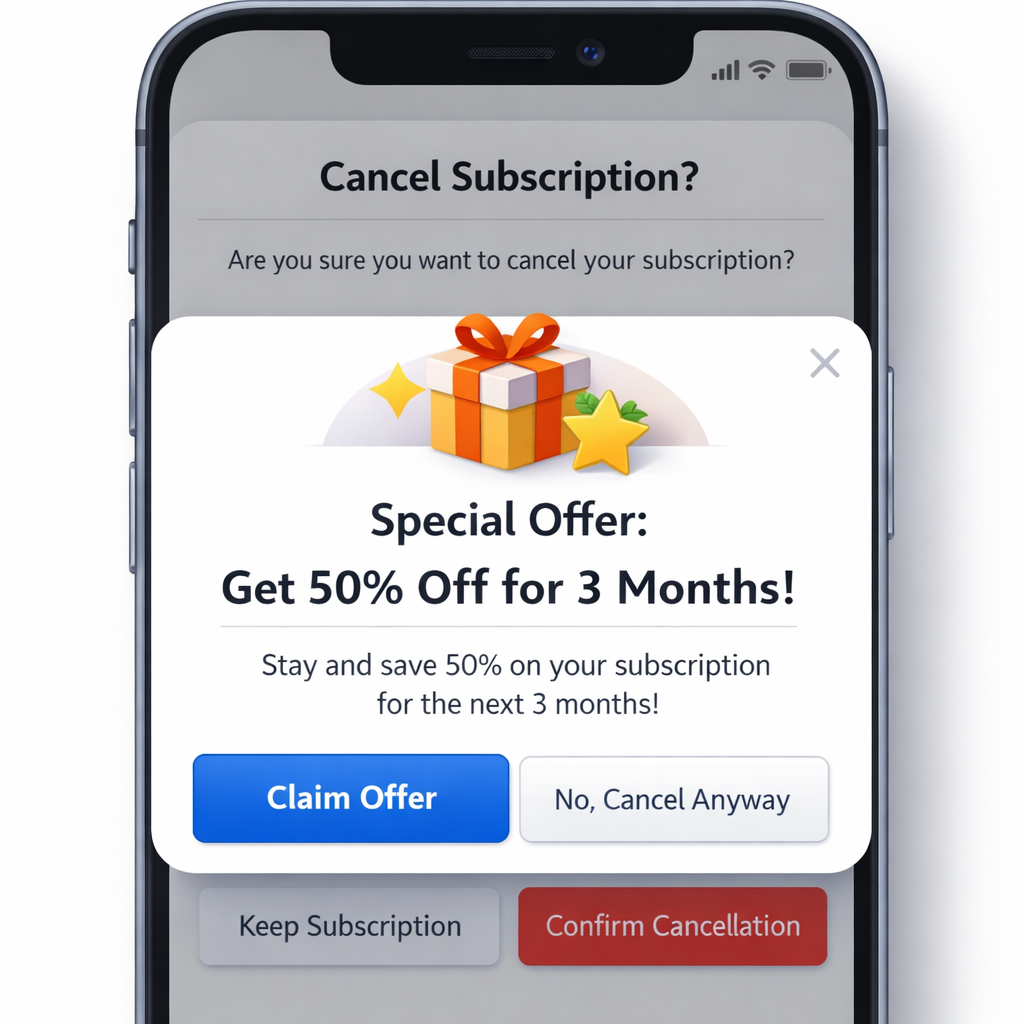
Apple has introduced a new feature aimed at helping developers hold onto subscribers before they decide to cancel. Called Retention Messaging, this tool enables developers to show personalized messages—complete with text, images, or special offers—directly in the subscription cancellation flow. This lets apps try to sweeten the deal before a user reaches the exit point. Apple first revealed Retention Messaging at its Worldwide Developers Conference (WWDC) earlier this year; as of today, developers can start using it.
How Retention Messaging Works
Through App Store Connect, developers can set up messages tied to auto-renewable subscriptions. They can define which subscribers are eligible, the frequency of messages, and use the Retention Messaging API to tailor offers based on each user’s subscription details. API access must be requested. In total, developers can create up to 10 different retention messages per app, each linked to one or more subscriptions.
This feature is distinct from Apple’s 2024 Win-Back Offers, which allowed developers to provide discount or promotional offers after a subscription had already lapsed or been cancelled. Retention Messaging targets users while they’re still in the process of cancelling, offering an opportunity to retain them before they leave.
What Developers Should Know
Retention messages can include visual elements or offer-based incentives, allowing developers to get creative with how they engage users. Eligibility settings mean developers can pick subsets of subscribers—for example, long-term users or those on specific plans—and customize wait times between repeated messages. This grants significant flexibility in defining strategic retention touchpoints.
This functionality is intended only for auto-renewable subscriptions through the App Store. The rollout follows Apple’s documentation and support materials that guide developers on configuring message content, triggers, and delivery logic.
For developers who’ve been seeking more levers to minimize subscription churn, this adds a powerful new tool. It bridges the gap between a user deciding to leave and following through — a moment when targeted intervention may make all the difference.