Apple wrapped up October with a torrent of new hardware announcements, pushing boundaries with OLED screens, upgraded chips, boosted performance, and design overhauls across its Mac and iPad lineups. Here’s what you need to know about the newest MacBook Pros, iMacs, iPad Minis—and the fallout from its folding phone’s hinge issue.
PROLED OLED MacBook Pro Delivers Touch and Dynamic Island
Finally bringing years of speculation to life, Apple unveiled the MacBook Pro models equipped with PROLED XDR OLED touchscreens. These 14- and 16-inch machines introduce a Dynamic Island in place of the notch, bring back the illuminated Apple logo on the lid, and include a sturdier hinge design to better support touch interaction. While the display doesn’t yet support ProMotion refresh rates, these OLED models carry a $400 premium over their mini-LED siblings—even though they share the same M5 Pro and M5 Max chip options.
Boosted Performance: M6 Chips for MacBook Base and iMac
The standard 14-inch MacBook Pro has been upgraded with Apple’s new M6 chip. It now sports a 12-core CPU—split as 2 super cores, 4 performance cores, and 6 efficiency cores—and a matching 12-core GPU. It also gets newer wireless tech with the N1 chip, enabling Wi-Fi 7 and Bluetooth 6, and can run dual external 4K displays up to 165Hz, up from 144Hz. The newly refreshed 24-inch iMac similarly drops its M4 for M6, alongside improvements like faster SSDs, upgraded wireless support, and an option to choose between two or four ports, depending on the configuration.
iPad Mini Redesigned from the Ground Up
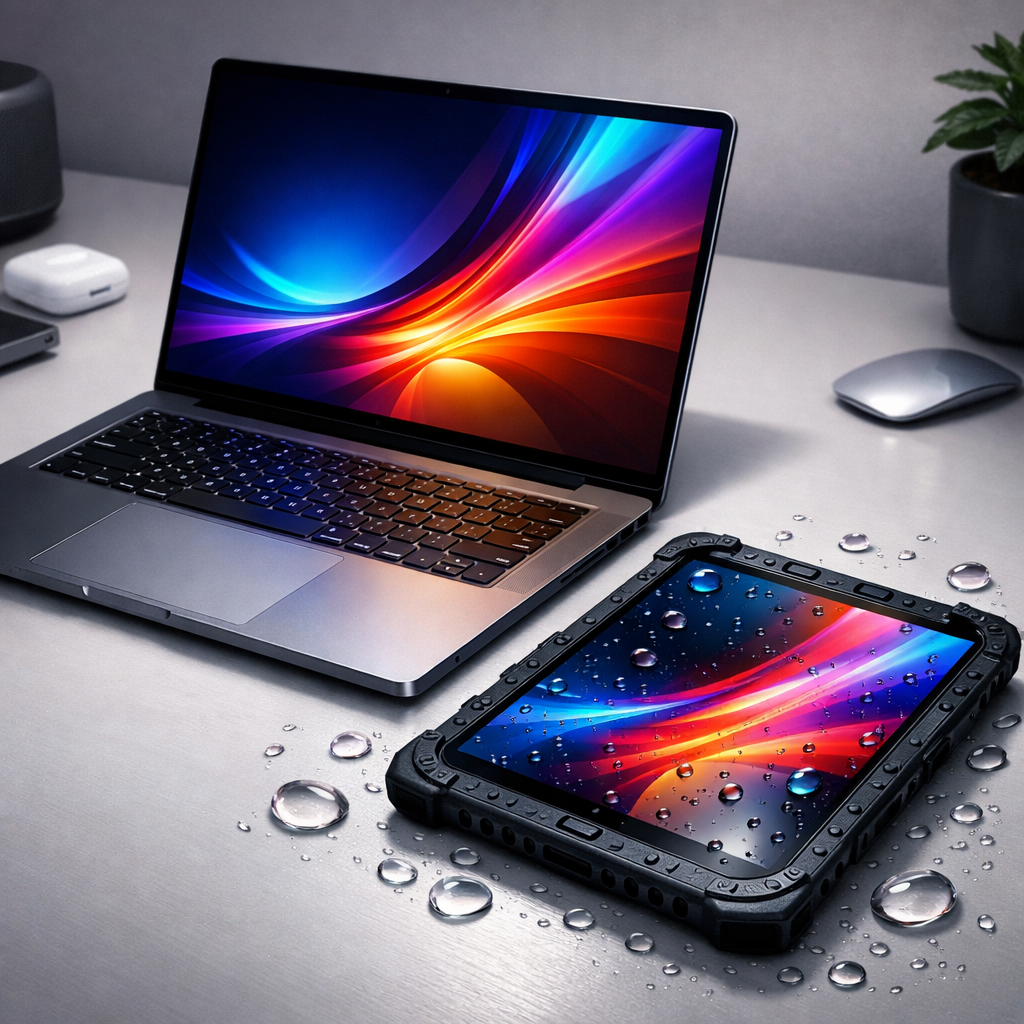
The iPad mini sees its largest revamp ever. The screen grows to 8.5 inches and switches to OLED, while the updated A20 Pro chip promises more power. A thinner and lighter chassis, IP67 water and dust resistance, a front-facing camera repositioned for landscape use, and a new Acoustic Display audio system that removes external speaker holes round out the design changes. Under the hood, an N1 chip adds support for Wi-Fi 7 and Bluetooth 6.
Mac Studio Now Configurable with 512GB RAM—At a Steep Cost
For users needing extreme workstation power, Apple has unlocked a Mac Studio configuration that bumps memory to 512GB. Teamed with the M5 Ultra chip’s 36-core CPU and 80-core GPU, this option ships at a towering price of $22,299, with the memory alone accounting for $15,500 of that tag compared to the base 96GB setup.
Hinge Headaches: iPhone Duo Users Report Screen Cracks
Just days after its launch, the iPhone Duo is drawing concern from some owners. Several early users say the interior screen has fractured near the hinge, with no clear cause beyond the complex folding system. Apple has acknowledged the issue for a “small number” of units and urged affected customers to reach out to AppleCare for replacements.
Across the board, these updates reflect Apple leaning harder into OLED, performance, and redesigns. The PROLED touchscreen MacBook Pro signifies a leap toward more interactive laptop experiences, while the M6 chip ushers in a mid-range bump for both portable and all-in-one Macs. The redesigned iPad mini underscores Apple’s desire to push features even in its smaller form factors.
What this means going forward: The OLED MacBook Pros are an early test of touch in Apple’s laptop ecosystem—one to watch if you work near screens all day. For creative pros and power users, the M6 iMacs and ultra-RAM Mac Studios deliver carving-edge performance. Also, the iPad mini upgrade now positions it as a more premium tablet with features like IP67 and OLED display, which may shift expectations for what a “mini” device should offer. Finally, the iPhone Duo hinge issue is a reminder that cutting-edge form factors still carry engineering risks.