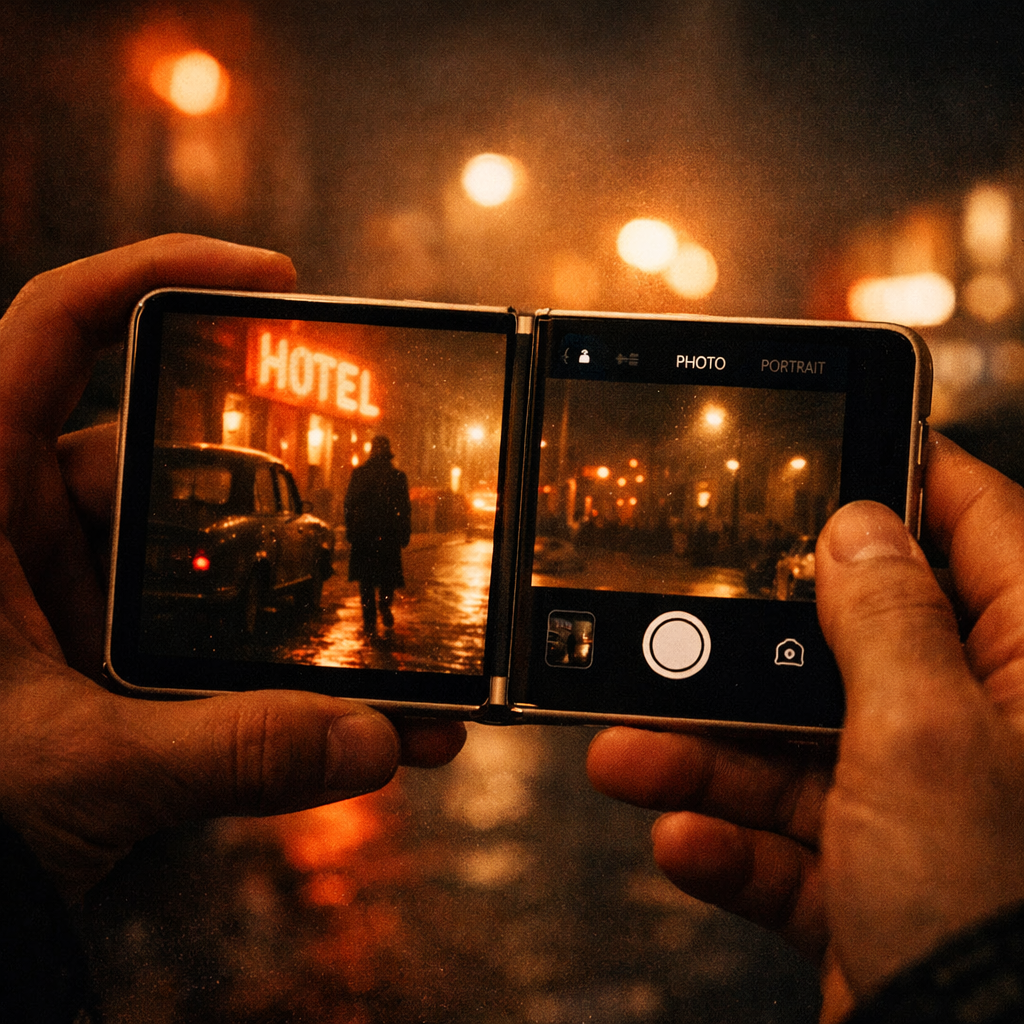
Film director Rian Johnson has teamed up with cinematographer Steve Yedlin to unveil a camera app for iPhone that mimics the signature image processing style of Johnson’s films like Knives Out. Called Chromagraph Camera, this app breaks away from the typical filter-over-photo model: it builds each image from raw data with its own bespoke pipeline. Users see their final look only after capture, not through the viewfinder.
Chromagraph Camera is a paid app priced at $12.99, with no in-app purchases. It’s already compatible with the iPhone Duo model, though reviewers suggest the adapted layout might need some polishing for smoother use. It includes local editing tools for adjusting color, exposure, grain, and halation—all without sacrificing the specially crafted “look” that the team has defined.
How Chromagraph differs
Unlike most photo apps that apply a filter on top of Apple’s own image processing, Chromagraph starts fresh. The app skips Apple’s built-in post-processing entirely and instead uses a processing pipeline designed by Johnson and Yedlin—supported by color science expert Eric Cameron. The result is a “look-first, finalize-later” workflow. Original raw files are stored in full quality, and users can view saved photos with the Chromagraph style applied live. Exports to JPEG or HEIC are handled when needed, and there’s even an auto-export setting to send every photo to the library as a processed version.
Johnson revealed he initially commissioned Chromagraph for personal use before deciding to release it widely. He felt existing third-party apps didn’t offer the combination of style control and editing tools he wanted. Now, it allows one intuitive UI experience that directly integrates his preferred visual effects, while keeping the flexibility of raw capture.
Within the App Store, Chromagraph has quickly risen to become the top paid app in the Photo & Video section, reflecting strong interest from users looking for more cinematic control without complex workflows.
This launch arrives amid growing critiques of how aggressively modern smartphones—particularly iPhones—handle image processing. As computational photography becomes more powerful, many users have looked elsewhere for control over color, tone, and texture rather than accepting opaque built-in processing. Previous apps like Halide’s Mark III and Process Zero have also tried to address that gap.
Johnson, Yedlin, and Cameron say Chromagraph isn’t about restoring realism—it’s about giving creators control over how their images feel. Key characteristics include grain, halation (the light bleed around bright objects), and tones chosen to match Johnson’s film style. It’s not a simple preset, but a fully custom processing style baked into the app’s core.
What this means is a shift further toward visual ownership for photographers and filmmakers, especially mobile creators. Chromagraph suggests a future where users can bypass built-in automatic styles and instead choose or build entire pipelines that reflect individual artistic vision.
Why this matters. Chromagraph isn’t merely another camera app—it marks a turning point in mobile photography. It shows that creators want more than filters, more than automatic enhancements; they want to own their visuals from the moment light hits the sensor. For iPhone users, Chromagraph offers a way to make phone photography feel cinematic without lugging around extra gear.