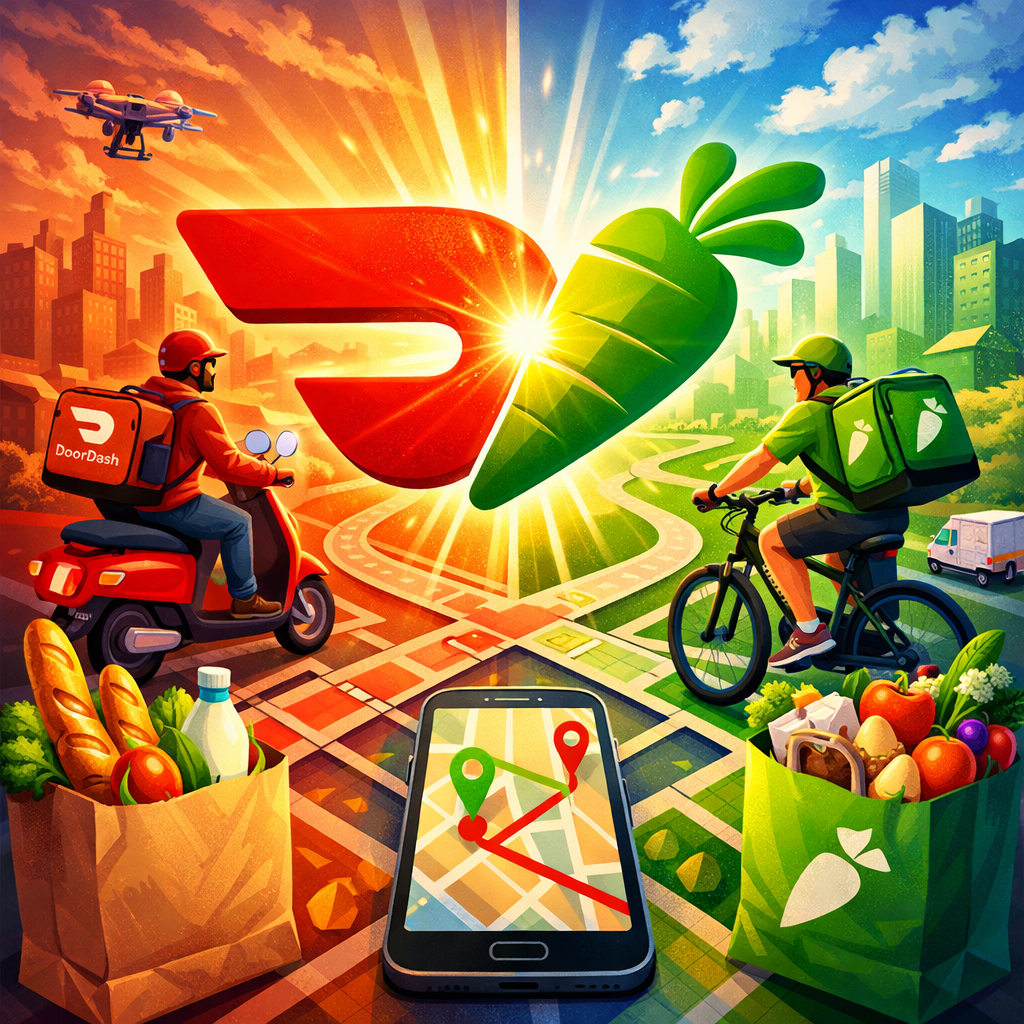
Today marks a major shakeup in the delivery industry as DoorDash announced it will acquire Instacart for $17 billion. The deal values each Instacart share at $65, a deal approved by both companies’ boards. The merger combines DoorDash’s strength in restaurant-to-door delivery with Instacart’s leadership in grocery logistics and technology.
Merging Complementary Strengths
DoorDash plans to leave Instacart’s branding, app, and enterprise offerings intact, operating both companies independently until the transaction closes. Instacart’s advanced grocery tech, retailer relationships, and Instacart’s experience selecting produce, substituting items, and handling perishables will merge with DoorDash’s robust logistics network and massive consumer reach. Together, the combined entity aims to provide more seamless delivery, enable grocers to build their own online platforms, and offer more efficient fulfillment options. Cost savings and delivery speed are expected to improve as DoorDash integrates its own fulfillment services with Instacart’s grocery operations.
Why Now—and What This Means
Instacart currently has a market cap exceeding $13 billion, with its stock up about 25% year to date. The timing seems to reflect growing competition in online grocery delivery, prompting Instacart to strike while its valuation remains strong. Previous talks with Uber ended without a deal, leaving the way open for DoorDash to step in. Closure of this transaction is expected in late 2027 or the first half of 2028.
This deal reshapes the delivery landscape in dramatic ways. Grocery delivery has long been a tough business—balancing perishable goods, granularity, speed, and low margins. Instacart has spent years refining grocery logistics; DoorDash has built a sprawling delivery network and strong local-store relationships. By combining forces, they aim to provide capabilities to smaller grocers for building their own online ordering systems, lowering delivery costs, and offering faster, more reliable service.
When it closes, this deal could force competitors to reconsider their strategies. Amazon, Uber Eats, regional grocery chains—all will now need to respond to a DoorDash/Instacart juggernaut. For retailers, the merged entity represents both opportunity and risk: access to better tools and scale, but also tighter dependence on a single service provider.
And yet, integration carries challenges. Maintaining Instacart’s identity, managing overlapping services, preserving customer trust, and navigating regulatory scrutiny are all hurdles awaiting the combined companies. Antitrust regulators will surely examine how this deal affects competition in both grocery and restaurant delivery.
Bottom line: this $17 billion acquisition isn’t just a consolidation—it’s a bold bet that the future of delivery hinges on owning both the logistics and the grocery tech. What gets built from this merger—and whether it can balance scale, cost, speed, and quality—will define the next era of online commerce.
What to watch for: How DoorDash integrates Instacart’s grocery services into its fulfillment operations; how this affects competition and pricing; and how regulators respond to this major consolidation in the delivery space.