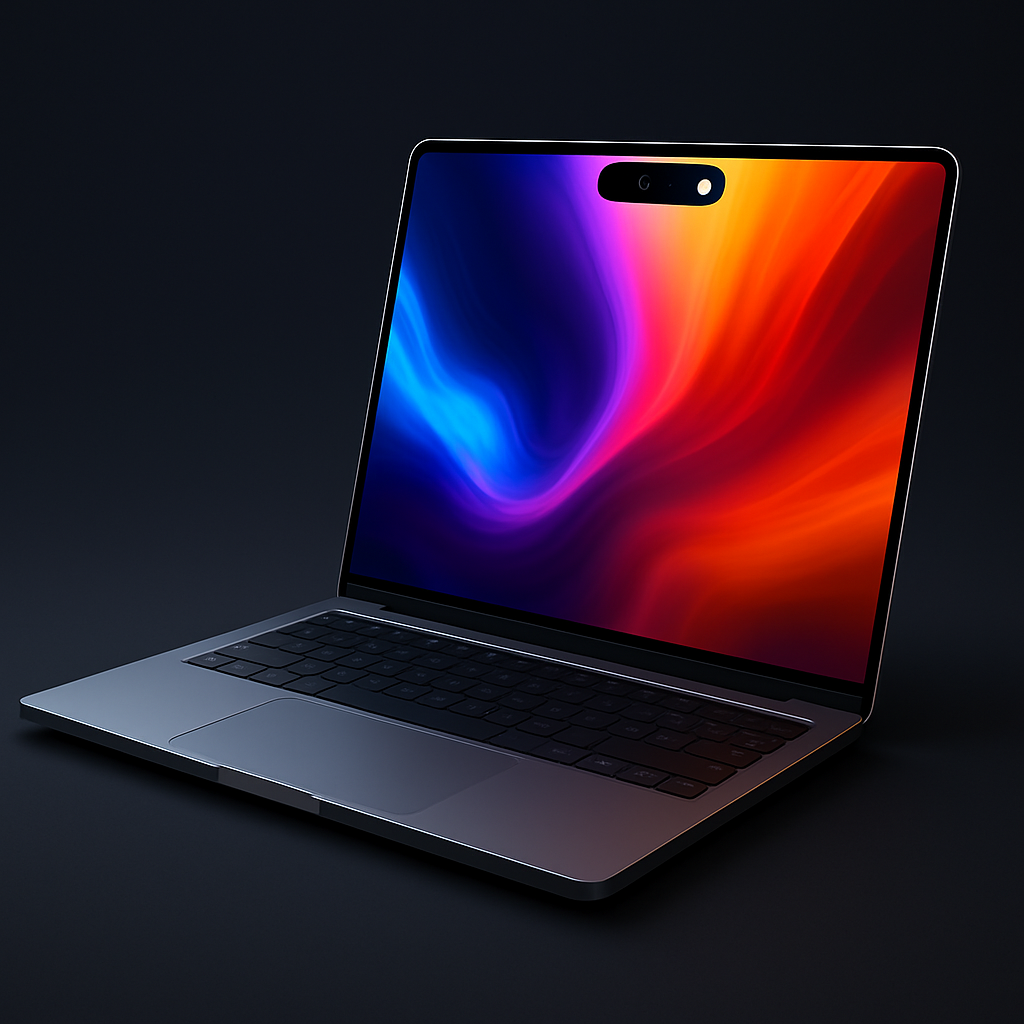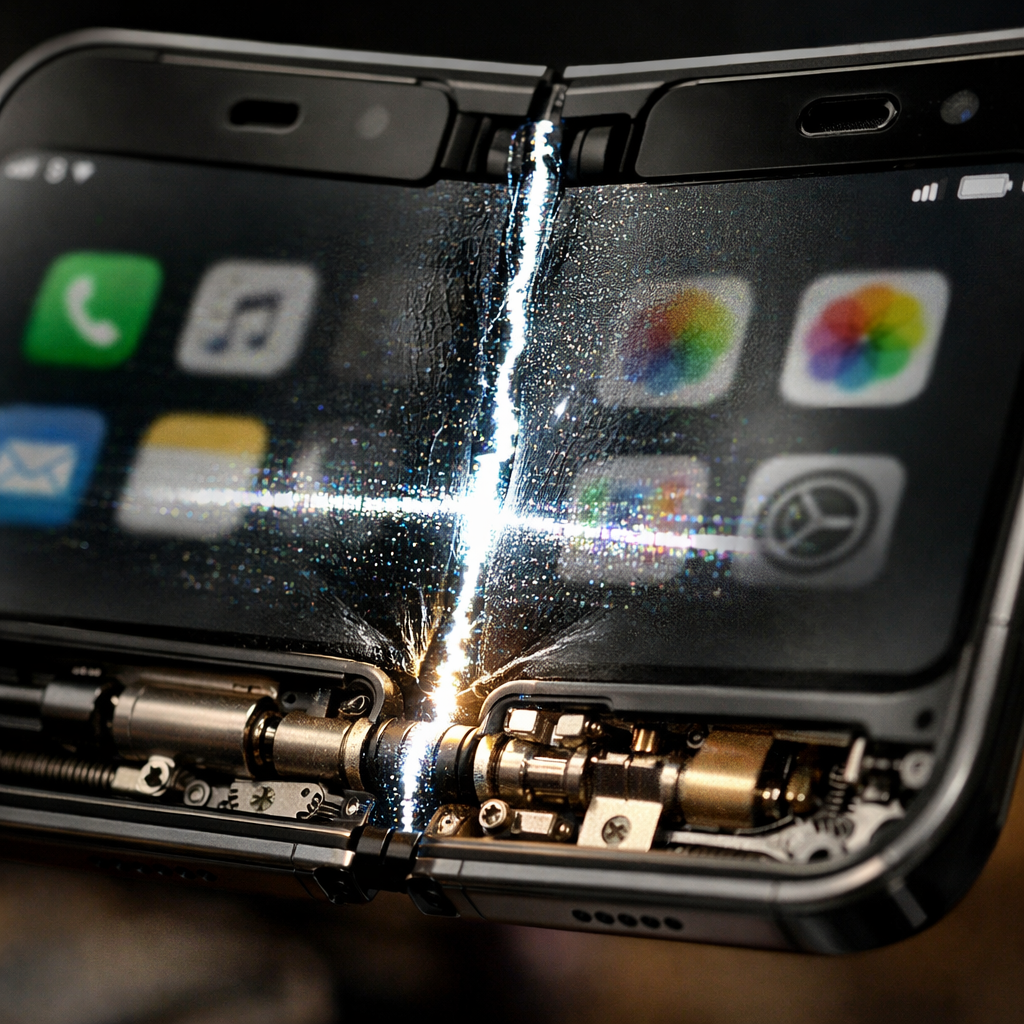
Apple has confirmed that a small number of its new foldable, the iPhone Duo, are afflicted by display cracks along the hinge. Early user reports surfaced immediately after the phone’s launch on October 23, showing damage on the inner 7.6-inch OLED panel at the fold, often accompanied by bright white pixel blocks and horizontal lines.
What Users Are Experiencing
Owners have posted alarming cases: one in Australia said the screen cracked after just six hours and under 20 openings. Social media threads report that many instances share similar symptoms—damage forming beneath or near the central hinge along the crease, with streaks extending down the display. Several users claim their Duos failed during setup or initial handling.
Investigations Point to a Hinge Flaw
Technical teardowns by iFixit and independent researchers suggest the root of the problem might be a design or manufacturing defect in the hinge mechanism. One theory holds that a central support bar in the hinge may not fully retract when the phone folds, creating interference with the OLED panel. Another observed issue is a narrower “link” in the hinge that could snap under stress, letting internal parts press up against the display. These findings match the typical crack locations users are reporting.
Apple’s component replacement policy requires the entire inner display assembly to be replaced when hinge damage is present, though the company has not officially launched a specific repair program tied to these failures.
Company Response and What You Should Do
In response to rising complaints, Apple issued a statement acknowledging the issue: it affects a “small number of units” and invites users experiencing inner display problems to contact AppleCare for replacements.
Several owners have managed to get their devices replaced in Apple Stores, though availability of replacement units is limited, especially through carrier channels. Without AppleCare+, replacing the inner display can cost as much as $999 in the U.S., while the cover glass layer alone runs $49—or $99 and $19, respectively, with coverage.
Apple’s support documentation on hinge issues covers symptoms such as hinge looseness, unexpected noises, or damage to the enclosure. It also advises removing third-party cases or screen protectors and checking for debris. However, it states that hinge damage cannot be addressed without replacing the full inner display assembly.
How Widespread Is This?
The number of reported breaks is still small relative to the number of devices sold—likely hundreds of thousands or more. Early tests, including one robot-fold durability trial with over 32,000 folds, have not replicated the issue. However, reports are emerging from multiple countries, and patterns are consistent across user experiences.
For those who already own an iPhone Duo, keep an eye out for unusual resistance, clicking, or tightness in the hinge—the kind of warning signs users describe just before damage appears. Avoid putting pressure on the center of the inner display when closing it, and regularly inspect the hinge area for dust or misalignment.
What this means:Apple’s first foldable phone may be facing early design or assembly weak points that could affect reliability. The hinge mechanisms in foldables are famously difficult to engineer; any flaw not caught before mass production can lead to real problems post-launch. For Apple, time will tell whether this becomes a minor batch issue or something that demands a broader fix. Moving forward, owners may want to insist on inspection of pre-delivery units, and Apple will be under pressure to clarify how many units are affected and what measures will prevent recurrence. What to watch: whether a formal repair program is announced, whether replacement stock improves, and if future production tweaks reduce claims of failure.