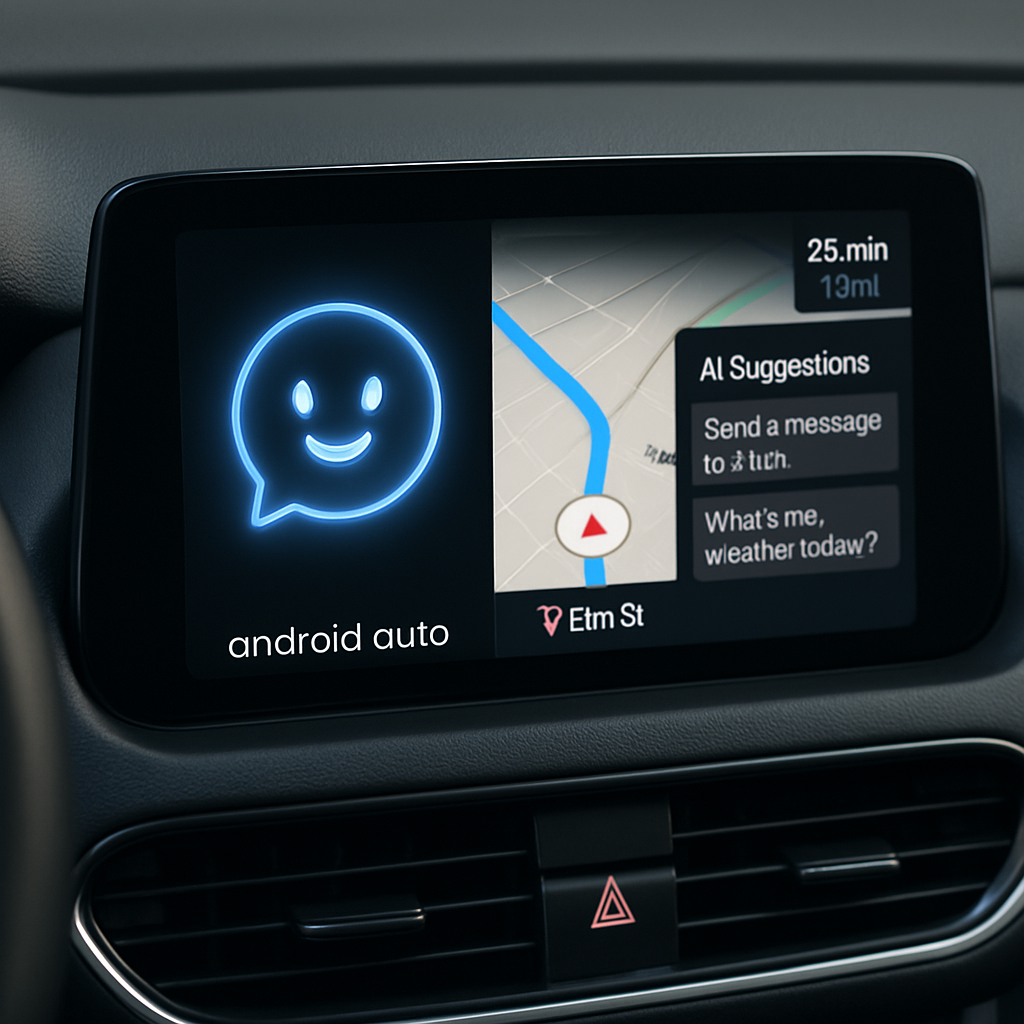
Google is expanding its Gemini AI with a new “Personal Intelligence” feature for Android Auto, with Android Automotive slated for a rollout in the coming months. Starting today, drivers using Android Auto will see responses shaped by their Google data—Gmail, Calendar, Photos, Maps, Search, and YouTube—without needing to specify every detail in their prompts. On Android Automotive, the system will behave similarly when the user’s phone is connected in the car. Personal Intelligence is optional; functions still work normally without activation.
What Personal Intelligence Adds
Once enabled, the feature lets Gemini tap into personal data to deliver richer, context-aware interactions while driving. Users could ask, “What’s my flight gate? And is my flight on time?” or “Take me to my doctor’s appointment,” and Gemini would pull together relevant info from emails or the calendar to answer in one go. It also learns preferences—such as dietary restrictions or favored atmospheres—so you can say “find me an indoor restaurant along my route that matches my usual vibe” instead of giving full criteria every time.
For tasks that normally require stopping and digging through past info, Personal Intelligence can save the effort. If you ask “Find the car wash from the photo I took last week and navigate there,” Gemini will locate the photo and set the navigation. Similarly, you can follow up with unfinished tasks—“Take me to the coffee shop we were talking about yesterday”—and Gemini will handle the rest.
Privacy, Opt-in, and Availability
Personal Intelligence is opt-in. If it’s enabled in the Gemini app on your phone, it will carry over to Android Auto. Without it, Android Auto still supports basic functions such as music, navigation, calls, and general questions—but won’t surface personalized details. On cars with Android Automotive, you’ll get personalized responses only when your phone is physically connected in the vehicle.
The feature is launching now for Android Auto. Drivers with compatible vehicles should start seeing it roll out imminently. Android Automotive users will have to wait a bit longer, as Google works to integrate the functionality into built-in car systems.
As cars become smarter, tying AI to personal data can make in-car assistants dramatically more useful—but also raises stakes around privacy and control. With this launch, the balance hinges on trust and how clearly Google manages access and opt-in decisions. What to watch now: how seamless the feature feels during real-world driving, whether data access stays transparent, and how much personalization feels like convenience versus intrusion.