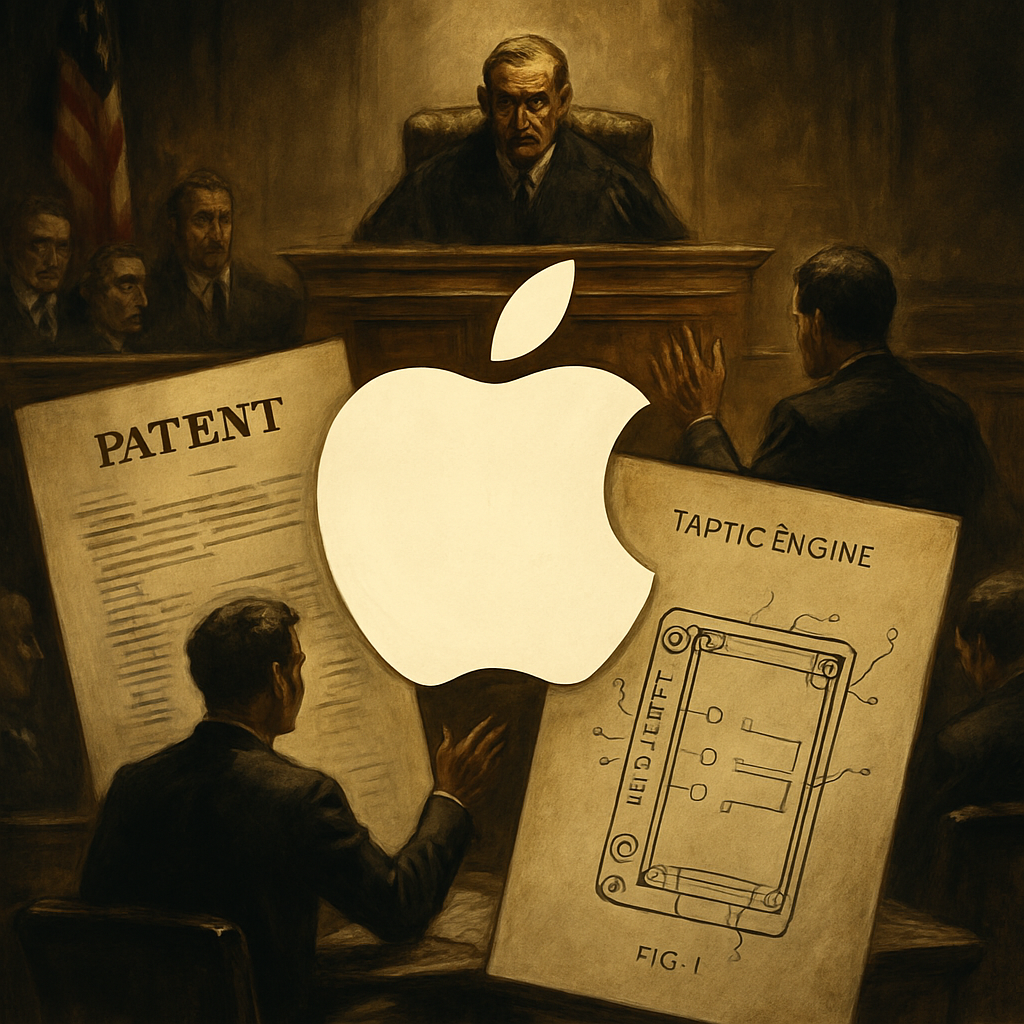
Apple has launched a legal assault on the $5.7 billion patent infringement verdict handed down in favor of Taction Technology. The lawsuit concerns two patents related to the Taptic Engine, the core component behind haptic feedback in Apple’s iPhones and Watches. The company has filed a motion arguing the damages awarded are not just wrong—but baseless.
Why Apple Says the Verdict Is Unfounded
The jury’s award marked what Apple calls the largest patent verdict in history by more than $3 billion. But Apple argues the verdict collapses under its own weight because Taction failed to provide credible evidence showing actual value or reasonable royalties tied to the patented technology. The motion asserts that without a solid financial basis, what remains is rampant speculation rather than justice.
The woes for Taction began before the award. A damages expert’s testimony was initially excluded, then barred completely after the court found flaws in prior licensing-based royalty models presented. Apple says that left jurors with nothing to anchor their calculation—Taction didn’t show what its patented technology was worth, only asking the jury to pick whatever they deemed reasonable.
Infringement Claims Under Fire
Apple’s filing challenges foundational claims of infringement. They argue that one of Taction’s technical experts crafted testing conditions specific to the courtroom, rather than replicating how the technology is described in the patents. Specifically, Apple says the expert used a test that measured how the electronic control system regulates vibrations, not whether the physical hardware generates the vibration patterns the patents require.
The company points out that other tests—outside of the lawsuit—show different results: Apple’s own pre-litigation testing and contentions introduced during the case reportedly demonstrate a “peaked response” in the Taptic Engine, which the expert conceded is not consistent with the “highly damped output” the patents demand.
Apple also contends that if Taction’s interpretation of its own patents is upheld, it would render the patents’ claims invalid. Because the methods used to assess infringement contradict the methods described in the patents themselves, Apple says there’s no clear marker for what the patents even cover.
As a remedy, Apple is asking the court to overturn the verdict entirely, rule in its favor of no damages or infringement, or at the very least grant a new trial that reexamines the issues of infringement, validity, and the financial scope of damages.
The verdict has not yet become final. The court is now considering whether to uphold the $5.7 billion award, throw it out, or demand a do-over on one or more grounds.
Why this matters: If the court accepts Apple’s arguments, it could dramatically shift how juries assess damages in patent cases, especially in tech. The case underscores risks in relying on expert testimony and legacy licensing deals when calculating royalties. Watch closely—for tech developers, patent holders, and giants alike, the outcome will reverberate through future litigation strategies.