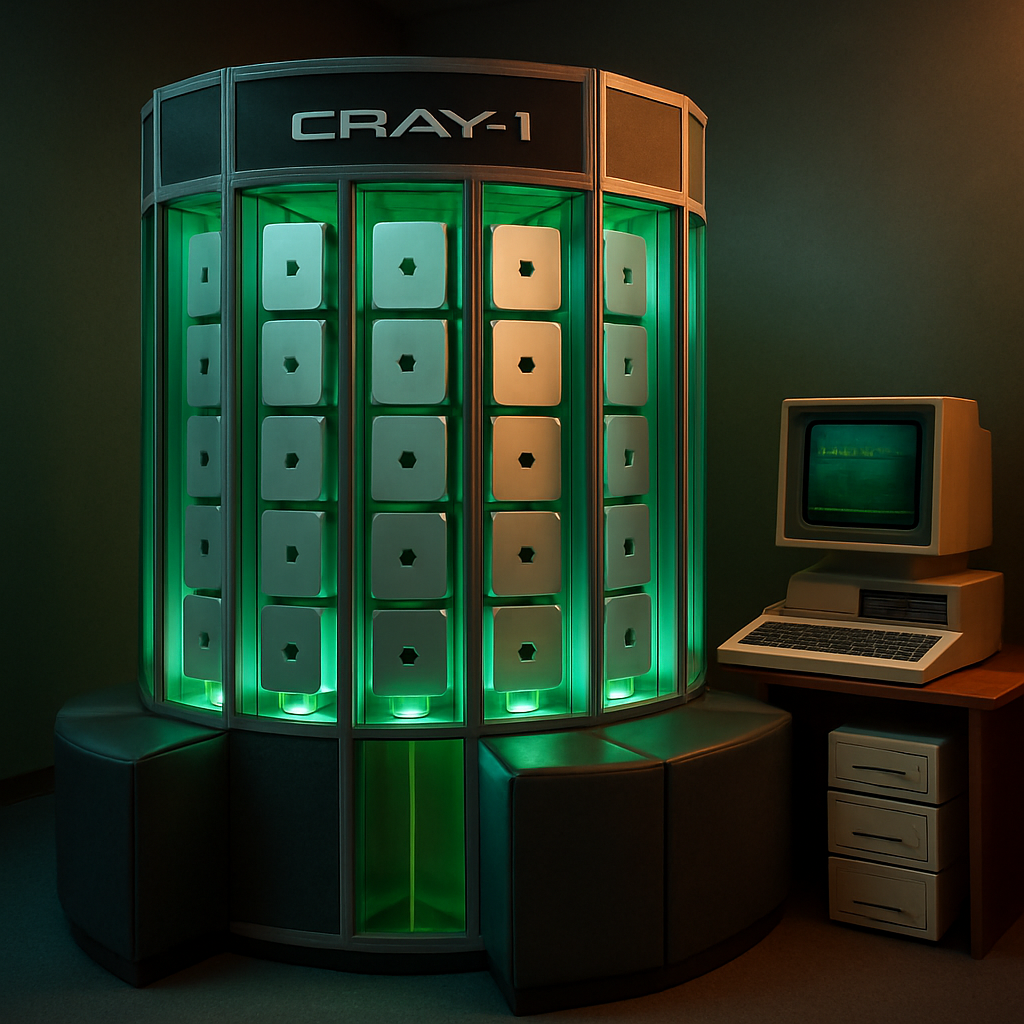
A museum in Spain has recreated a full-scale model of the Cray-1 supercomputer using 30 Intel Mac minis—and the result outpaces the original in raw speed. Built as a tribute to both the Cray-1’s 50th anniversary and Apple’s founding, this replica produces performance in the teraflop range while mimicking the look of the original machine.
Replicating a Classic—with a Modern Twist
The Museo de Historia de la Computación in Spain spent 18 months constructing a visual duplicate of the Cray-1 using retired Intel Mac minis. Built to match the original’s vertical tower design with retro-green and clear glass panels, the exhibit assembles 30 Macs, most being 2012 models with upgradable SSDs and RAM. The cluster includes 25 units with dual-core i5 CPUs and five quad-core i7 machines, giving a total of 64 CPU cores.
Instead of copying the original’s vector-processing architecture, the replica runs macOS Mojave 10.14 across its nodes. It uses Message Passing Interface (MPI) to coordinate tasks across the multiple machines, treating each Mac mini as a node in a parallel cluster.
Performance Gains and Future Expansion
The original Cray-1 delivered about 160 megaflops at peak. The Mac mini cluster averages around 1.3 teraflops—roughly eight-plus times more processing power—and can reach up to 1.5 teraflops in its current configuration. However, the tower is only about half full; efforts are underway to obtain 70-80 additional Mac minis to completely fill the chamber and push performance even higher. Filling out the roster could even put the exhibit in contention for the Top500 supercomputer rankings.
Being a collection of Mac minis, the setup is remarkably quiet. Designers removed the bases of each unit to improve passive cooling and mounted them vertically on steel racks with aluminum mounts. The entire rig runs at only 30 to 33 decibels. Noise comes mostly from two gigabit Ethernet switches at the bottom, which the museum plans to replace.
The replica includes a themed terminal styled to resemble supercomputer control stations of the 1970s, complete with retro floppy drives and vintage shell keyboards. It also connects to two real Cray C1X supercomputers from 2004, which are part of the museum’s collection. The museum is located along Camino de Toril in Majadas, Spain, and is open for guided tours on Saturdays.
What this project shows is how much computing power has advanced: an array of former consumer-grade desktops now easily outpaces a famous supercomputer. Using older Intel Macs is less conventional than leaning on ARM architectures or GPUs for high-performance work, but it underscores that sometimes readily available hardware can be repurposed in unexpected ways. As more nodes get added, the rank and capabilities of this replica will be worth keeping an eye on—for enthusiasts, retro-computing fans and performance seekers alike.