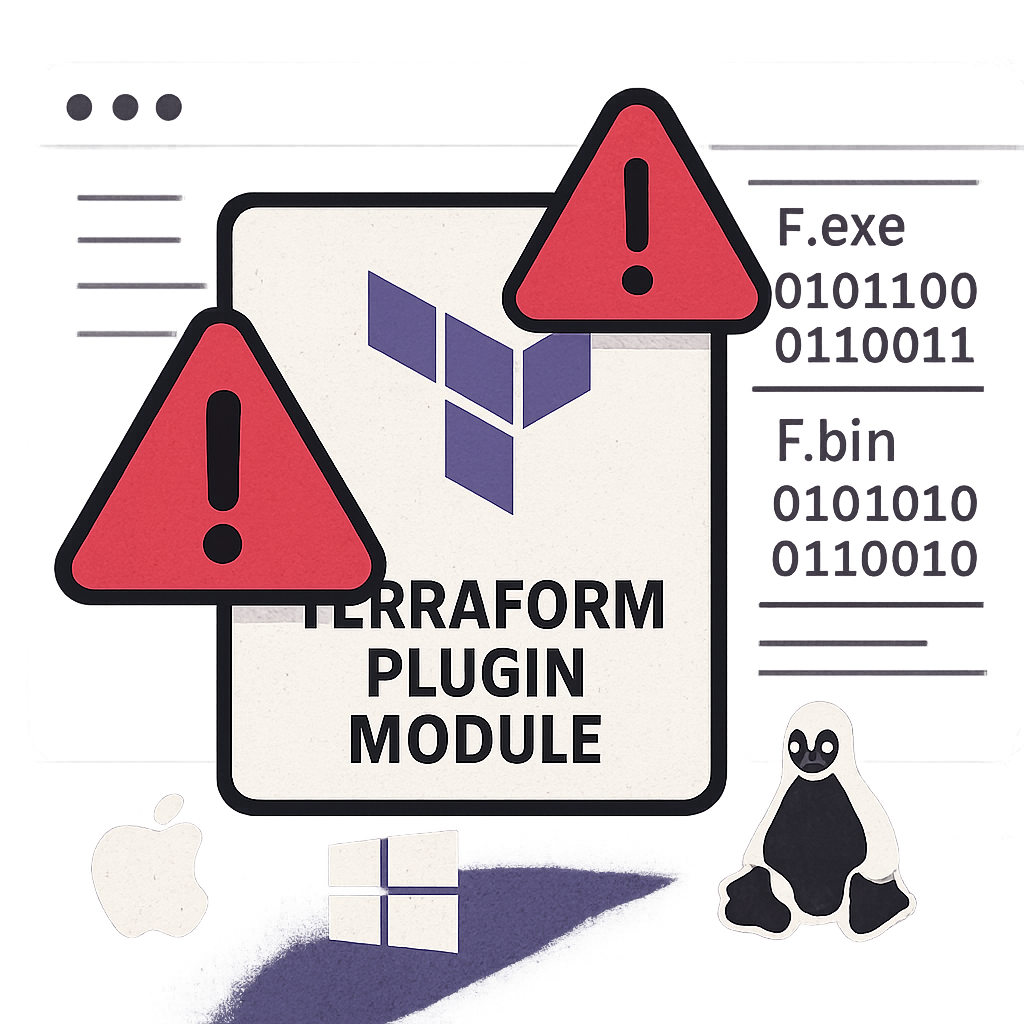
A sophisticated supply-chain campaign is infecting developer machines via compromised Terraform provider workflows, deploying malware against macOS, Linux, and Windows environments. The Trojanized provider masquerades as a legitimate AWS plugin, exploiting trust established in development pipelines to execute harmful code while maintaining operational normalcy. DevOps engineers, cloud teams, and Web3 or cryptocurrency projects are especially under threat, as Terraform providers run on systems that often store sensitive credentials, API keys, and deployment rights.
How the Attack Chain Works
Security researchers spotted the campaign in July 2026 and traced it to a threat actor commonly known by several names including TraderTraitor, UNC4899, Pressure Chollima, and Slow Pisces. While the behavior and targeting matches this group, attribution remains uncertain due to insufficient unique code, infrastructure, or cryptographic evidence.
The malicious provider—named “terraform-provider-awsbeta_v1.0.0”—is written in Go and replicates the structure of a standard AWS Terraform plugin. On load, it checks for the absence of a session.lock file in the temp directory. If missing, it downloads a Bash loader called “safari_updater,” executes it in background, and creates the lock file to avoid repeating the process.
The loader examines the OS and CPU architecture to determine which payload to fetch. It supports Unix-like shells on Windows (such as Cygwin, MinGW, or MSYS) in addition to native Linux and macOS environments. Payload files are disguised with benign-looking.woff web font extensions, embedding encrypted executables following a placeholder font section separated by a marker. These are decoded and decrypted using AES-256-CBC.
Malware Capabilities: FLATROOF and ROOFDECK
Once deployed, the primary malware—called FLATROOF—is written in Rust and supports all three desktops platforms. It can gather system info, list running processes, manage files, download additional payloads, exfiltrate stolen data, execute arbitrary commands, and even uninstall itself. Persistence is achieved via Linux services, macOS logout hooks, or Windows registry Run keys.
FLATROOF specifically hunts for browser and wallet data. On Linux and Windows, it targets saved credentials from Chrome, Edge, Brave, browsing history, autofill info, shell history, and wallet-extension data from MetaMask, Phantom, Trust Wallet, and Rabby. On macOS it can steal Safari data including keychain contents and login credentials.
A secondary component, ROOFDECK, empowers attackers with remote control features. It can list files and disks, run shell commands, transfer files, manage background tasks, manipulate clipboard content, self-update, and delete its traces. Its command-and-control (C2) functionality is delivered through flexible channels like local config files, cryptographically signed Pastebin posts, or metadata on Nostr profiles.
Defense Measures & Indicators of Compromise
To counter this threat, organizations should enforce strict provider verification in Terraform workflows: only allow approved providers, validate checksums via lock files, review source addresses, and block lookalike domains. Monitoring system behavior is key—pay attention to Terraform launching unexpected shell processes, odd files appearing in temporary directories, strange.woff downloads, or executables running from user profile folders.
As part of broader security hygiene, implementing secure CI/CD practices—including code review, dependency management, secret control, and automated scanning—can reduce exposure before infrastructure changes are rolled out.
Indicators of compromise include file hashes tied to the fake AWS provider and loader, dozens of encrypted payloads disguised as fonts for different OS/architecture combos, and URLs used for payload downloads and C2 communication.
This attack demonstrates how supply-chain strategies continue to evolve, especially targeting developer tools and environments. Terraform’s plugin model has proven beneficial for automation—but its trust assumptions can be weaponized. The implications go beyond server infrastructure; local machines and credential stores are now primary targets.
Defensively, verifying provider authenticity, scrutinizing dependency flows, and maintaining visibility into all stages of the development pipeline are no longer optional—they are essential. Teams should also stay alert to domains and artifacts that mimic known provider names or extensions. The broader trend toward mixing infrastructure as code with distributed, third-party dependencies demands renewed attention to secure supply-chain management.