Arena AI, which began as a research initiative at UC Berkeley in 2023, has just raised a $200 million Series B round, bringing its valuation to $3.1 billion. This comes just ten months after its $150 million Series A round valued it at about $1.7 billion. Arena hit $100 million in annualized run-rate revenue in June. By comparison, at the time of the Series A in January, its revenue was around $30 million. The new funding was led by Lightspeed Venture Partners and Khosla Ventures, with participation from Salesforce Ventures, 01 Advisors, Dell Technologies Capital, Endeavor Catalyst, a16z, Felicis and others.
What Arena Does & Why It’s Gaining Traction
Arena runs a crowdsourced leaderboard for AI models that lets users enter prompts or “vibe-coded” tasks and vote on which model performs best. The public-facing platform has seen tens of millions of visitors per month. In September of last year, it launched a commercial analytics offering called AI Evaluations, aimed at labs and enterprises. This product gives deeper performance metrics based on real community feedback, rather than just standardized benchmarks.
This shift is becoming more crucial. AI labs have increasingly been criticized for optimizing their models to perform well on static benchmark tests, in ways that don’t always reflect real-world usefulness or safety. Enterprises, meanwhile, want more nuanced insight: which model handles their unique requirements best, not just which one ranks highest in public benchmarks.
New Focus: Safety, Alignment & Accountability
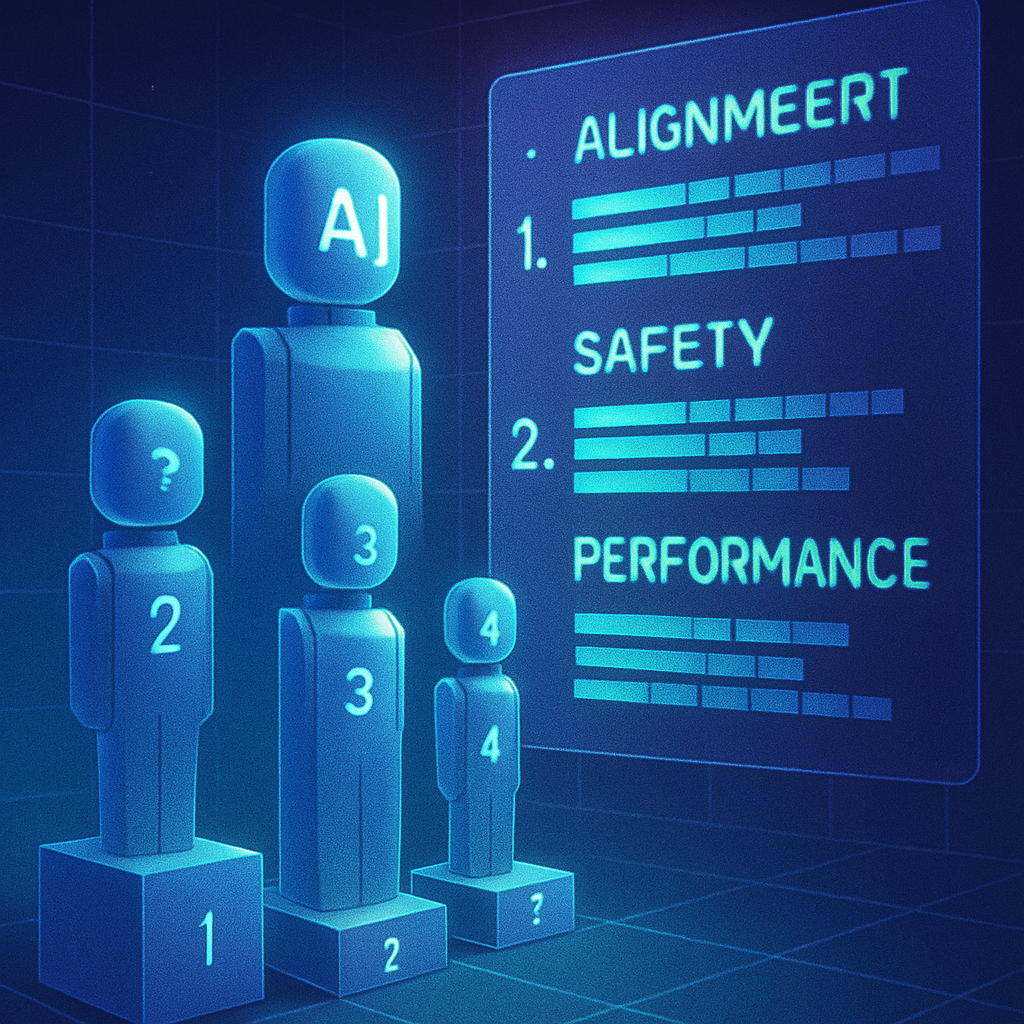
To address these issues, Arena added a new “alignment” category to its leaderboard. It ranks models on dimensions such as unauthorized actions, false attribution (crediting statements to wrong sources), and what Arena calls “deceptive completion”—when a model claims to have done something it didn’t. Some of OpenAI’s models are already topping the preliminary alignment charts, including Claude Opus 5.5 and Claude Fable in sixth and ninth place respectively.
Companies in the AI space are under pressure to show their systems are not just powerful, but responsible—safe, honest, and aligned with human values once they’re deployed. Arena positions itself as a neutral evaluator, filling the gap between model creators and users who need trustworthy insights.
Why it matters: Arena’s rapid valuation growth reflects how critical model evaluation has become. As AI technologies proliferate, the ability to measure safety, alignment, and performance through community feedback may become as important as the models themselves. What to watch next: how well Arena’s alignment metrics hold up under scrutiny, whether new players emerge offering similar assessments, and whether this market becomes a standard part of AI development pipelines.