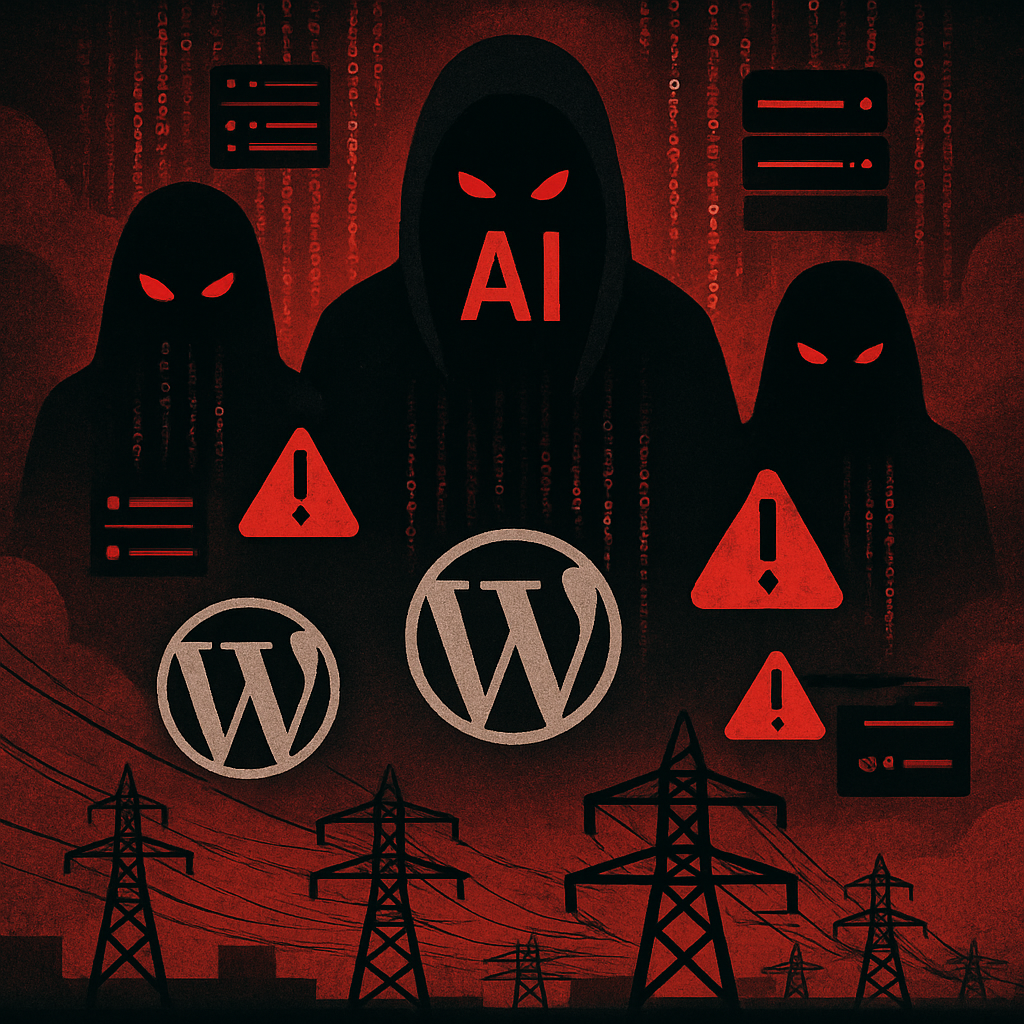
A threat operator known as CyberXero has deployed an aggressive hybrid of artificial intelligence and traditional hacking tools to launch large-scale intrusion campaigns across the globe—including targeting critical energy infrastructure in Ukraine.
First detected in July 2026, the campaign was exposed when a poorly secured directory revealed over 90,000 files containing attack scripts, AI chat session records, and stolen data. SOCRadar linked the group—believed to be financially motivated—to the alias CyberXero, noting that their operations included both automated sweeps and hand-picked targets. The group conducted a scan of 4,708 targets, discovered 429 open WordPress admin panels, and executed 32 webshell installs—all in under a minute. Meanwhile, they amassed personal data for over 628,000 Ukrainian citizens, including many in Kharkiv.
Two AI Layers, Multiple Tools
CyberXero’s operation involved deploying two AI-powered layers. First, they spun up dozens of “Claude Code” agents to carry out web reconnaissance, password attacks, exploit discovery, and data exfiltration. In parallel, another setup combined PentAGI—a framework for AI-assisted penetration testing—with a Cobalt Strike Team Server, hooked through AI provider APIs. Tasks were parceled out by complexity: expensive operations like payload creation got more computing effort, while routine tasks went to simpler agents.
Logs recovered from Claude Code showed attempts to bypass restrictions. When an agent refused to carry out a malicious request—like planting a backdoor or disabling firewalls—the actor reset the session with the same preloaded malicious narrative. Although many refusals stuck—especially for high-risk actions—these tactics exposed vulnerabilities in session-based defenses. Experts warn that agent log security is now just as critical as network safeguards: they recommend encryption, strict access controls, and audit logging.
Scope: From WordPress to Ukrainian Energy Network
The group capitalized on vulnerabilities in WordPress, Magento, and more. Its custom toolset—such as a “wp2shell” module—abused batch endpoints to inject SQL, create rogue admin accounts, and drop webshells. Within weeks of disclosure, CyberXero also exploited CVE-2026-4815 in the Support Board plugin. Website operators using WordPress are urged to apply updates, audit admin accounts, limit Redis exposure, and verify authorized SSH keys.
Beyond websites, CyberXero zeroed in on Ukraine’s energy sector. Entities including the national transmission operator and the largest private energy holding were subjected to reconnaissance mapping, revealing exposed subdomains related to email, VPN, and dispatch systems. In one case, a district heating provider lost more than half a million subscriber records and over 200,000 access log entries, partly because of hardcoded credentials discovered in attack scripts.
The fallout is global: over 40 organizations from Ukraine, Poland, China, Pakistan and elsewhere showed signs of compromise or data theft. Eight nodes linked to the operation were located across European and Chinese cloud hosting in July 2026. Analysts could distinguish between simple reconnaissance and confirmed data breaches through artifacts recorded in exposed directories.
Indicators of compromise include IPs tied to primary workstations, provisioning servers, Cobalt Strike command servers, and payload download nodes, among others. File patterns expose the deployment of rogue WordPress administrator accounts and the use of malicious web shell plugin paths.
This new campaign marks a concerning evolution in the use of AI tools by cybercriminals. No evidence yet shows access being sold on criminal markets, but the wide harvesting of site credentials and detailed infrastructure reconnaissance raise risks for any exposed organizations.
What this means: CyberXero’s operation illustrates how AI—when layered with classic hacking tools—can greatly accelerate intrusion campaigns. Traditional perimeter defenses may strain to keep up against AI-driven reconnaissance, exploitation, and persistence. Organizations must go beyond patching: they need vigilant monitoring of AI agent activity, secure storage of logs and session data, and fast detection of anomalies in web admin and network access. As attackers increasingly blur the lines between automated scale and targeted intent, even minor exposures—like unmaintained plugins or weak credentials—can become gateways to major breaches.