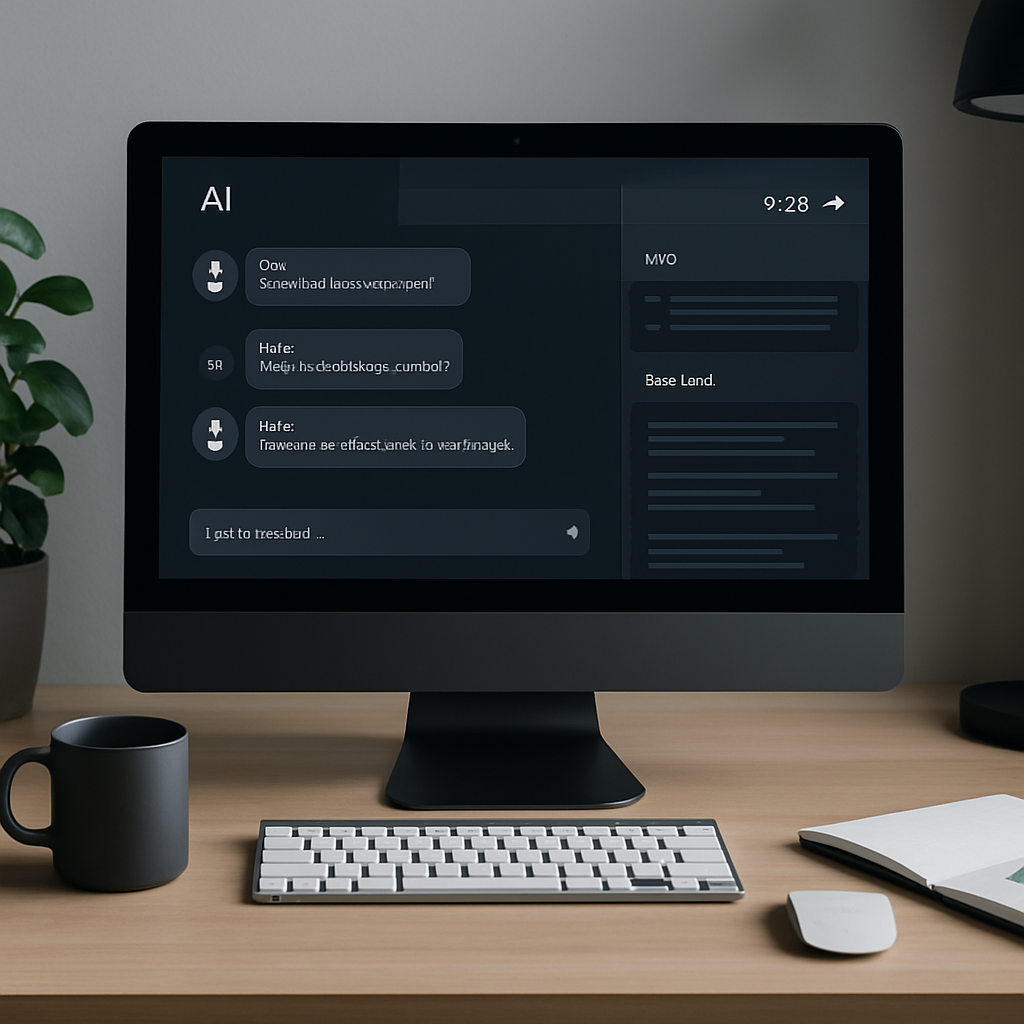
Hark, a fledgling startup led by serial founder Brett Adcock, has rolled out Hark Pro — a privacy-first AI personal assistant designed to live on your computer. Long in the shadows since its founding less than a year ago, Hark aims to reshape how users interact with AI, positioning Hark Pro not just as another chatbot, but as a full suite assistant that handles digital life with nuance.
What sets Hark Pro apart
Hark Pro offers a full-screen interface that resembles an AI-native operating environment. Its layout features a central chat window, a feed suggesting actions (such as approving expenses or responding to emails), and “panels”: mini-dashboards showing info users care about. The interface’s background dynamically reflects local weather and time, delivering a more personalized feel.
Users link up their essential digital tools — email, calendar, hard drive, finance accounts — allowing Hark Pro to carry out tasks automatically, in addition to answering usual AI questions. In demonstrations, the assistant flagged overlooked tasks, like renewing car registrations, and even walked users through agency websites to complete them. Importantly, it shows browser navigation in a visible window when working online — a transparency measure aimed at trust.
Privacy, trade-offs, and upcoming hardware
Privacy is baked into Hark Pro’s identity. Leadership emphasizes that the platform isn’t trying to monetize user data with ads or internal profiling. Their goal lies in enabling the AI to learn how to support tasks, not build personality profiles. That said, giving the assistant access to your full digital life—email, documents, accounts—raises the privacy stakes significantly.
On the intelligence front, Hark built its model specifically for computer-based tasks. It trades off broader domain knowledge to boost speed and focus for workflows tied to your digital workspace. Compared to other tools like Muse or Instinct, Hark claims it may not be the fastest, but promises better end-to-end execution.
Looking ahead, Hark plans to enter the hardware space in 2027 with what they call an “AI-native” device designed to support their software. What that product form will take remains under wraps. Designers have explicitly rejected wearable cameras due to “creep factor,” suggesting something novel is in the works.
It’s easy to talk grand ambitions in AI, but Hark’s pitch is more modest: not building AGI or curing cancer, but designing an assistant that practically improves daily computer use. For users who want AI to more seamlessly handle life, Hark Pro could be compelling — if it delivers on both utility and privacy guarantees.
What this means: users are growing impatient with assistants that promise the moon but fall short in trust. If Hark Pro proves reliable and truly transparent, it could push major players to be more open about task handling, privacy, and model specialization. The device coming next could spell the real test — whether Hark builds something new or repackages existing concepts. In either case, the battle for next-gen personal AI will turn on not just features, but ethics and execution.