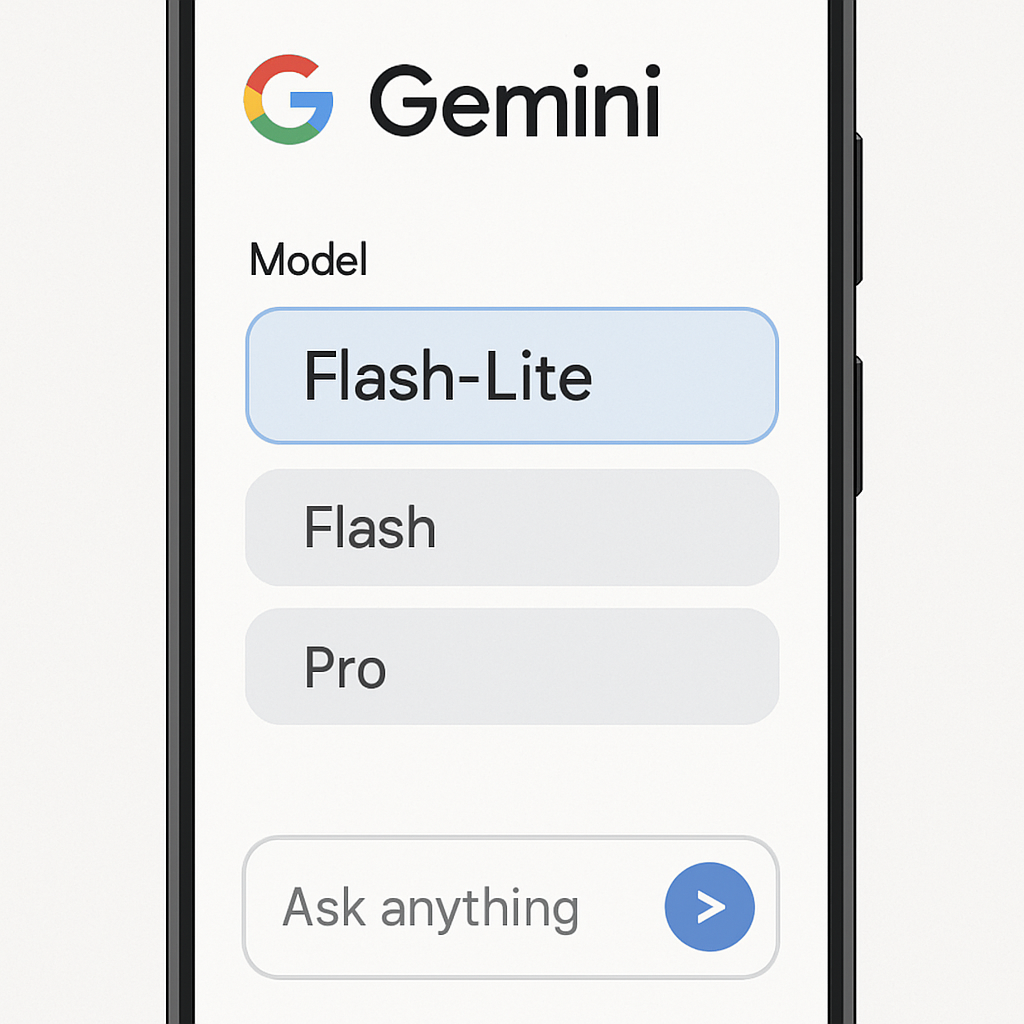
Google is preparing to tighten access to its Gemini AI models for users without a subscription and those on the AI Plus tier, effective October 9. Free users will be limited to the basic Flash-Lite model, losing access to both Flash (3.6) and Pro (3.1). AI Plus customers, who currently pay $4.99/month, will retain Flash along with Flash-Lite, but be cut off from Pro. Meanwhile, subscribers on the AI Pro and Ultra plans will continue enjoying full access, with Ultra customers gaining a new “Deep Think” mode for enhanced parallel reasoning.
What’s Changing for Gemini Users
Free Gemini users will see the most significant changes: only Flash-Lite will be available to them starting October 9, while Flash and Pro models will be off-limits. AI Plus users, already paying, will still get Flash-Lite and Flash, but not Pro. Those on higher tiers—AI Pro and Ultra—are unaffected, but Ultra tier members will benefit from the new Deep Think option, designed for more complex query resolution.
Google is also introducing three new effort-levels—“low,” “medium,” and “high”—across all available models later in October. These settings are expected to adjust the depth and completeness of responses, mirroring options from Google AI Studio and Antigravity. The more demanding the effort level, the more usage quota it will consume.
Why These Adjustments?
This shift follows compute-based usage policy changes that went into effect back in May. Google appears to be streamlining model offerings based on subscription tier, likely to balance resource usage and incentives for upgrades. For free and AI Plus users, access is narrowing; those who subscribe get more control, depth, and performance.
These changes will be communicated via email, especially for AI Plus users who will get details on when the limitations take effect for them. AI Pro and Ultra users will see their privileges maintained, with Ultra getting the bonus Deep Think mode.
What to Watch For: In coming weeks, users should look for the rollout of the new effort-levels and how Google enforces model access limitations. Proof of these changes suggests Google is doubling down on tier-based segmentation. How users adjust—or react—will be telling for Google’s AI business and users’ satisfaction.
Ultimately, this move pushes free users toward more basic tools, while layering advanced capabilities behind subscription paywalls. It’s a familiar strategy in cloud computing and AI: core access is broad, but premium features are gated. What may make these adjustments notable is how Google defines “premium” in the AI space, and whether the trade-offs in speed, capability, or cost feel fair.