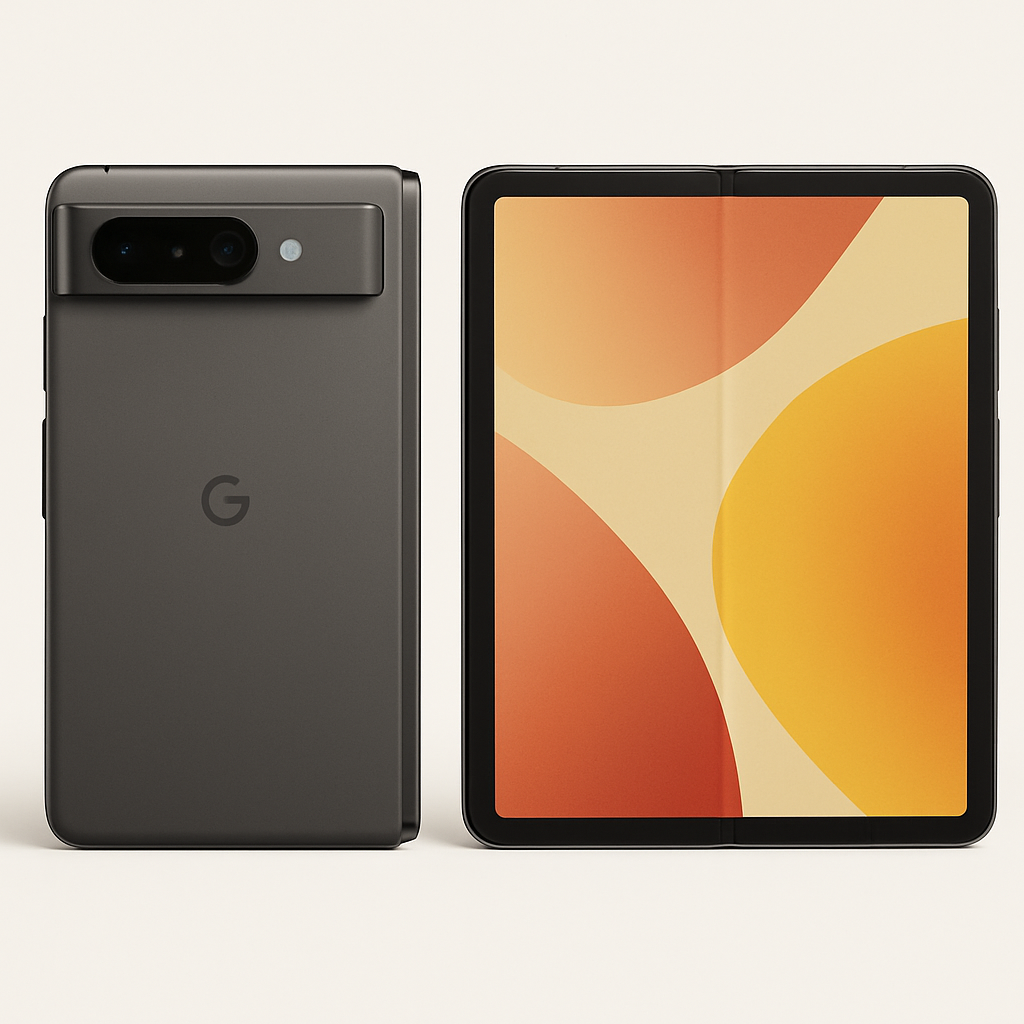
In 2023, Google took its first bold step into foldables with the Pixel Fold — a device that, while flawed, showed significant promise in anticipating where mobile hardware was heading. Though its execution left room for improvement, we now see that some of its core ideas were not only forward-thinking, but foundational to what’s shaping today’s foldable phones.
The positives outweigh the faults
At launch, the Pixel Fold stood out by offering surprisingly durable hardware alongside solid camera performance. Where many contemporaries leaned heavily into compromises to enable folding designs, Google minimized that trade-off. The device delivered features and build quality that made it “better than it should be,” though still “far from perfect.”
But after three years in this evolving category, certain issues have become harder to ignore. Its glossy metal frame collects fingerprints relentlessly, and the weight and thickness feel especially noticeable compared to newer models like Samsung’s Galaxy Z Fold 8. The central crease remains prominent and the device’s heft compromises comfort. Heat management turned into a serious downside over time, especially for the Tensor G2 chip powering the Fold.
A form factor that points to the future
The most significant success of the Pixel Fold was its shape. It embraced a wide, tablet-esque ratio when unfolded — one that made multitasking easier and favored apps built for larger canvases. At its best, it even forced some apps to show fully tablet-optimized interfaces, rather than just stretched phone layouts.
However, Google ultimately abandoned that wider canvas direction. The reason was mostly software: Android apps in 2023 were rarely optimized for the kind of wide foldables the Pixel Fold offered. Developers hadn’t yet prioritized those layouts, so the market hung back. In retrospect, it may have made sense—but now, devices like the Galaxy Z Fold 8 demonstrate that the wider design works when done right.
The Galaxy Z Fold 8, which has gained traction and acclaim in recent months, reinforces that Google’s design bets were not misplaced. Users seem to prefer those wider unfolded dimensions for multitasking and tablet-style app experiences. In hindsight, the Pixel Fold was aiming for a trend that the rest of the industry has recently validated.
Google hasn’t revisited the wide-form foldable much since. But perhaps that’s changing; companies often circle back to ideas that were ahead of their readiness by a year or more. The Pixel Fold might’ve launched too early in its trajectory—and with software that didn’t fully support its strengths—but its ambitions offer clues about what comes next.
What this means: The Pixel Fold shows the risks and rewards of leading the pivot to new form factors. Designs ahead of their time can suffer in the moment, but they shape the expectations and trajectories of the hardware ecosystem. As Samsung proves with its latest flagships, wider foldables are finding their moment now. For Google, the question isn’t if it’ll try again—it’s how—and whether it can pair hardware innovation with software that’s equally forward-looking.