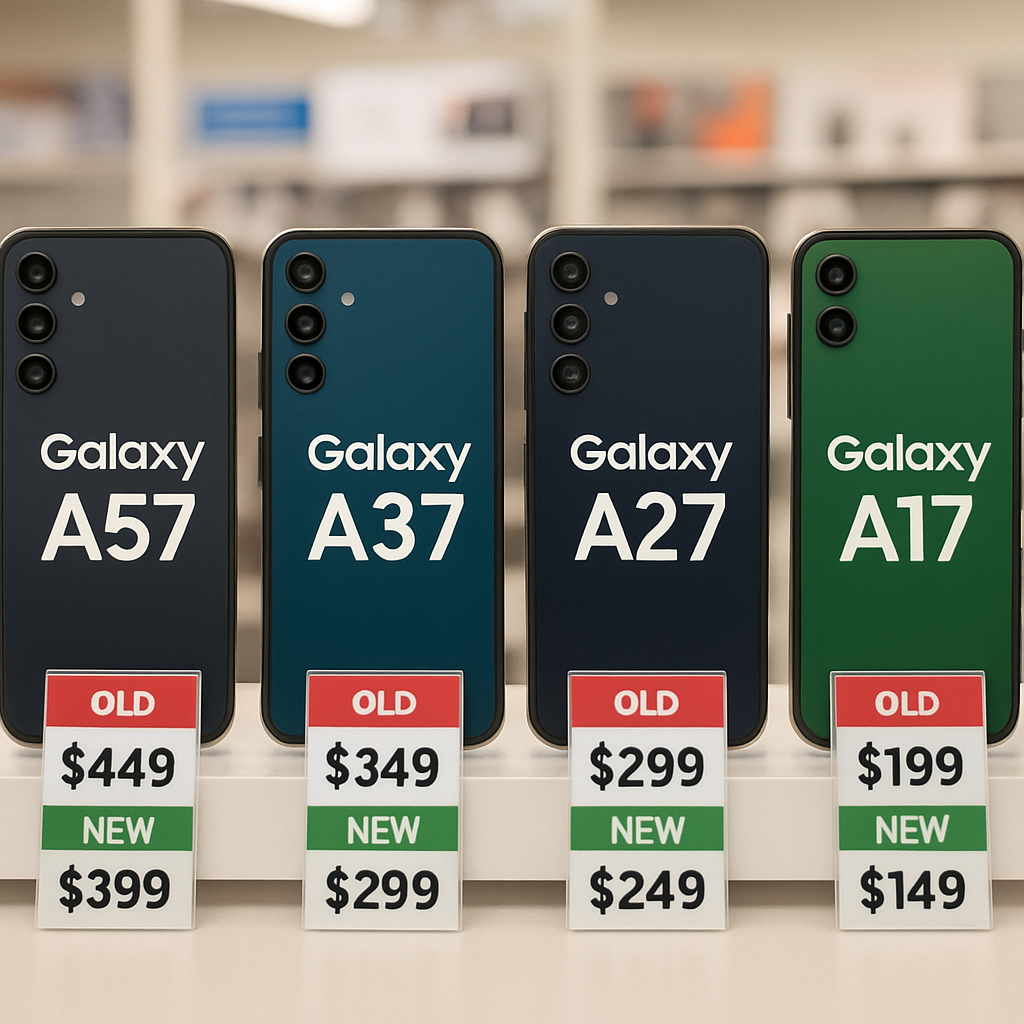
Samsung has quietly increased the prices on several of its Galaxy A-series smartphones in the United States, joining earlier hikes to its flagship Galaxy S26 line. The affected models now cost between $20 and $70 more, depending on storage and configuration. The move reflects rising component costs and mounting pressure throughout the tech supply chain.
Which Models and How Much Extra
The updated pricing affects the Galaxy A57, A37, A27, and A17 series. For example, the Galaxy A57 with 128GB storage has jumped from $549 to $599, while the 256GB variant now sells for $679 instead of $609. The Galaxy A37 sees its 128GB model move from $449 to $489, and its 256GB version from $539 to $609. The Galaxy A27 has risen to $379, up from $349, and the A17 now sells for $269, up from $249.
Entry-Level Takes a Harder Hit
Samsung launched the A17 earlier this year at $199, making this the second significant price hike for that model. These adjusted prices represent more than a 35% increase from its original launch price, especially notable for an entry-level device. Other models, like the mid-tier A57 and A37, also saw substantial bumps tied to storage capacity.
These price changes are visible on Samsung.com and among major US retailers. While Samsung already raised list prices on the Galaxy S26 series, this move extends the trend to non-flagship hardware. It underscores the broadening impact of rising components, manufacturing and logistics costs across Samsung’s lineup and the industry at large.
For comparison, it’s worth noting the price of flagship phones like the Galaxy S26 was recently increased by around $100, signaling Samsung’s efforts to pass climbing costs to consumers across its entire product portfolio. Meanwhile, older or lower-tier devices aren’t spared—in part because supply chain challenges affect all levels of production.
Samsung’s pricing strategy reflects long-running pressures: part inflation, semiconductor shortages, and supply chain disruptions. While phone prices generally trend upward, consumers may notice that even budget and mid-tier phones are no longer shielded from these shifts.
Analysis: These price hikes signal that the cost burden is now full-spectrum, stretching from premium flagship phones down to budget-friendly A-series models. Where consumers once could rely on value offerings, even entry-level models are now reflecting global component inflation. As we approach the holiday season, watch how demand responds—and whether Samsung introduces trade-in offers, subsidies or bundling to ease sticker shock. Rival brands may seize this moment to gain ground if they can manage the tension between cost and value more effectively.