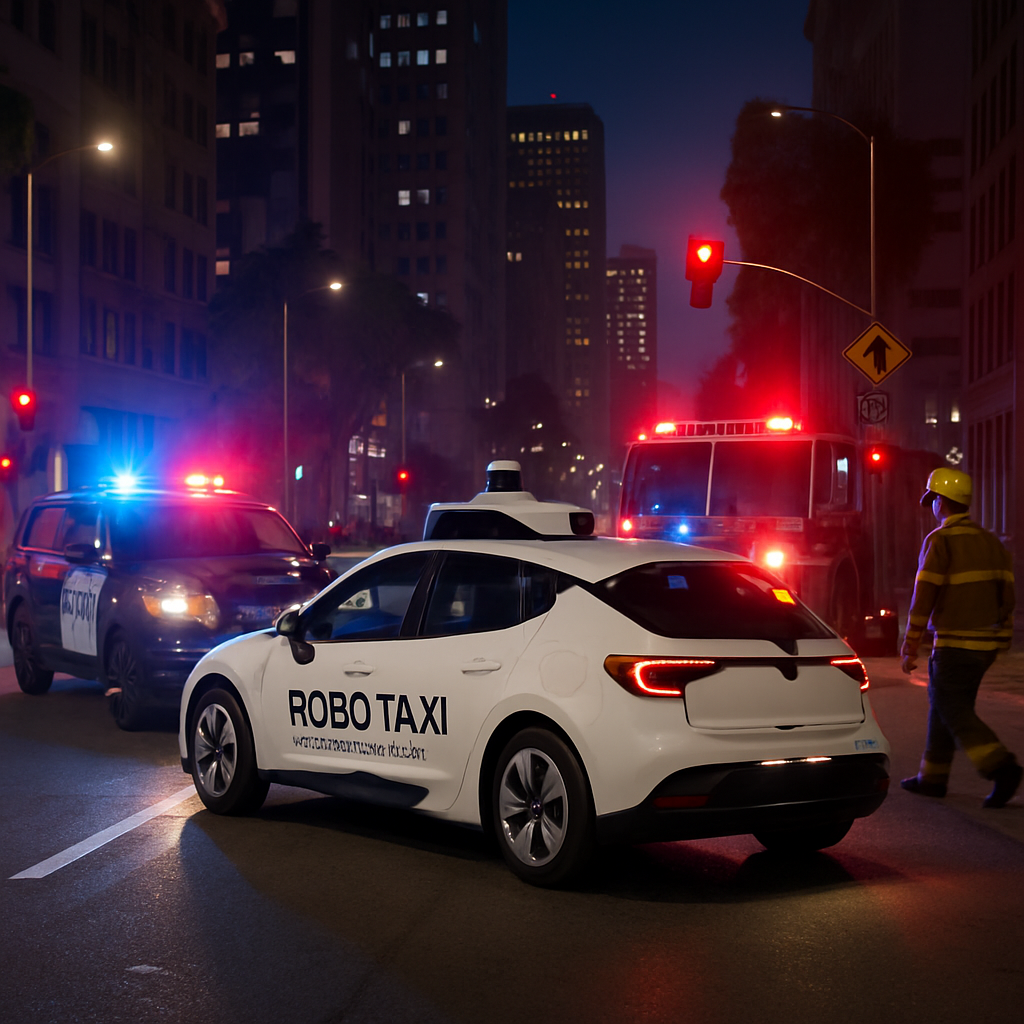
California has approved a new law targeting robotaxi operators, mandating they assist emergency responders when their autonomous vehicles (AVs) cause disruptions. Under Senate Bill 1246, companies like Waymo, Tesla, and Zoox may face penalties if a robotaxi obstructs police or firefighters for over 30 minutes. The rules also require AV firms to supply local technicians to address disabled vehicles and to notify authorities during system-wide failures. The law takes effect in July 2028.
Why the Legislation Came About
This move follows numerous incidents in California where robotaxis have broken down or impeded first responders and law enforcement. Companies, especially Waymo—the largest commercial robotaxi operator in the U.S.—have been involved in several cases where their vehicles blocked traffic, entered crime scenes, or became stranded. Earlier this year, Waymo was found to have leaned on first responders to manually drive their vehicles in some failure scenarios. These events drew attention from state and federal regulators, with the National Highway Traffic Safety Administration calling on AV developers to find solutions.
Key Provisions of SB 1246
Some of the law’s main points include:
- Remote operators must be located in the U.S. and hold U.S. driver’s licenses. This responds to concerns about how companies use remote control when AVs run into trouble. While Tesla has openly acknowledged that its remote operators sometimes take direct control, Waymo says its approach involves remote assistance rather than full control—its staff is dispersed globally, including abroad.
- Companies must alert local jurisdictions when their network is affected by system-wide failures, detailing vehicle locations and status. In addition, local incident technicians have to be made available to manage on-ground issues like disabled vehicles or those interfering with emergency responders.
- Fines will be levied if an AV blocks first responder access for over 30 minutes during emergencies.
Industry Response and Path Forward
Companies directly impacted by the law—Waymo and Zoox—have voiced support, affirming their intention to comply. Waymo highlighted amendments to ensure robotaxi services in California remain viable under the new rules.
The California Department of Motor Vehicles will issue rules on several requirements established by the law, including specific response times for incidents and obstructions.
With Waymo operating about 4,000 AVs nationwide—with roughly 1,200 in the Bay Area—the law’s consequences will be closely observed by both companies and policymakers.
This legislation matters because it sets clearer standards for accountability in the AV sector. As robotaxis become more common, how they handle breakdowns and emergencies will increasingly affect public safety and trust. The law could force changes in remote operation models, emergency planning, and infrastructure support. Watch for how companies implement the rules, how enforcement is handled, and whether similar laws emerge in other states as AVs proliferate.