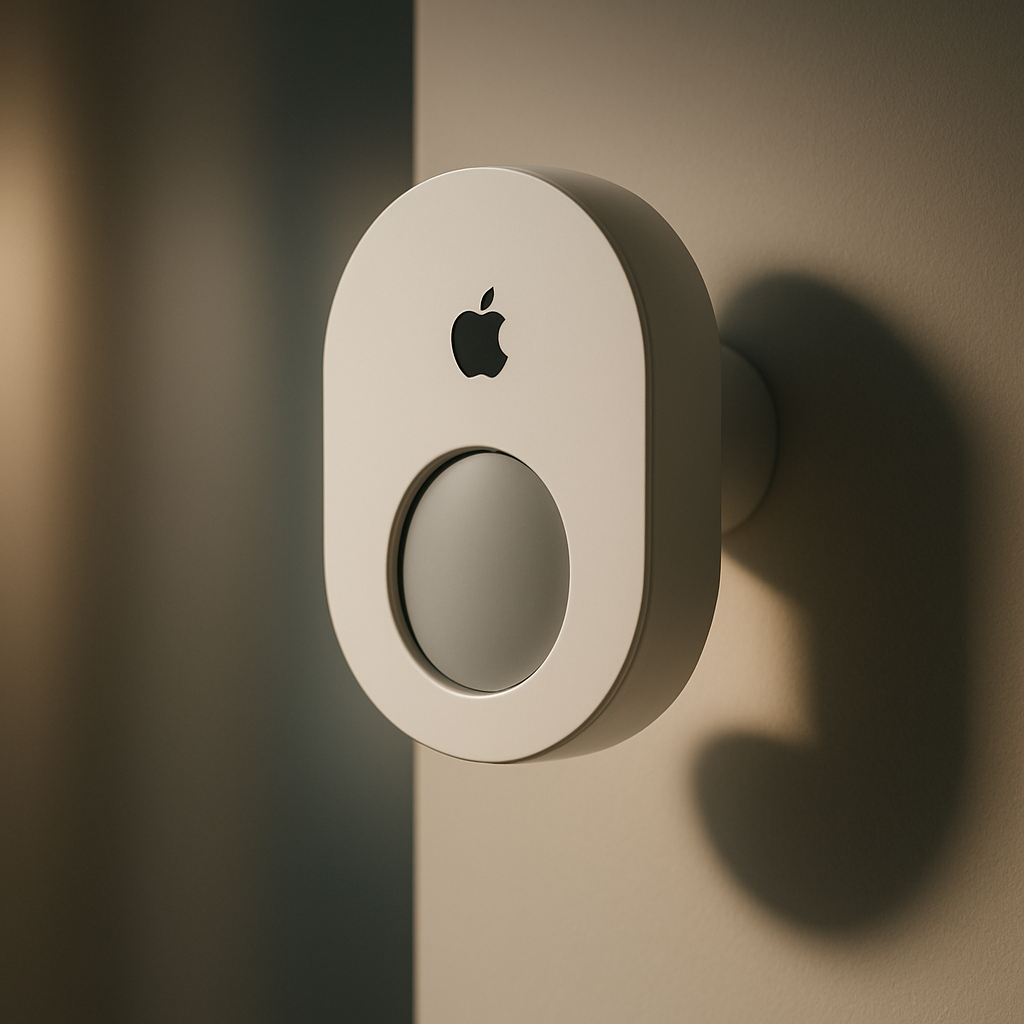
Apple’s upcoming smart home camera reportedly won’t store or record traditional video footage. Instead, it will function more like a sensor — analyzing home environments with AI without any video playback or archive capability. This idea comes from Bloomberg’s Mark Gurman, who comments on Apple’s plan during a recent podcast. He described the device as “the first mainstream home video security camera that doesn’t give you any footage.”<\/p>
Gurman clarified that the primary capability of the new product will be live AI-powered environment detection — spotting things going on inside a house in real time, but without offering a video record or retrospectively viewable clips. That means no saved video to scroll through later; the camera serves more like a high-tech alert system than a traditional recording device.<\/p>
Where This Fits in Apple’s Vision
This fits into a larger trend at Apple, which has emphasized user privacy as a selling point in recent years. Their devices already feature encrypted communications (like iMessage), on-device processing of personal data when possible (as with Siri’s offline features), and strict policies around what is sent to Apple servers. A camera that never stores video would align strongly with this trajectory.<\/p>
Although much remains unconfirmed — including what kinds of alerts, detection types, or privacy controls will be included — this approach could allow users to monitor their home environment without maintaining a security cam video archive vulnerable to hacks or leaks. It may also help in jurisdictions with strict laws around video recording and surveillance.
What We Don’t Know Yet
Gurman has not yet revealed the camera’s full feature set. Key questions include whether it will capture any still images (and if so, how they’re handled), how live monitoring will work, and how sensitive its sensors will be. Pricing, design, release date — all of that is still under wraps.
It’s also not clear exactly what “no video recording” means in practice. There may be local storage options, encrypted buffering for only short durations, or highly restricted cloud uploads. Apple may define “recording” in a very specific sense that excludes live streaming but includes temporary on-device buffering.
Apple is expected to unveil multiple smart home products this fall, possibly including a smart home hub, updated HomePod models, and Apple TV updates. This camera could integrate into that ecosystem, likely leveraging Apple Intelligence and HomeKit systems to provide alerts, automations, or other smart features.<\/p>
Why this matters: If Apple launches a home security camera that never records, it effectively redefines expectations for privacy in smart home security. Users who’ve been wary of cameras snooping in or saving footage can gain some comfort, while the device still serves as a sensor and deterrent. The tradeoff is that recordings can be crucial when reviewing break-ins or disputes — without them, accountability relies heavily on device data integrity and alert logs. What to watch: exactly how “no recording” is defined, what observability options exist, and whether users can opt in to limited recording. Also pay attention to how this product is priced and whether it sees delays — radical privacy comes at a cost, and implementing it well is not easy.