Financial institutions—banks, insurers, asset managers—have long lived in an environment where legacy software, strict regulations, and zero tolerance for downtime make substantial change risky. Systems accumulate dependencies, base images age, and vulnerabilities pile up. But the days when organizations could discount known vulnerabilities or delay security fixes are quickly ending.
The shifting threat landscape
Historically, financial services accepted a backlog of known software vulnerabilities because most were dormant and exploitation seemed unlikely. But “frontier” AI tools have changed the equation, enabling attackers to chain together weaknesses and expose risks faster than humans can patch them. Notably, attacks stemming from vulnerability exploitation have now surpassed phishing as the leading cause of initial access in financial services breaches. Also, a majority of vendors in the sector are now found with at least one high-severity Common Vulnerability and Exposure (CVE) in their codebase.
These developments reveal that the old assumptions underpinning risk management in financial firms—namely, that delaying fixes for legacy apps was “fine”—no longer hold. With tools that make it easier to exploit software supply chain holes, deferred risk is now active.
Software “modernization” — redefined
When leadership in financial services hears “modernization,” they often envision revamping applications—rewriting monoliths, migrating data layers, upgrading language runtimes. Those efforts are expensive, slow, and introduce risk. But there’s a more urgent and more achievable form of modernization: securing the software supply chain beneath the applications.
This means focusing on what goes into your apps—container base images, open-source libraries, build tooling—and ensuring those inputs are hardened, verified, and continuously maintained. Rather than rewriting the app, you upgrade the foundation on which it runs.
How to lock down the foundation without overhauling everything
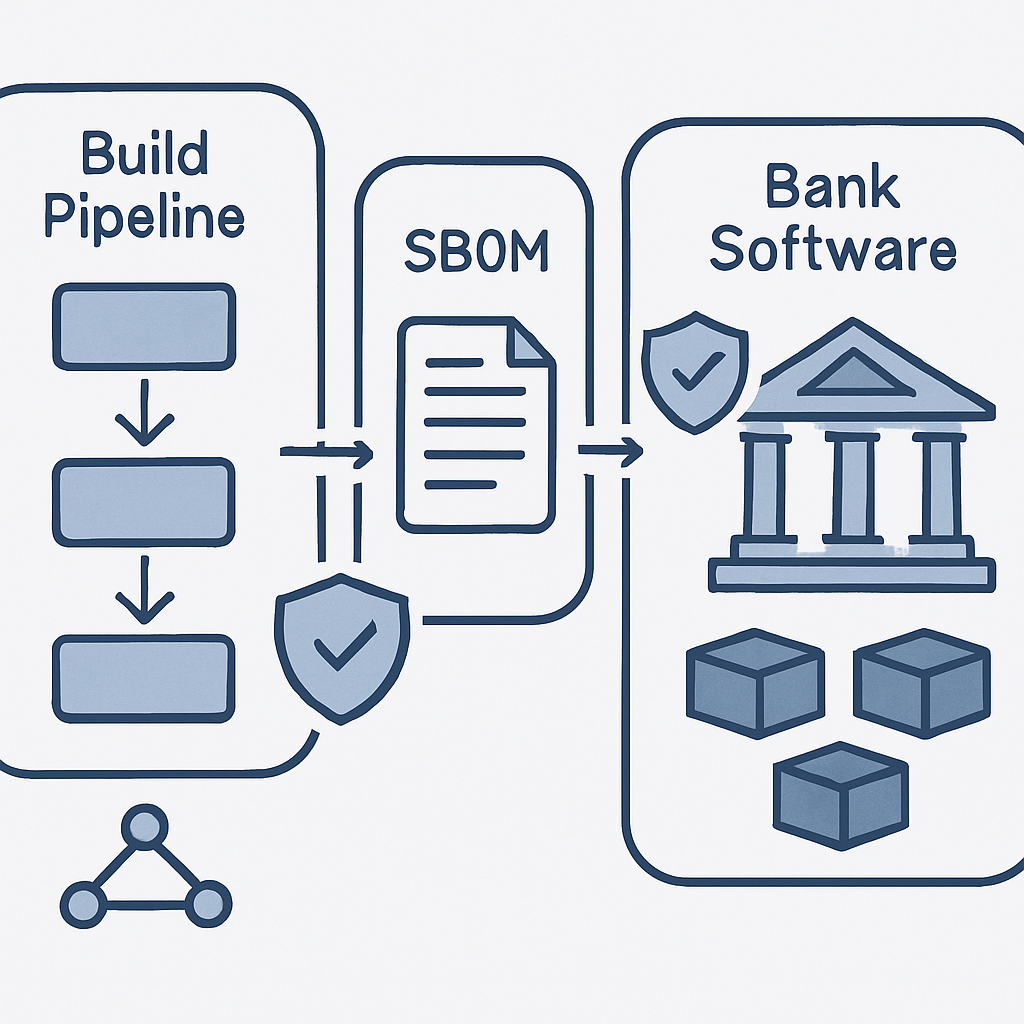
One approach is to use hardened, minimal container images and open-source libraries that reduce attack surface. Secure builds and artifact provenance—like signed Software Bill of Materials (SBOMs)—help trace what components are in use and where they came from.
For software that can’t yet be fully upgraded, backporting security patches to existing runtimes helps maintain compatibility while addressing vulnerabilities. Centralizing this work in platform teams—using golden image programs, internal registries, and shared pipelines—lets application teams inherit secure defaults instead of reinventing or auditing bases themselves.
The cost of inertia
Maintaining the status quo carries stealth costs. Engineering teams spend excessive time triaging CVEs, responding to emergency patches, and defending outdated dependencies. Authentication and audit burdens multiply. Opportunity costs accumulate: features that generate revenue are delayed.
By modernizing the supply chain underneath applications, organizations can gain security improvements with relatively small changes. It’s less risky than rewriting the app logic or doing full migrations. You get results step by step, rather than waiting for the big launch.
You get benefits long before you finish
The key is that supply-chain modernization doesn’t require waiting until everything is upgraded. As hardened foundations and trusted build artifacts roll out, institutions reduce exposure to vulnerabilities continuously. Over time, security postures shift from reactive to proactive. Rather than fixing flaws, you start building on defaults that already avoid many of them.
Anchoring methods like signed SBOMs and verifiable build provenance answer common audit questions—what’s running, where did it come from, how is it maintained—without overloading teams or dropping stability.
By reframing modernization—starting from the inputs instead of demanding a full rework—financial institutions can close pressing security gaps more quickly and sustainably.
What this means going forward: firms that can modernize their software supply chain now will be better positioned to handle increasingly sophisticated threats, tighter regulations, and faster-moving attack tools. The path is manageable, avoids disrupting core logic, and offers measurable security gains along the way. The bigger transformation can follow on your schedule—what matters is starting.