Researchers have uncovered a sophisticated browser automation network dubbed “PaperPhone,” which disguises large-scale scraping activity as ordinary mobile device traffic. The operation cycles through tens of thousands of IPs and fabricated device identities to circumvent IP-based site defenses. These tactics expose major shortcomings in IP blocking and geo-restrictions.
Global IP Spread and Coordinated Timing
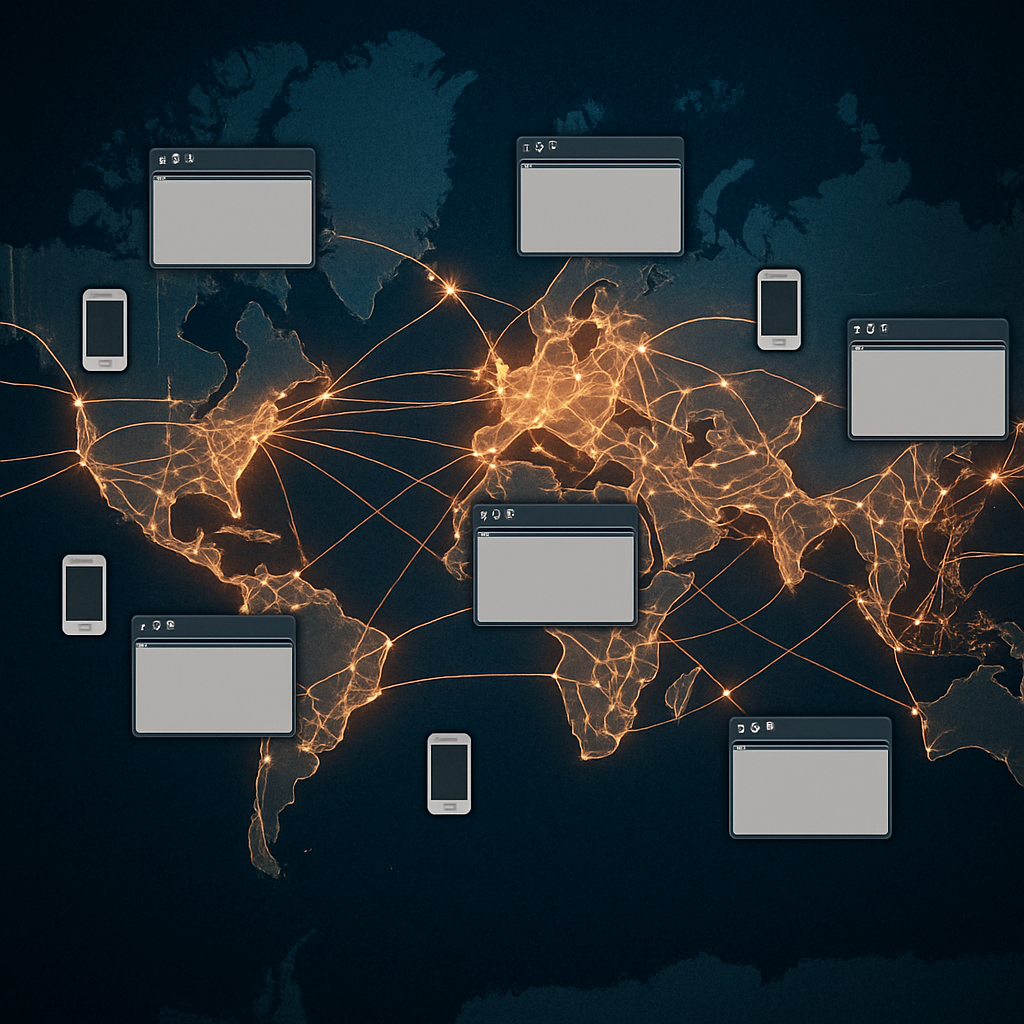
The PaperPhone setup was observed using around 75,000 distinct IP addresses distributed over 230 IP blocks, across 43 countries. Most of the IP ranges were clearly data‐center linked rather than residential, with many registered to one transit provider yet purporting to originate in other regions. Despite dramatic timezone differences—such as between the U.S. and Japan or Australia and Canada—traffic surges often rose and fell in parallel, indicating centralized control rather than organic, local user behavior.
Fabricated Mobile Devices and Browser Discrepancies
PaperPhone reportedly simulates sessions from switches among at least 13 “devices”—including Android and iOS models—yet all browser viewports aligned to the same 375×812 resolution, consistent with older iPhone models. Additional clues like the use of Google’s software renderer SwiftShader—a fallback typically present in environments without hardware graphics acceleration—contradict the claimed devices which should naturally include hardware GPU support. These inconsistencies undercut the device IDs and browsing signals as trustworthy indicators of genuine mobile traffic.
Implications for Defenders
Because PaperPhone’s logic blends IP reputation, geographic labels, device identity, browser fingerprint, and response to site challenges, defenders relying on single-vector metrics such as IP banlists or country blocks may be misled. Indicators like display dimension uniformity, rendering behavior, and synchronized request timing become essential in detecting automated vs human traffic.
The known Indicators of Compromise linked to PaperPhone include IP ranges such as 103.216.1.0/24 and several in the 62.105.x.x block, which are listed as having misleading registration and location data that conflict with their operational claims. These provide actionable signals against matching traffic.
While it remains unconfirmed whether any servers have been compromised or if specific individuals are behind the network, the evidence points to highly coordinated bot operations rather than ad hoc scraping. There’s no confirmation yet of leaked datasets or stolen credentials tied to this activity.
Why This Matters: PaperPhone’s discovery underscores how automation can now mimic mobile device signals at scale, breaking simple defenses. For security teams, it’s a call to refine bot detection strategies—to combine IP behavioural analytics with browser fingerprinting and identity consistency. Effective countermeasures will need multidimensional telemetry rather than reliance on geographic or device-based rules alone—especially as botnets get more adept at evasion.