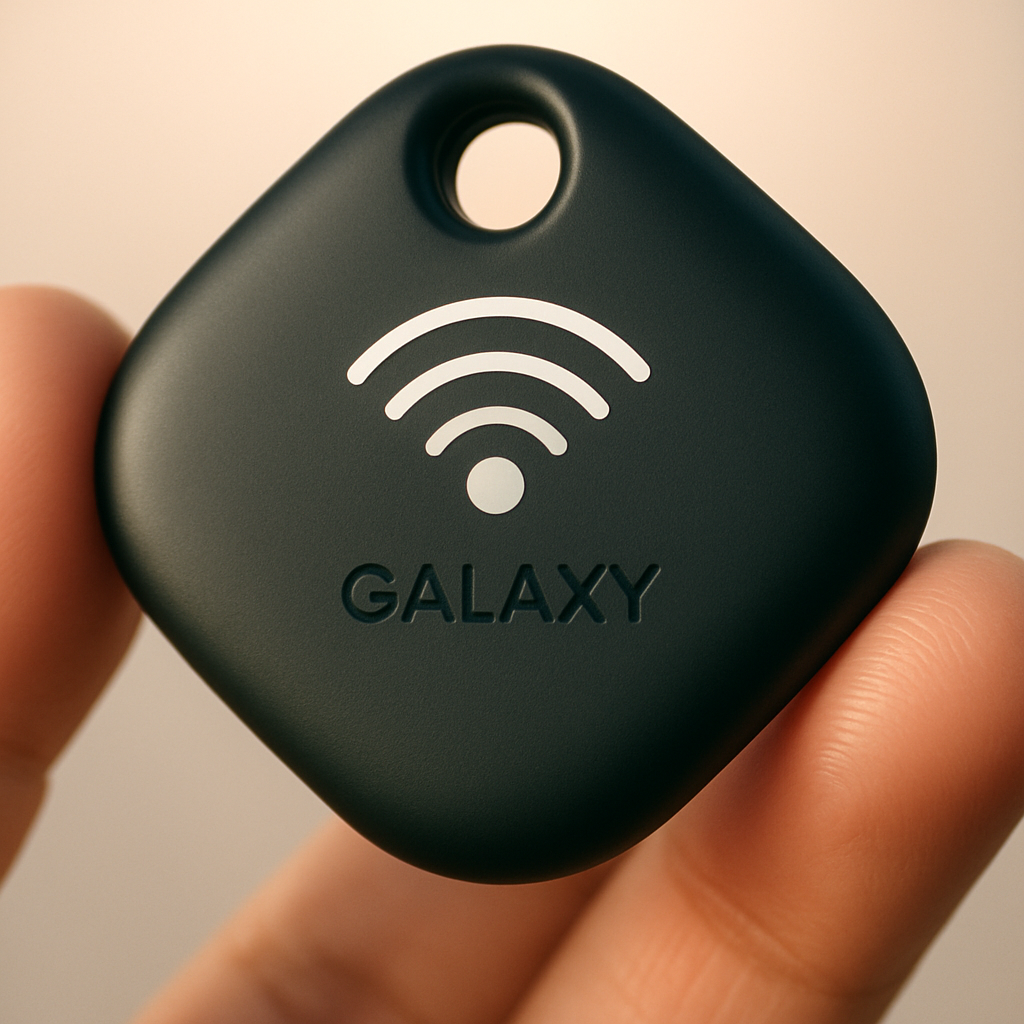
Samsung has introduced the Galaxy SmartTag 3, its new tracker designed to rival Apple’s AirTag. As part of the launch, Samsung has revealed that while the SmartTag 3 now works with iPhones, it still doesn’t tie into Android’s collaborative Find Hub network.
What’s new with Galaxy SmartTag 3
The SmartTag 3 is smaller and lighter compared to previous models—about 35% smaller and 33% lighter—achieved by removing the built-in mounting loop and relying instead on add-on accessories. In terms of durability, Samsung says typical use yields up to 550 days of battery life, with “Power Saving Mode” extending that to 790 days. The device supports Bluetooth 6.0 with channel sounding and ultra-wideband (UWB) for more precise tracking.
SmartTag 3 connects with Samsung’s own Galaxy Find Network via the SmartThings Find app, which already includes over 900 million Galaxy devices globally. The tracker includes new features such as Place Notification, which alerts users when a tagged item enters or exits a predefined zone; Location History to review past tag movements; Movement Detection Alert for activity-based warnings; and an NFC-powered Lost Mode that displays contact info or messages when scanned. Users can also trigger SmartThings IoT automations through tag-button presses, and receive alerts when a mobile device gets separated from a tagged item.
iPhone compatibility, but Android Find Hub left out
For the first time, Samsung is making SmartTag 3 compatible with iPhones. Owners of Apple’s smartphones will be able to use Samsung’s app to track their SmartTag 3 devices, though iPhones won’t contribute to the larger Galaxy Find Network. Samsung still limits full Android integration to Galaxy phones through its SmartThings ecosystem.
Notably, SmartTag 3 does not integrate with Android’s broader Find Hub network, which is intended to allow devices from many Android manufacturers to assist with tracking across a shared framework. Samsung’s decision means that non-Galaxy Android devices won’t help locate the SmartTag 3 beyond ordinary Bluetooth or UWB-based local detection.
The SmartTag 3 becomes available on October 7, coinciding with the launch of Samsung’s Galaxy Tab S12 series.
What this means is Samsung is cautiously expanding the utility of its tracker—offering iPhone owners some support—while keeping its larger asset-finding operations firmly within its own hardware ecosystem. For users invested in Android, especially outside the Galaxy line, this represents a missed opportunity for broader interoperability. It’s a reminder that even in a world pushing toward shared networks and cross-platform openness, companies may still prioritize their proprietary ecosystems when it counts. Watch closely to see whether Samsung modifies this approach, especially as competing networks like Apple’s are increasingly open to cross-platform participation.