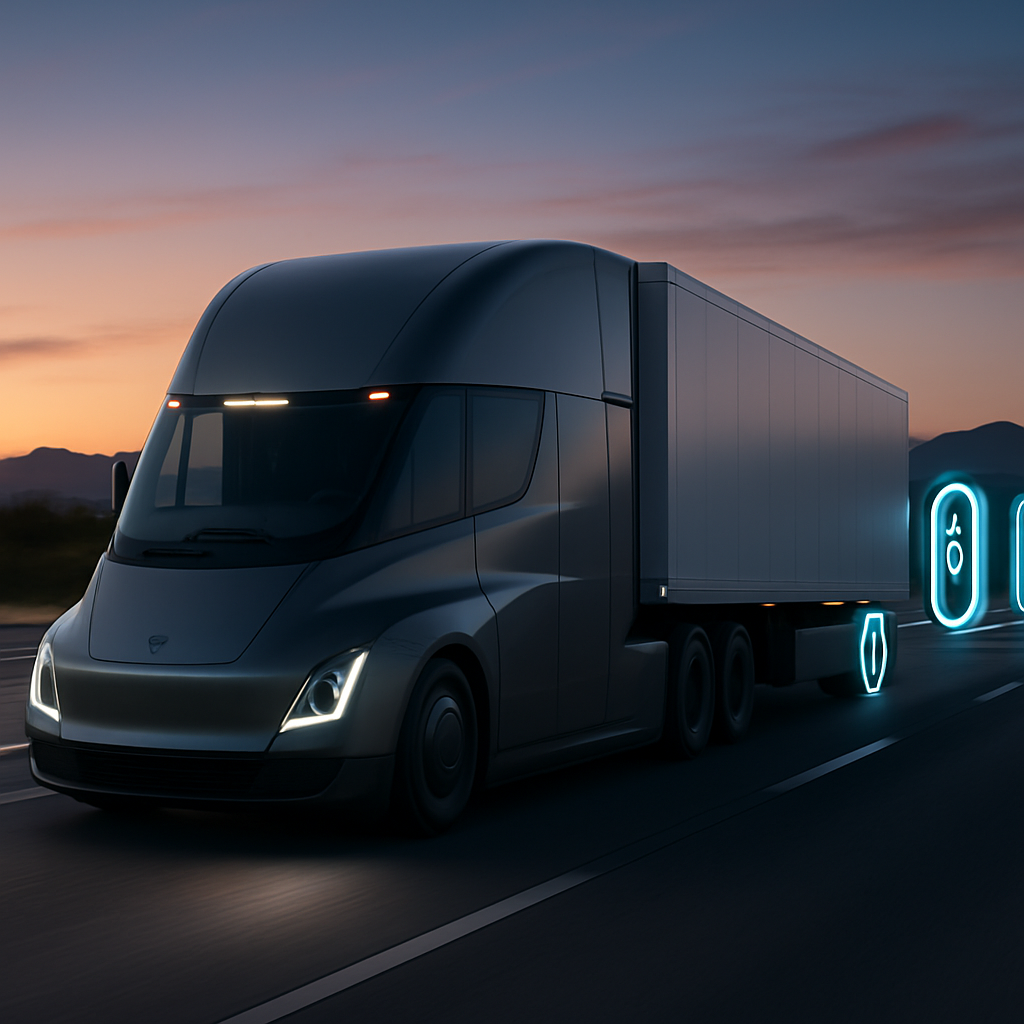
Tesla has officially started delivering its all-electric Semi trucks to customers, nearly a decade after unveiling the vehicle. Originally revealed in 2017, the Semi had been pushed back repeatedly due to global supply shortages, pandemic disruptions, and feedback from pilot customers. Executives introduced the finished product at a launch event in Reno, Nevada, held on September 24, 2026. Tesla did not disclose the final price yet, but emphasized its benefits for fleet operators: lower long-term costs, better reliability, and significantly reduced emissions.
Factory Expansion, Specs & Variants
The Semi will be built at Tesla’s dedicated truck facility in Reno, located next to its Gigafactory. Tesla projects it can manufacture up to 50,000 units annually—about 1,000 weekly—and plans to add 3,000 jobs locally. The top-range model is expected to deliver more than 500 miles of range on a full charge, though real performance depends on load size. Less capable variants—offering shorter ranges—will also be available. Before incentives, the higher-end Semi is expected to cost just under $300,000.
Design Fixes & Charging Infrastructure
On the design front, Tesla made several tweaks that responded to long-running criticisms. It shaved approximately 1,000 pounds off the Semi compared to its earlier prototype, simplified its drive axle by replacing three oils with a single lubricant, and dropped the awkward pop-out side windows in favor of roll-down versions to support drivers’ interactions with the outside world—toll booths, badge readers, etc.
The event also spotlighted Tesla’s megawatt-charging station network, with the company showing a Semi charging jump from 3% to 60% during the presentation. Infrastructure remains a major sticking point; although deliveries are underway, customers are being told they can take possession when ready. Still, fully scaling up charging capacity is crucial for operational feasibility.
Strategic Shift & Environmental Stakes
Alongside these product details, Tesla is redefining its identity. Once focused primarily on accelerating sustainable energy, the company is now embracing broader themes of robotics, AI, and abundance. However, environmental concerns remain central—highlighted by statistics shared at the event pointing out that heavy-duty trucks account for about 16% of vehicle emissions while making up only 1% of vehicles on the road.
Tesla’s leadership also addressed earlier skepticism—most notably from prominent industry voices—and reclaimed their original promises. Executives underscored efforts to wring out inefficiencies such that vehicle work can be done with less battery, reducing both weight and cost. Methods included changes to motor design, materials, and component integration.
Elon Musk, who was absent from the live presentation, contributed via a prerecorded segment in which he described the Semi as a joy to drive and committed to adding partial autonomy features in the near future. He also emphasized the cost-per-mile savings of electricity versus diesel, a comparison made more dramatic by recent fluctuations in fuel prices.
This launch marks a major milestone for Tesla’s Semi, finally moving from prototype to production. The company has long touted its potential to displace fossil-fuel trucks, tame emissions, and cut running costs, but only now is delivering on those promises in volume. Watching how charging infrastructure, fleet operator adoption, and regulatory pressures evolve will determine whether the Semi becomes a game changer—or just another well-intentioned idea that couldn’t scale.