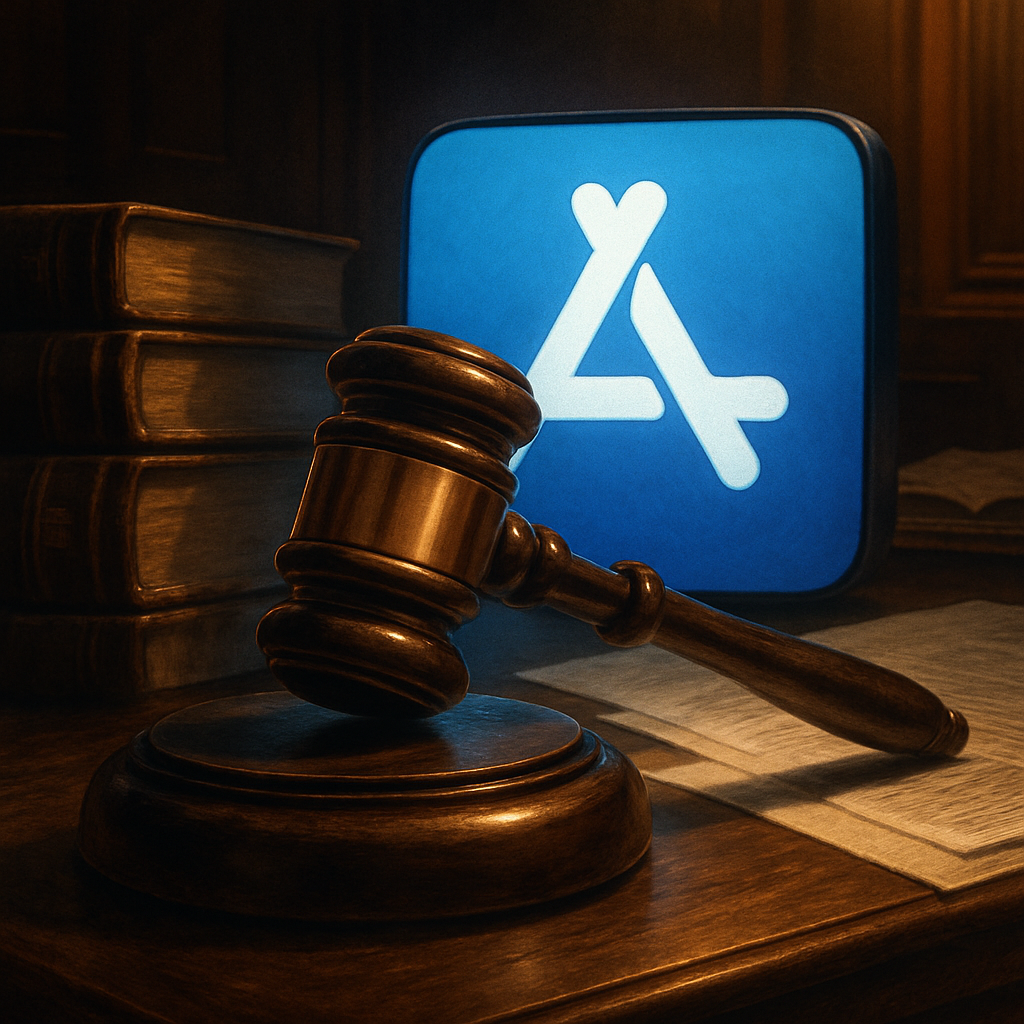
The legal battle between Apple and Epic Games has entered a critical phase. With the Supreme Court set to decide in October whether Apple can be held in contempt for breaching an injunction, a wave of amicus briefs has surged forward—largely siding with Apple’s interpretation of the law.
What’s at Stake
Years ago, Apple was ordered to stop its “anti-steering” rules—policies that discouraged developers from pointing users to alternate payment systems outside the App Store. While the company complied by removing those restrictions, a recent ruling claimed Apple still violated the “spirit” of that mandate. Apple insists this standard—a violation of spirit rather than letter—falls beyond what’s lawful. The case hinges on whether courts can penalize a party based on implied expectations rather than explicit terms.
Amicus Briefs Echo Apple’s Argument
One of the most influential documents comes from the U.S. Solicitor General. While not siding fully with either party, his brief closely aligns with Apple’s view that being judged by “the spirit of an injunction” without fair notice undermines legal clarity. The brief also contests an appellate ruling that found Apple liable for a 27% commission on certain redirected transactions, arguing that it’s unclear whether the injunction actually prohibited that commission based on how the text reads in its full context.
Other groups have thrown their weight behind Apple’s position. The Washington Legal Foundation, the U.S. Chamber of Commerce, and Chamber of Progress uniformly urge that courts must not interpret injunctions in terms of spirit alone. The International Center for Law and Economics adds that Apple’s commission on external purchases doesn’t necessarily interfere with consumers’ awareness of alternatives—that Apple retained discretion over compensation under the injunction as written.
What the Court Could Decide
If the Supreme Court accepts Apple’s arguments, the “spirit” standard—used by lower courts to find Apple in contempt—could be struck down. That outcome might mean vacating the recent ruling against Apple, potentially limiting how injunctions are enforced nationwide. However, the Court could also affirm that certain design rules—such as how links and buttons should work—did violate the literal terms of prior orders. The precise contours of what is permissible under an injunction are very much in play.
Apple’s case has spanned more than six years, beginning when it was accused of violating its own App Store policies. Though the company largely won on most counts, one mandate—against steering users to external payment methods—remained in dispute. After a multi-year legal tug-of-war, the Supreme Court’s decision may reshape how civil contempt and injunction enforcement operate at all levels of the U.S. judiciary.
Why this matters: at issue is not just this particular lawsuit, but how broadly courts can enforce injunctions in future cases. If “spirit of an injunction” standards are allowed to stand, entities could be punished for ambiguous conduct never clearly banned. Watch for significant consequences—for Apple, for developers, and for the way legal language around court orders will be handled in cases to come.