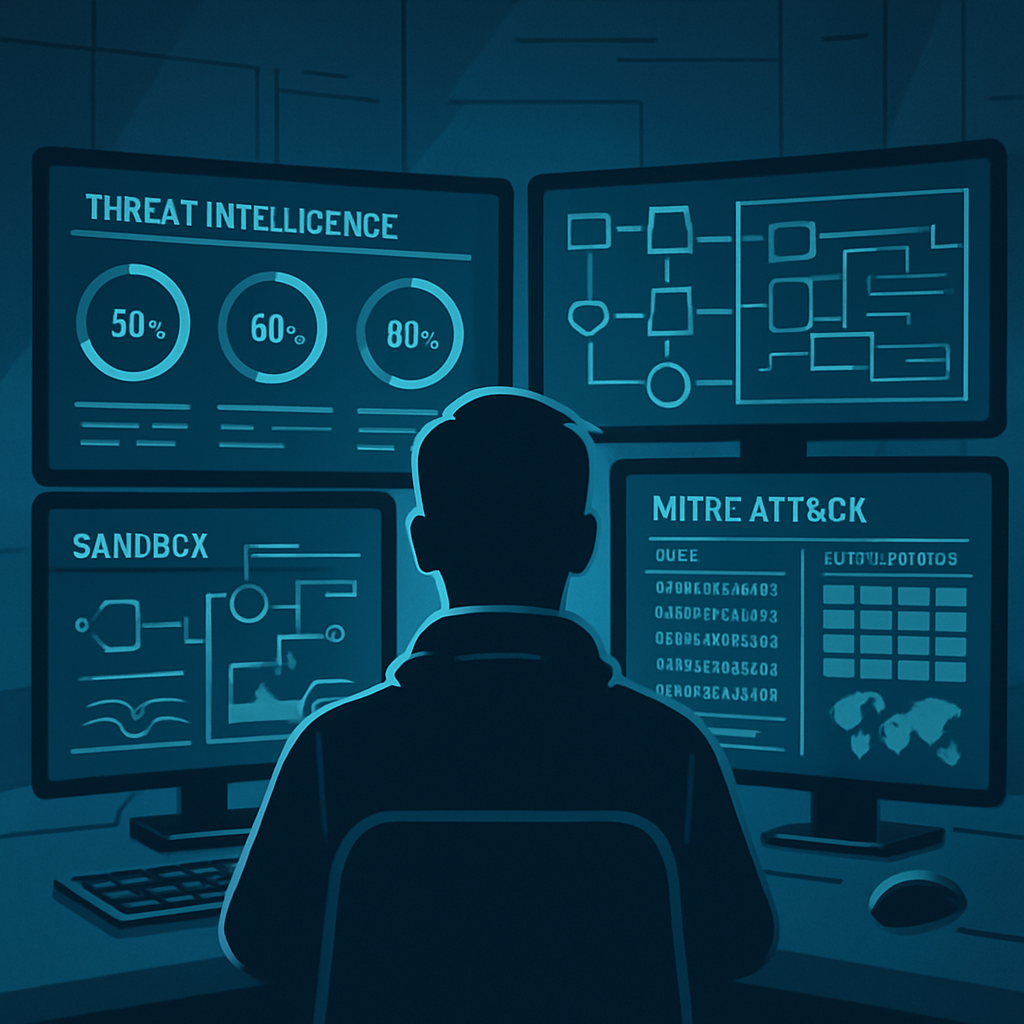
Security operations centers (SOCs) are often overwhelmed by alerts featuring suspicious IPs, domains, or file hashes. Spotting those indicators is just the start—understanding what they mean can be far more time-consuming. Analysts frequently must determine associated malware, infrastructure, attack methods, and whether the same threat has surfaced elsewhere.
Traditionally, this requires toggling between threat intelligence feeds, reports, sandboxes and SIEM/EDR systems—a fragmented process that slows down alert triage. Bringing threat intelligence together—blending behavioral data, enriched indicators, and expert analysis—enables faster, more precise investigations.
Threat Intelligence Components That Reduce Triage Time
Interactive sandbox environments play a crucial role by revealing what happens when malicious files execute. These tools log behaviors such as network calls, file and registry changes, process execution, and more. From 16,000 SOCs and 700,000 analysts, intelligence is gathered not just on known indicators, but on how threats act in live settings.
“TI Lookup” tools combine this sandbox behavior with enriched indicator data. Analysts can search using over 30 parameters—file hashes, IPs, domains, YARA/Sigma rules, registry information or even process-specific traits. These lookups extend across six months of research, linking indicator to real-world threats and MITRE ATT&CK techniques.
Continuously updated threat intelligence feeds surface freshly observed domains, IPs, and malicious URLs. When grounded in sandbox findings, these feeds provide enriched context—helping spot emerging threats without drowning in false positives. With near-zero false positives and high uniqueness in surfaced IOCs, these feeds can be integrated into detection tools via APIs or STIX/TAXII.
Threat intelligence reports add another layer—curated analysis of attack campaigns, phishing, APTs, and broader TTPs. They draw connections among individual IOCs, IOAs (Indicators of Attack), IOBs (Indicators of Behavior), and provide practical resources like YARA or SIGMA rules for detection tuning.
Impact on SOC Efficiency, Burnout, and Strategy
By unifying lookup tools, sandbox data, feeds and reports, SOCs can reduce Tier 1 workload by around 20%, and Tier 2 escalations by roughly 30%. For junior analysts, richer context lets them resolve alerts more independently. Senior teams free up effort to focus on threat hunting, detection engineering, and proactive defensive measures.
This unified intelligence strategy helps shift SOCs from reactive responders to proactive defenders. Threat hunting improves when analysts can search not just by known IOCs but by behaviors and techniques. Fresh feeds keep security tools current. Reports highlight shifts in attacker behavior—ensuring defenders can anticipate change even when infrastructure morphs.
Ultimately, effective threat intelligence reduces alert fatigue by bringing relevant context closer to the point of investigation. It bridges the gap from isolated indicators to full threat understanding—improving detection, response, and analyst morale.
What this means going forward: teams should invest in platforms that blend multiple forms of intelligence—behavioral, indicator-based, and heuristic. The goal isn’t just faster alert cleanup—it’s building SOC resilience through context, capability, and capability that empowers analysts to see beyond noisy indicators and act decisively.