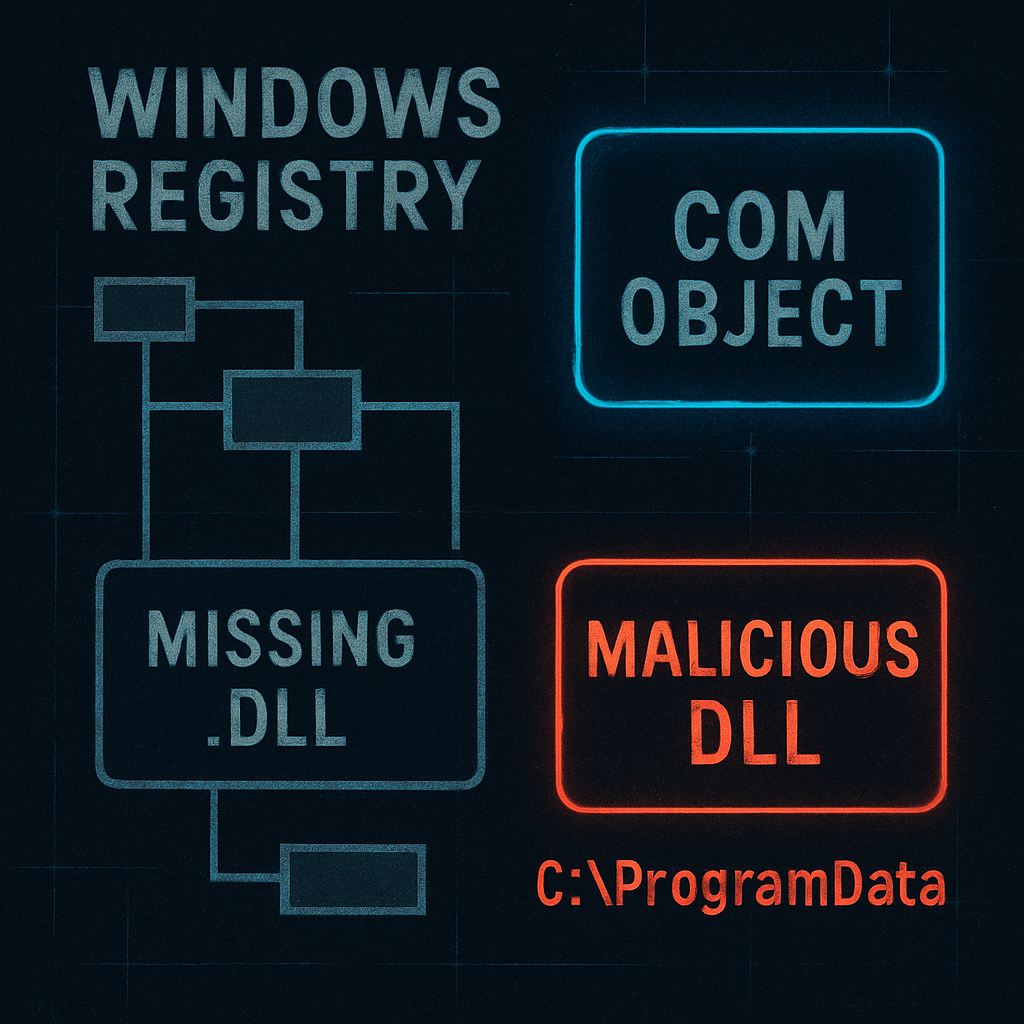
Microsoft patched a serious Windows privilege escalation vulnerability—CVE-2026-66804—that enables a local, low-privileged user to execute arbitrary code with full NT AUTHORITY\SYSTEM rights. The flaw hinges on how Windows handles dangling Component Object Model (COM) registrations in the CrossDevice component, which supports Phone Link, cross-device clipboard syncing, and file sharing. The registration points to a DLL file in ProgramData that does not exist, allowing attackers to insert their own malicious DLL in its place. The system then loads it under SYSTEM authority when the COM class is instantiated.
From “Dark Elevator” to the New Risk
This vulnerability is an offshoot of a previous bug dubbed “Dark Elevator” (CVE-2026-50343), which also involved the CrossDevice component. The earlier issue let attackers abuse weak registry permissions to register the class via an installer plugin and cause SYSTEM-level InstallService to load attacker-controlled code. Microsoft addressed that via patches in July 2026, but the underlying dangling COM reference remained intact. That leftover stub is what made this new exploit possible.
How the Exploit Works
Attackers leverage custom COM marshaling—a process by which COM interface parameters are passed between processes. Normally, parameters are marshaled by reference, but if the object implements IMarshal, it can force marshal-by-value behavior, specifying a CLSID to be loaded during unmarshaling. In this case, pointing that CLSID at the dangling CrossDevice class forces a privileged process to load the user-planted DLL.
To succeed, a target SYSTEM COM service must allow custom marshaling. The researchers identified one such target: the Shell Create Object Handler (CLSID 135fd325-45b7-4c30-89f8-4386961669f0). Because the object runs in a SYSTEM process (dllhost) without disabling custom marshaling, it’s exploitable via a scheduled task named CreateObjectTask paired with a global event. Attackers create a fake marshaled object passed through its ICreateObject interface, triggering automatic DMV (dangling-registration-based malicious DLL) loading before the real method runs.
Microsoft rates CVE-2026-66804 as “High” severity with a CVSS score of 7.8. It requires local, authenticated access but no user interaction once conditions are met. Proof-of-concept exploit code is now public, and at least one commercial exploit module automates the path from LOCAL SERVICE to SYSTEM, increasing the real-world threat to machines that haven’t received the update.
The August 2026 cumulative update fixes the issue by removing the dangling registration that enables the attack. Administrators are strongly urged to deploy that patch immediately. Moreover, this isn’t just about one flaw—dangling COM registrations are a recurring issue that often fly under the radar. Security teams should proactively scan registry entries for classes whose registered DLLs are missing and check whether an attacker could plant a replacement.
What this means: attackers constantly find ways around previous fixes. Even when an issue seems patched, leftovers like orphaned registry entries or stale references can offer fresh attack surfaces. System administrators shouldn’t assume that a fix closes all possible paths. What to watch for: newly released exploit code, expansion of automated exploit modules in commercial offerings, and whether future patches include full registry cleanup rather than stopgap application‐level checks. Stay current with updates, but also audit registry and COM porting practices, especially lazy or inherited custom marshaling policies.