Smart homes are getting smarter this week. Aqara’s new FP400 spatial sensor delivers advanced presence detection, Apple’s iOS 27.2 beta brings upgrades to Home and TV apps, while price hikes ripple across smart device categories. Here’s a breakdown of what’s fresh in the world of connected living.
The FP400: next-level spatial awareness
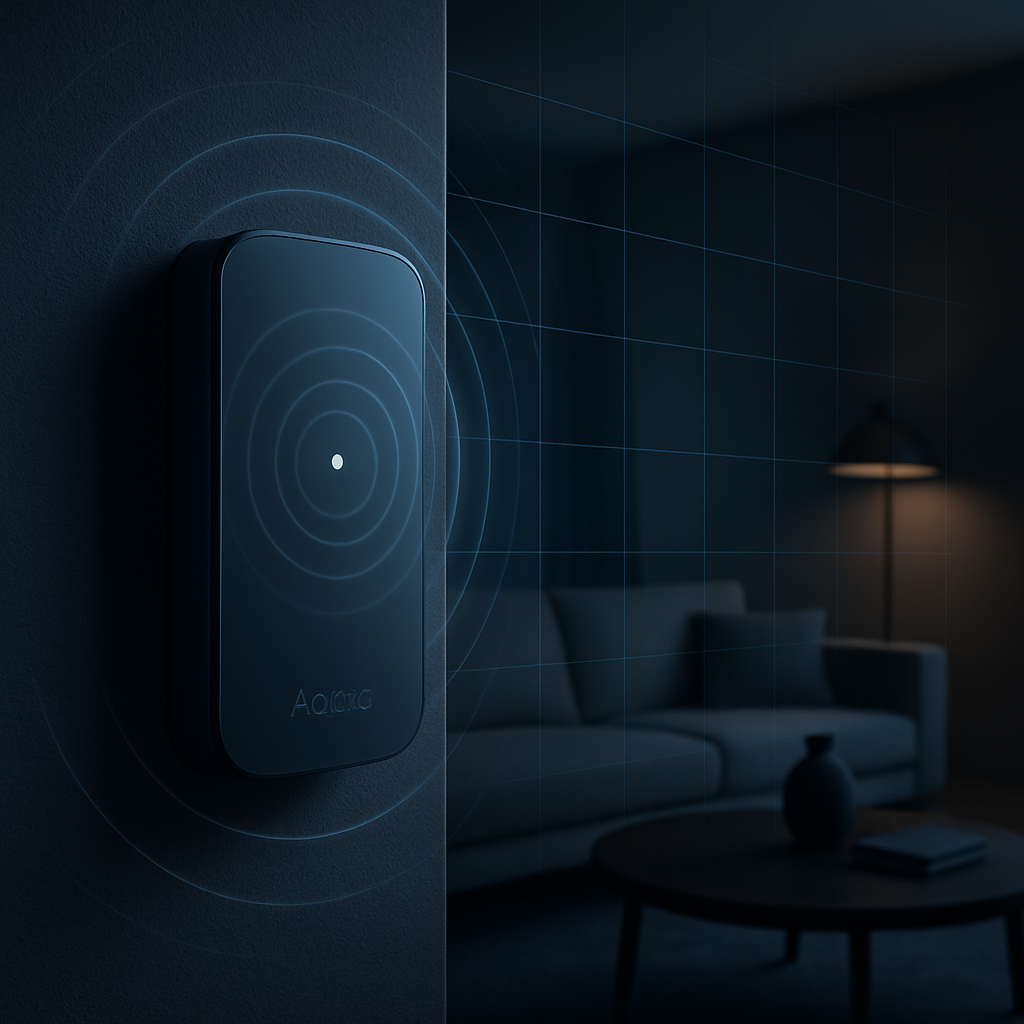
The Aqara FP400 spatial multi-sensor is a significant step up in room detection. Using a 60 Hz mmWave radar, it can register up to ten people in a room, track posture, and cover a field of view spanning 120 degrees over an area stretching up to 10 meters by 8 meters. It even supports mini virtual zones as small as 0.5 by 0.5 meters—ideal for tailored automation, like activating a lamp when someone sits at a desk. Integration with Matter over Thread allows direct pairing with compatible smart home setups, while legacy support via an Aqara hub and Zigbee opens doors for those using older ecosystems. Users report fast and accurate triggering during hands-on testing.
iOS 27 updates & smarter tools
Apple has released the first beta of iOS 27.2. The update preserves the Health app added earlier in the iOS 27 cycle and introduces a new feature to the Apple TV app on iPhone and iPad: profile support. This helps parents share devices securely, allowing children’s usage without altering the parent’s watch history—a subtle yet helpful privacy and usability upgrade.
Meanwhile, app makers and lighting brands are pushing out updates too. The HomeBatteries app now offers battery suggestions, estimated battery life metrics, and enhanced filtering options. Lighting company Govee has launched two new lights—the dual-zone Wallwash Table Lamp and outdoor ball lights. Both work with Matter via Wi-Fi for basic control and automation, though color and effects remain tied to Govee’s own apps.
Widespread price increases and ecosystem shifts
Consumer electronics, especially smart home devices, continue to bear the brunt of higher costs. The Echo Dot has jumped from about $50 to $80, while the Fire TV Stick 4K Max is now listed at $84.99—an approximate 40 % price rise. In comparison, Google’s entry-level smart speaker is priced around $99, and Apple’s HomePod mini comes in at $129. These increases appear to be driven both by inflation and shifts in supply chain costs.
On the hardware front, Ikea has introduced a new Matter-over-Thread lighting driver—Dubbelkisel—that replaces its previous Zigbee Tradfri model. The unit supplies up to 30 watts, enough to power about eight lights under cabinets or in closets, and leverages more modern, responsive connectivity.
These updates matter because they reflect deeper trends: smarter sensors are moving from novelty to necessity, Matter and Thread are becoming de facto standards, and cost pressures are likely to stick around. For anyone building or upgrading a smart home, it’s now about balancing precision (like what the FP400 offers), compatibility, and cost. The next few months will be telling—keep an eye on how small-zone automation, cross-platform integrations, and price stability evolve.