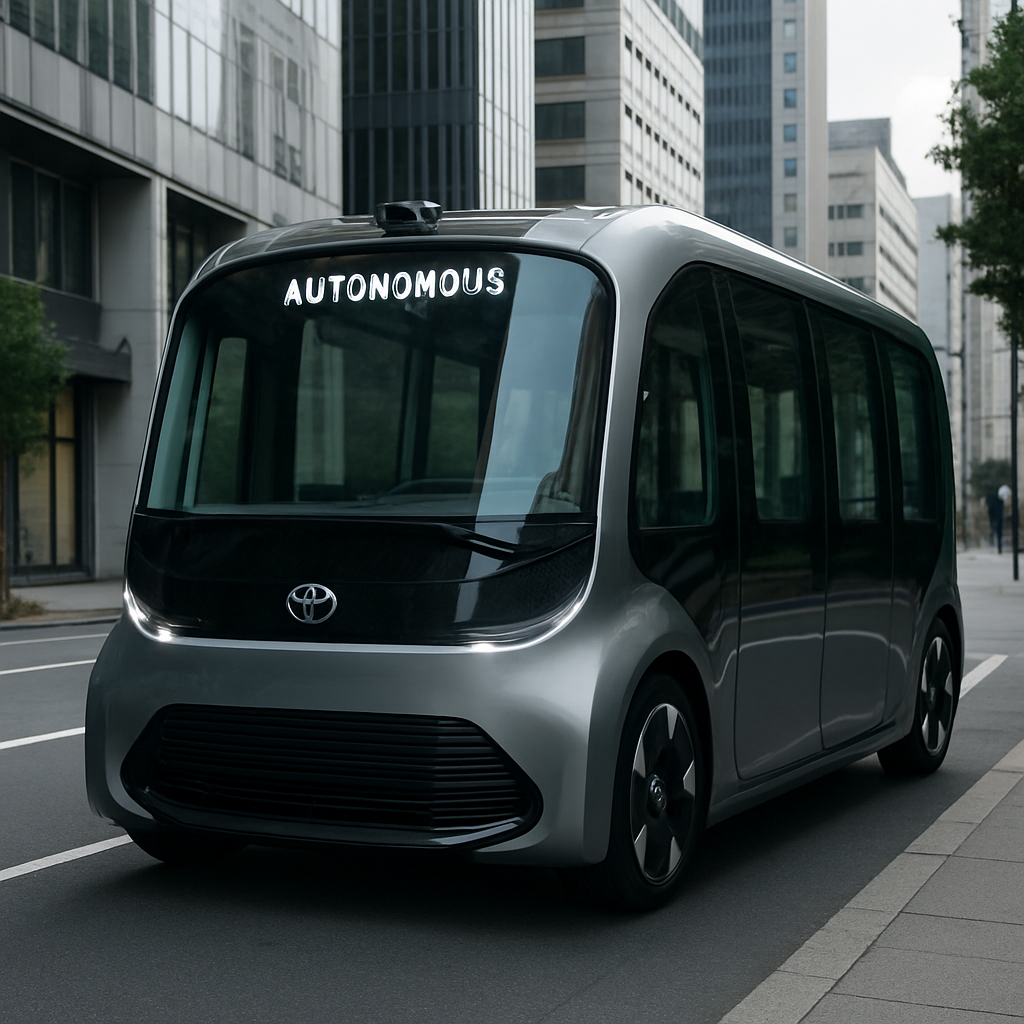
Autonomous vehicle startup May Mobility is preparing to become a publicly traded company through a merger with the special purpose acquisition company ACP Holdings Acquisition Corp. The deal gives the AV specialist a valuation of approximately $1.4 billion and could raise over $300 million in fresh capital. Once the merger concludes, May Mobility aims to stand out as the first U.S. company entirely focused on autonomous ride-hailing.
Business Model: Asset-Light, Partnerships First
Unlike companies that own their fleets, May Mobility follows an “asset-light, partnership-first” strategy. It sells autonomous vehicles to fleet operators, while retaining oversight over remote monitoring and software updates. Its revenue comes through either fixed fees or licensing on a per-trip basis. This model contrasts with others in the AV space, where hardware ownership and direct operation are more common.
Founded in 2017, May Mobility is currently operating autonomous Toyota Siennas in three U.S. locations, including Eden Prairie and Grand Rapids in Minnesota, and via a partnership with Lyft in Atlanta. Last year the company generated about $10 million in revenue, while burning around $93 million in cash. To date, it has completed more than 550,000 paid rides across over 1 million miles.
Deal Structure and Growth Plans
The merger involves a $120 million private investment in public equity (PIPE) plus up to $217 million from ACP Holdings’ trust account. SPAC investors may redeem their shares, which could reduce the total amount May Mobility receives.
May Mobility plans to deploy the new funds toward advancing R&D—particularly to eliminate the need for safety drivers—lower its supply chain costs, and expand its presence geographically. In addition to U.S. expansion, the company has begun a trial in Japan, and aims to launch commercially in Arlington, Texas with Uber either at the end of 2026 or early 2027.
This public listing will be a litmus test for investors’ appetite for startups focused strictly on robotaxis. Unlike companies like Waymo, Tesla, Rivian, Aurora, or Kodiak, May Mobility will have no other major lines of business beyond ride-hail autonomy.
Here’s a snapshot of where things stand: growing deployments, modest revenue versus high cash burn, an ambitious global footprint in planning, and a SPAC deal structured to deliver significant capital if all goes well.
What this means:With autonomy increasingly dominated by large corporations and vertically integrated models, May Mobility’s path offers a test of a lighter, partner-centric approach. If investors embrace this SPAC, it could pave the way for similarly structured AV players. Key things to watch: whether the company can scale without safety drivers; how quickly it can reduce its supply chain costs; and whether it can win wide deployment contracts that sustain its licensing revenue model.