A medium-sized German manufacturer has reduced incident response times by roughly 15 minutes per alert after swapping out its traditional air-gapped forensic setup for an interactive, cloud-managed sandbox solution. The five-person security team now safeguards around 10,000 endpoints and equally many users across office infrastructure and servers—demonstrating that even relatively small security operations can scale without immediate headcount additions.
From Offline Forensics to Real-Time, Cloud-Based Analysis
Previously, the company’s detection tool—extended detection and response (XDR)—could flag threats but usually lacked enough behavioral context to discern whether a file or URL was truly malicious. To validate alerts, analysts depended on an air-gapped Ubuntu laptop running a virtual machine with the FLARE VM and SANS forensic toolset. Preparing that environment—retrieving the laptop, entering encryption keys, booting up the VM—could take five to ten minutes before any actual investigation could begin.
This setup brought other challenges: only one analyst could access the laptop on site, and remote-work occasions—about a quarter of all shifts—left analysts completely without access. Even transferring samples was tedious; investigators had to move files via USB or manually retype links.
Cloud Sandbox Enables Faster, Smarter Triage
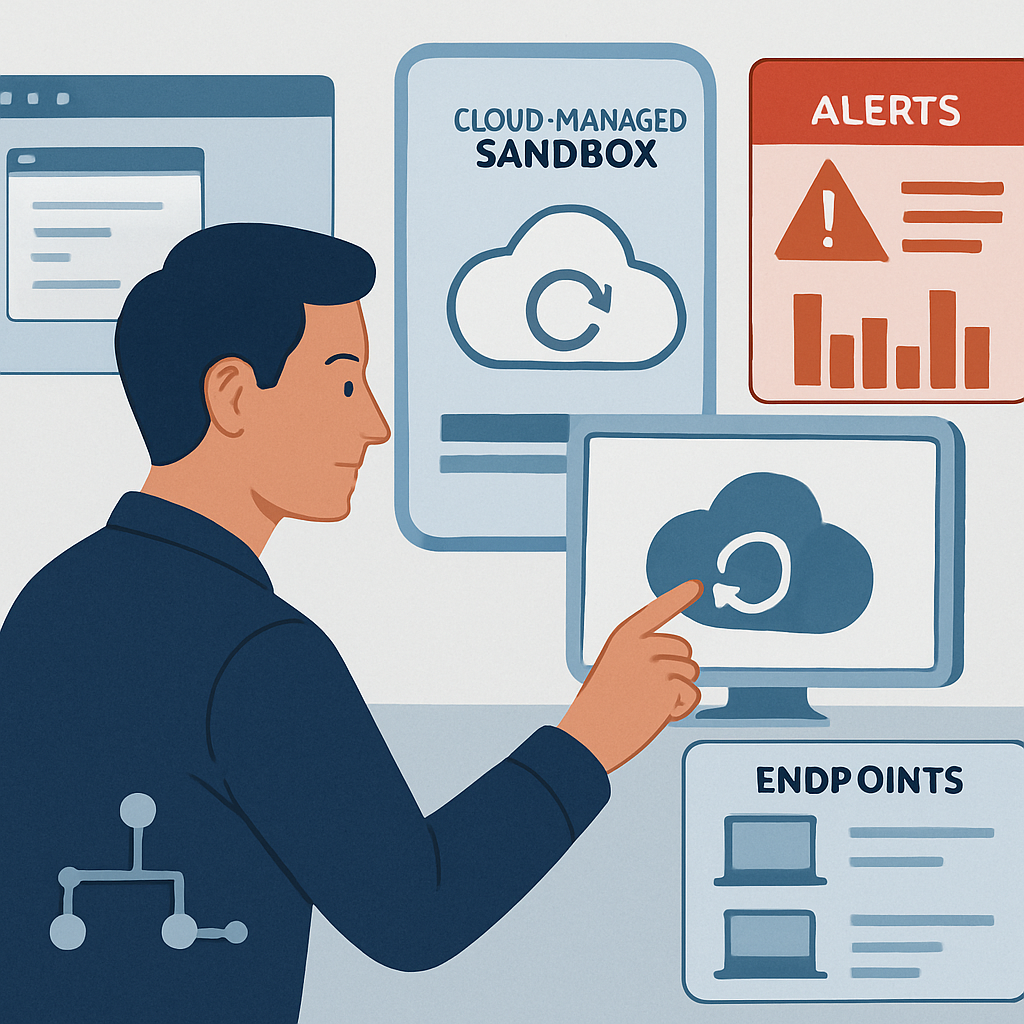
To streamline the process, it adopted a private cloud-managed sandbox from ANY.RUN. With the new system, both office-based and remote analysts can submit suspicious files or URLs, interact with a live virtual machine, examine processes, system changes, network behaviors, and detection rule triggers—all in real time. Analysts now use visual verdicts and process trees from the sandbox for containment decisions, also downloading reports for compliance and post-incident audits.
The company additionally empowered two Exchange administrators to review quarantined emails directly, allowing them to release emails deemed safe without tying up the core security team.
Impressive Gains: Timing, Accuracy, and Fatigue
After the transition, the average per-alert overhead dropped by around 15 minutes, just in the stages eliminated: laptop access and VM setup. The team now handles between 20 and 40 analysis tasks per day, with a target of about 2.5 minutes to isolate a confirmed malicious device.
Accuracy has held up as well: there’s about a 95% agreement rate between what human analysts decide and the sandbox’s automated classification of alerts as true or false positives. One multi-stage phishing example stood out: a malicious email with a benign seeming PDF inside hid a password-protected ZIP with malware—static tools missed it, but the sandbox replicated the full chain from email to execution. That enabled cross-mailbox remediation and later became a training case.
Operationally, shedding repetitive hardware and setup tasks means analysts are free to investigate more alerts, including uncertain ones they might previously have skipped. Remote work is less of a bottleneck now. And in a sector where workloads are about 22% higher than in many other industries, this helps reduce burnout.
The vendor behind the sandbox claims over 16,000 organizations use its platform, including 74% of the Fortune 100. It offers enterprise features like single sign-on, multifactor authentication, role-based access, SOC-2 Type II compliance, and encrypted handling of client data.
This German manufacturer’s evolution from offline forensics to a modern, cloud-based sandbox illustrates how a lean team can achieve enterprise-level responsiveness. With accurate detections, faster containment, and reduced analyst burnout, investments in interactive analysis tools now show clear ROI. What to watch next: whether more manufacturers follow suit, and how sandbox vendors scale to support them while maintaining airtight security and privacy.