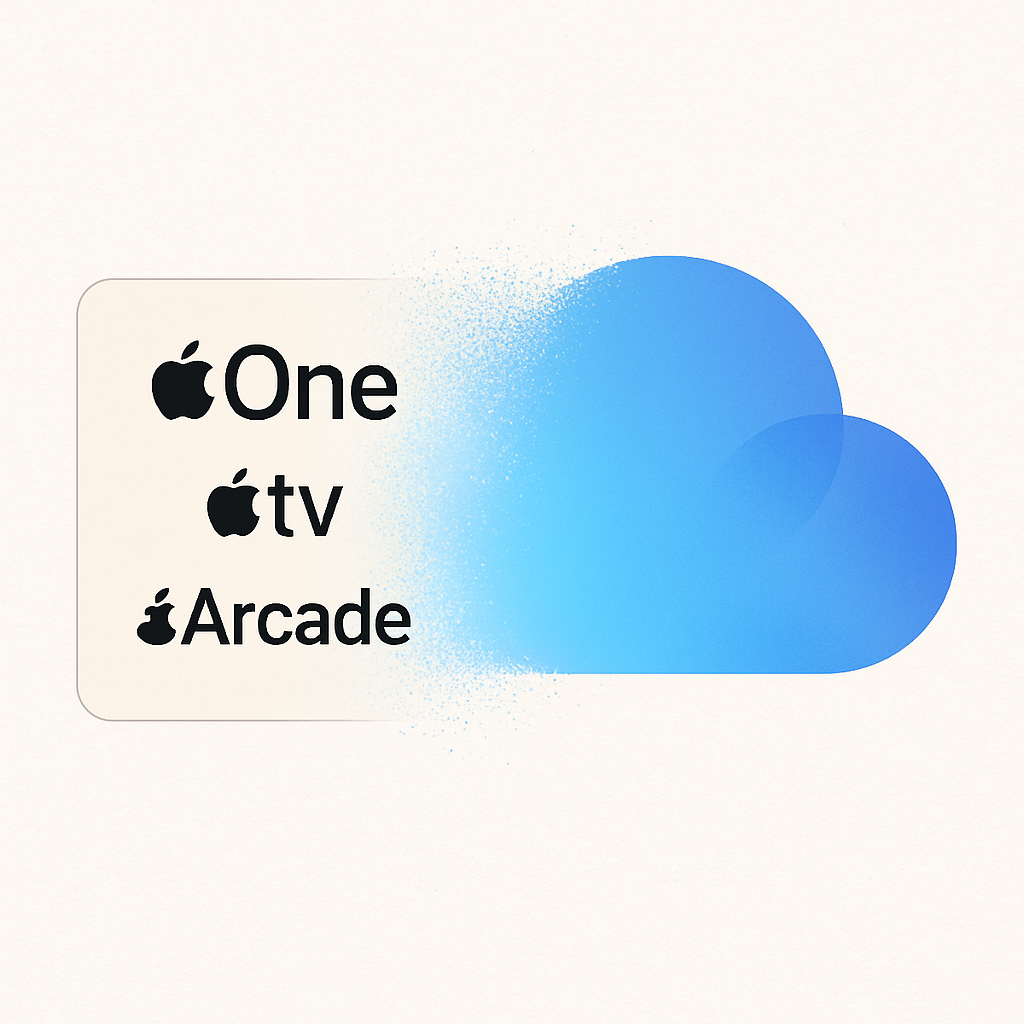
Today marks six years since Apple launched its Apple One bundle, which originally combined services like Apple Music, Apple TV, Apple Arcade, and 50GB of iCloud storage under a single monthly plan. As of September 15, 2026, Apple is closing Apple One to new sign-ups in every country that has adopted its revamped iCloud+ subscription bundle. All existing subscribers keep their plans, but from now on Apple One won’t be available to new users in those markets.
Why Apple is phasing out Apple One
The shift comes as part of Apple’s strategy to integrate more services into its iCloud+ plans. In over 100 countries, even the entry-level 50GB tier of iCloud+ now includes Apple TV and Apple Arcade at no extra cost. Apple Music is still available, but now positioned as an add-on rather than bundled in.
For users sensitive to price, this move could offer better value in those affected countries. Instead of paying full subscription rates for each service or opting into premium bundles like Apple One, many will now get multiple services through iCloud+ at a lower incremental cost.
What this means for pricing and existing customers
Apple One’s price has risen in key markets. In the U.S., the Individual plan has increased to $21.95 per month, up from $19.95, following a recent price hike for Apple TV. The Family and Premier tiers had already gone up when Apple Music raised its rates last month.
Despite the change for new customers, those already subscribed to Apple One will keep their plans intact. There’s no forced migration yet, though the shake-up suggests Apple might extend this approach—moving more services into iCloud+ across additional markets where Apple One remains active.
Apple One first launched on September 15, 2020. At the time, the bundle offered tiers like Individual, Family, and Premier—Premier including perks such as Apple News+ and Apple Fitness+, with up to 2TB of storage. The original U.S. pricing was $14.95 for Individual; $19.95 for Family; and $29.95 for Premier.
This transition reflects Apple’s broader pivot toward streamlined subscription models. Rather than steering users into bundled subscriptions, it’s offering more modular plans via iCloud+—especially in regions where cost sensitivity is higher. Premium features like enhanced privacy tools and app-based perks remain part of iCloud+ benefits.
At its core, this is a notable change in how Apple positions its services worldwide. For most customers in affected countries, iCloud+ is now doing the heavy lifting that Apple One once handled. What to watch next: whether Apple eventually phases out Apple One entirely, or how pricing and service-bundling evolve in markets not yet converted.