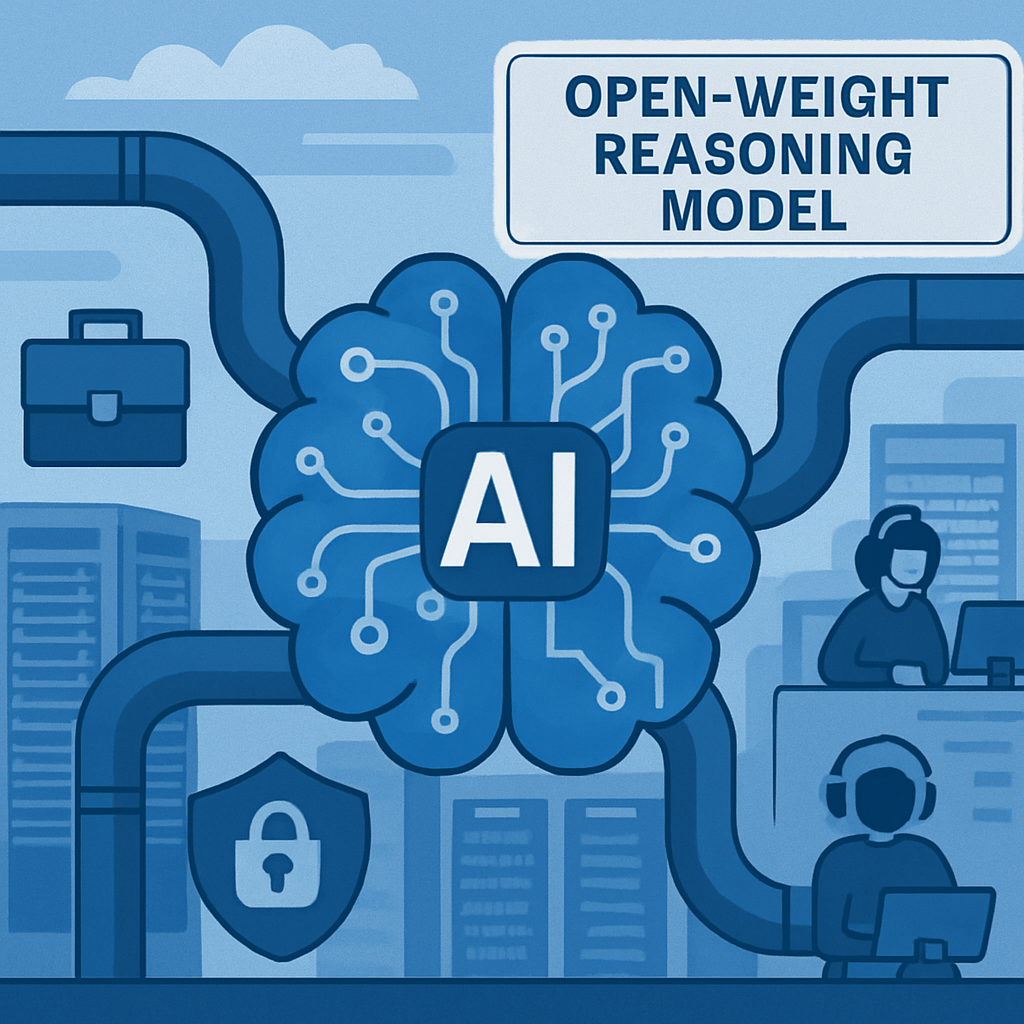
At its Dreamforce 2026 event, Salesforce introduced Koa, a reasoning model co-developed with NVIDIA, aimed at reshaping AI tools for enterprises. Built atop NVIDIA’s open-weight Nemotron foundation, Koa is designed from the ground up for sales, marketing, and customer support workflows. It is the first of its kind from Salesforce: an enterprise-ready reasoning model rather than a general-purpose frontier system.
Unlike many of today’s leading AI systems, which are closed-source or uncertain in their data provenance, Koa offers an open-weight alternative. That gives companies more transparency into its workings. To avoid potential privacy pitfalls, Koa’s post-training didn’t rely on actual internal customer data; instead Salesforce and NVIDIA generated synthetic data designed to mimic common business scenarios—from handling upset customers to closing deals.
Koa also promises lower operational costs. Thanks to Nemotron’s architecture, Koa is engineered to be token-efficient—accomplishing tasks with fewer computational resources than forwarding them to large frontier models like ChatGPT or Claude. For enterprises running high volumes of customer-facing interactions, that efficiency could translate into savings.
How Koa fits into Salesforce’s Agentforce ecosystem
Agentforce is the Salesforce framework that builds AI agents to tackle everyday tasks—customer queries, appointment scheduling, etc. Before Koa, when a task required multi-step reasoning, these agents typically routed requests through “frontier” general-purpose models via Agentforce’s AI gateway. That meant extra latency, cost, and perhaps exposure to opaque model behavior. Koa allows those workloads to run internally.
Still, Salesforce is not abandoning partners like Anthropic and OpenAI. Its newly announced ClaudeForce initiative enables customers to leverage Anthropic’s Claude, while keeping their data securely inside Salesforce’s systems of record. The choice between using ClaudeForce or Koa depends on where control, transparency, or specific capabilities are most needed.
Why Koa’s emergence matters
Koa breaks with several industry norms. First, it’s enterprise-tailored rather than frontier-ambitious—built for deployment-scale tasks instead of research benchmarks. Second, it’s open-weight, offering transparency and adaptability, which contrasts with many proprietary models. Third, its reliance on synthetic data sidesteps concerns of leaking customer data, a risk often associated with large scale model training.
As more companies demand AI that’s secure, compliant, cost-effective, and tailored to specific verticals, a model like Koa might gain traction fast. It demonstrates a shift: from frontier-first to enterprise-first in AI development.
Salesforce holds that before Nemotron’s availability, there was no U.S.-based, state-of-the-art base model with verifiable data provenance that met enterprise-grade security and performance needs. Koa is the result of filling that void, not by building something from scratch—but by building upon what already existed—then aligning it tightly to enterprise workflows.
What to watch going forward:how well Koa performs on real-world tasks compared to frontier models; whether its token-efficiency realizes meaningful cost savings; and how enterprises balance using Koa versus frontier models under ClaudeForce. Its success—or its shortcomings—could signal whether AI labs still compete by raw scale and general benchmarks, or must adapt to narrower, controlled enterprise demands.