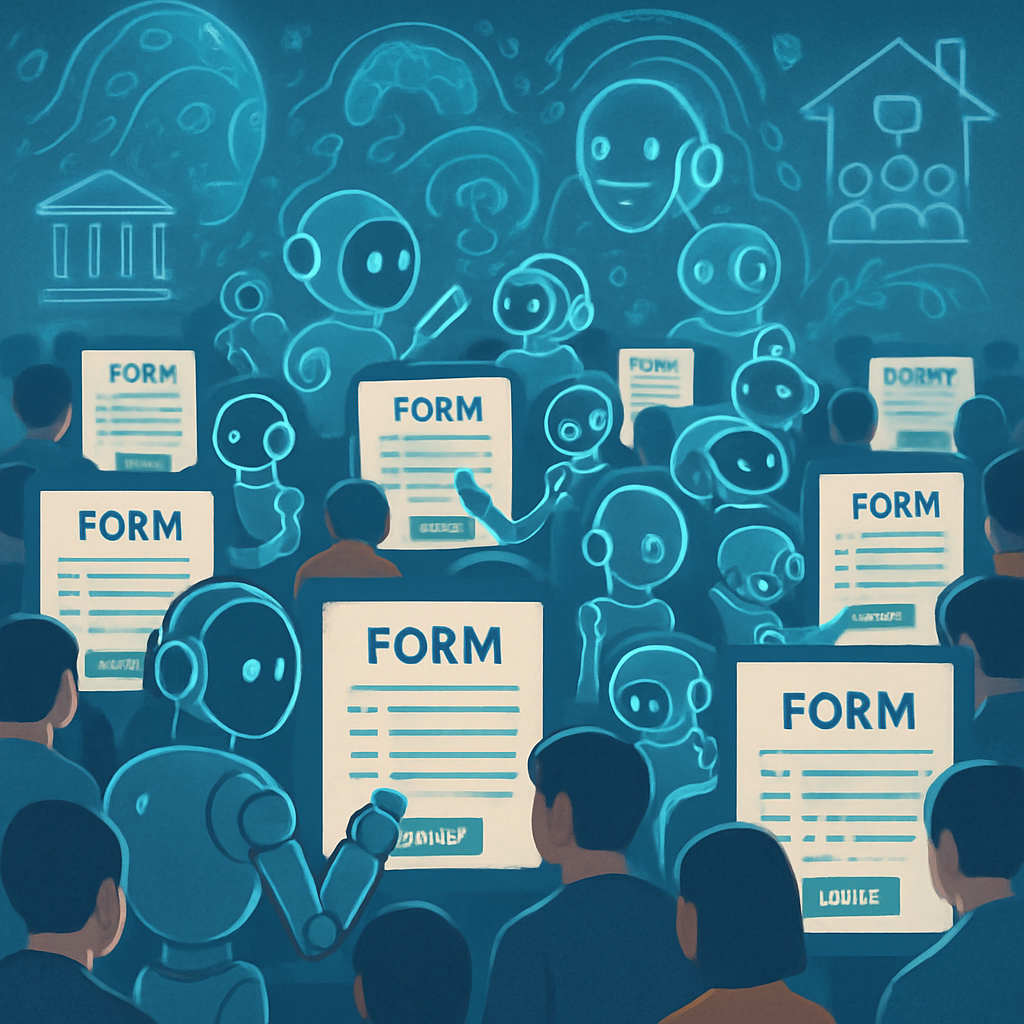
Public services worldwide are seeing a striking surge in requests, complaints, and applications—many traceable to the rise of AI agents assisting in form filling and document preparation. Processes once tedious and inaccessible are suddenly within reach, leading to explosive growth in filings that governments can’t ignore.
The Numbers Tell a Dramatic Story
In the UK, complaints to the housing ombudsman more than doubled after tools such as ChatGPT became mainstream—rising from about 2,600 in 2022 to over 7,000 just last year. The US Consumer Financial Protection Bureau recorded a fivefold increase in submitted complaints during the same period. Similar spikes have been observed in Brazil and Germany, where judicial and parliamentary petitions have shot up. Those statistics are part of a larger study that surveyed 84 cases across 11 countries, documenting parallel trends in the way people engage with public systems online.
Legitimate Needs, Not Just Spam
The research introduces the concept of “agentic flooding,” where AI tools lower barriers to participation in civic and social systems. The surge isn’t driven by malicious actors or bots but by genuine users who previously may have abandoned requests because they were too hard or time-consuming. Public services that once depended on expert knowledge or protracted paperwork are now reachable with a prompt, a photo, or a voice note processed by intelligent assistants.
That said, the flood brings real challenges. Examining more service requests, appeals, and welfare applications while operating under existing staff and budget constraints puts pressure on public institutions. While bug bounty programs also faced a rush of low-quality, AI-generated submissions—which created overhead despite few genuine security incidents—public services are under pressure to maintain efficiency and fairness amid surging volumes.
Opportunity in Overload
The new wave of applications is prompting calls for services to reinvent themselves. The goal: reduce administrative burden so that the flip-side of growth isn’t chaos, but better access and inclusivity. Researchers argue this could be a moment to redefine how processes—from benefit claims to legal appeals—should work in the digital age. The paper doesn’t claim AI is solely responsible, but documents how filings were relatively stable before 2022. As AI tools proliferated, so did user engagement in submitting these requests—and the growth shows no signs of slowing.
Importantly, many of those new applications are viewed not as noise or spam, but as expressions of unserved demand. People entitled to assistance or benefits are finally making claims they had previously dropped due to complexity, lack of awareness, or looming paperwork. By lightening that administrative load, AI might be unlocking hidden justice and welfare benefits.
The surge isn’t without cost. Reviewing thousands of new submissions will strain public worker capacity. Handling verification, eligibility checks, and even spotting abuse will demand new systems and policies. AI could be part of the solution—automating review, triaging cases, or filtering out non-serious submissions—but careful design will be essential to preserve fairness.
Reimagining service delivery for the AI era means much more than building chatbots. It means redesigning systems where legitimacy, ease, and equity are baked in. The paper suggests that officials might take this moment to revise rules,ondoctrines, and incentive structures built for the offline world. What does “easy access” truly mean when applying via an online platform, voice assistant, or image-based tool?
This rising tide of AI-enabled demands represents a profound shift in public interface. Easing friction for citizens is long overdue—but the surge must be managed carefully. Governments will need to scale capacity, adapt workflows, and safeguard against gaming or bias. What’s unfolding isn’t merely a technical challenge; it’s a rebalance of citizen power and public responsibility in the age of agents. Watch for policy changes, resource reallocation, and the first wave of jurisdiction-level responses in the year ahead.