Back in 2009, Microsoft’s Courier concept showed that Apple’s newest innovation, the iPhone Duo, isn’t entirely new. A video surfaced this week revealing that Courier featured multi-pane or split-screen gestures remarkably similar to features Apple is promoting today.
Merging Tabs, Apps, Photos Across Screens
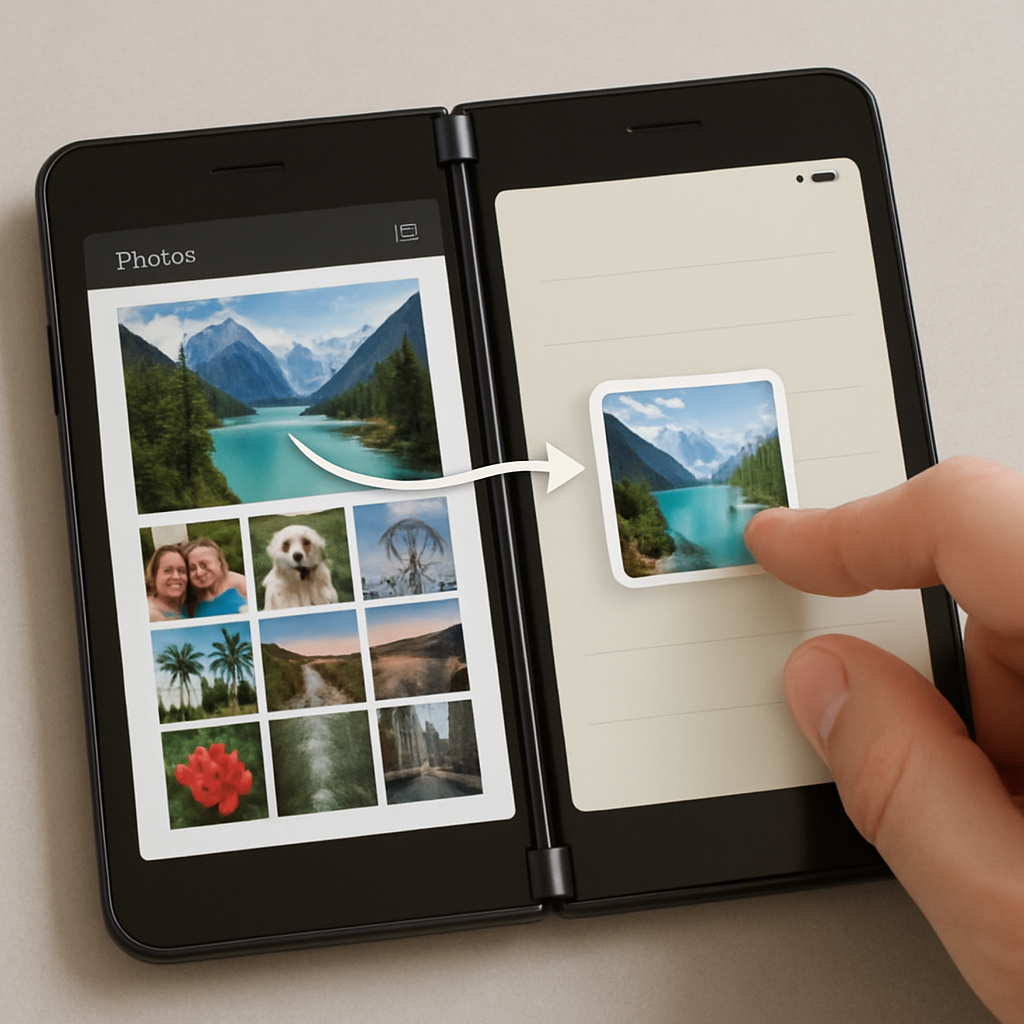
The Courier concept — an experimental Microsoft tablet split into two screens joined by hinges — demonstrated dragging content like images from one display onto apps on the opposite side. That’s an eerily close match to how Apple is advertising content flow between the Duo’s two sides. Even though Courier was stillborn before production, its UI ideas mirror Apple’s current design direction.
Microsoft did use some split-display ideas later in its Surface lineup, though none of them recreated the full Courier experience. The Duo, which Apple just officially introduced, leans fully into what Courier hinted at: gestures and functionality built around having two displays seamlessly treated as parts of one unified screen.
A Prototype Ahead of Its Time
Courier never made it beyond early prototypes and concept videos; the project was officially shelved less than a year after being publicized. Despite that, many of its interface ideas resurfaced in later Microsoft products, though not to the same degree of hardware-software integration Apple is now exhibiting.
What’s timing-wise wild: the gap between Courier’s conception and now spans over fifteen years, during which Apple led the market in making such features real. Devices folded, screens merged — these are no longer vague dreams but core to how the Duo promises to function.
It’s tempting to say Microsoft “invented” the idea behind the Duo, but what’s really noteworthy is how inspiration can ripple across companies and years. Courier planted seeds, but Apple reaped them — translating old concepts into fresh new hardware.
For users, this means the Duo’s innovations stand on a historical foundation but still feel new. The benchmark has shifted: Apple isn’t just matching what we’ve seen — it’s pushing split-screen, dual-display experiences toward mainstream usability.
What to watch now is how Apple handles software support and developer buy-in. Courier’s concepts never fully materialized because of challenges in adapting interface design to real-world use. The Duo has the benefit of mature tech, better materials, and lessons from foldables already on the market. If Apple executes well, the iPhone Duo won’t just echo the past — it could define future norms.