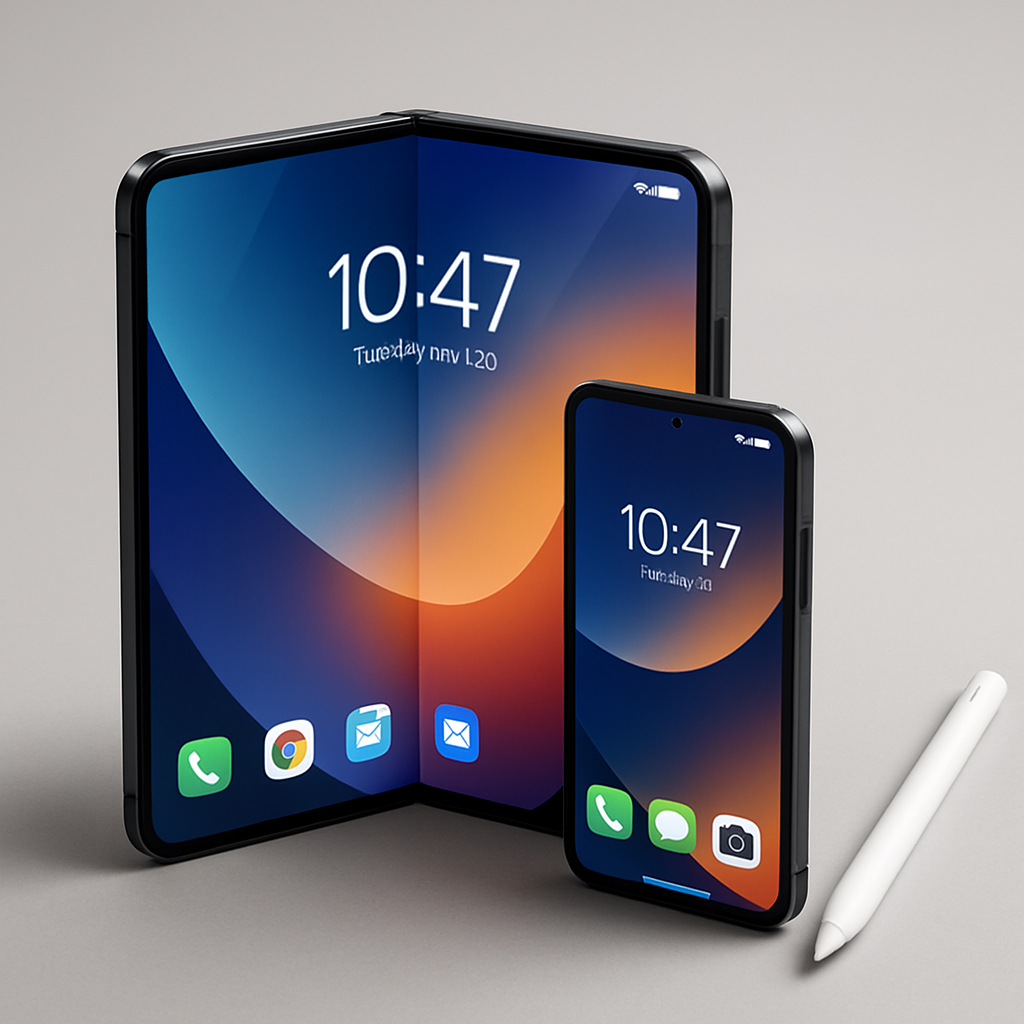
Apple’s foldable debut—dubbed the iPhone Duo—is grabbing attention not just for its design but for how deeply its software has been tailored to bend around new hardware realities. Yes, the phone opens like a book, equipped with Audi Display Camera (UDC), titanium-reinforced plastics, and Apple Pencil support—but what’s truly shifting the narrative is Apple’s revised iOS layout, the way it adapts app UI across displays, and the launch of iOS 27.1 alongside it. This is Apple’s wager on software being the heart of foldables—not just hardware.
Hardware: Lively, but Familiar Challenges Remain
The iPhone Duo comes into the foldable market with specs that rival Android rivals, yet doesn’t wildly surpass them. Its durability earns an IP68 rating for water and dust protection, though that protection may deteriorate over time. Authentication leans on a side-mounted fingerprint sensor instead of the more seamless Face ID. From the camera setup to weight—even with its flexible titanium and plastic build—it’s noted as being one of the heaviest foldables currently available.
Still, Apple brought back features that stood up well on past Android foldables. The under-display front-facing camera makes its return (one it had previously avoided), and the Duo supports Apple Pencil—echoing functionality that others dropped with newer models. In short, hardware feels competitive—even if some readers will see it as “good enough” rather than revolutionary.
Software: The Shape of Foldables to Come
Where the Duo sets itself apart is iOS’ tailored experience for foldables. From smooth transitions between outer and inner displays, to UI designs that speak to one-handed usability, the polish is evident. iOS 27.1 will roll out this October in lockstep with the Duo, letting developers specifically target the foldable form factor in updated apps. Apps that haven’t been optimized may feel awkward at first, but Apple’s strong track record of nudging developers to adapt work in its favor.
Weighing the trade-offs—hardware limitations, heft, and sensor placement—the software becomes the differentiator. Apple’s ecosystem, influence, and ability to shepherd its app store toward new form factors gives it an edge: not through raw specs, but via user experience and developer momentum.
Other launches at Apple’s recent event can’t be overlooked. The new iPhone 18 Pro models introduce a variable-aperture main camera featuring four stops—f/1.48, f/1.8, f/2.8, and f/4—that adjusts automatically. Apple also removed Qualcomm modems in its Pro lineup for the first time, switching to its own chip; that new chip (also used in the Duo) adds mmWave support in the US. Meanwhile, the Apple Watch Series 12 debuts audio features aimed at transcribing recent interactions—sparking questions about privacy despite Apple’s assurances. And the new AirPods 5 saw not enhancements but a price cut.
While Apple’s moves into foldables and AI-powered features are bold, they don’t erase current constraints: extra weight, fewer cameras, no Face ID, and apps that might not yet feel fully polished in every mode. But the clear investment in how software interacts with the foldable form suggests that “foldability” might soon matter less than “how well things fold.”