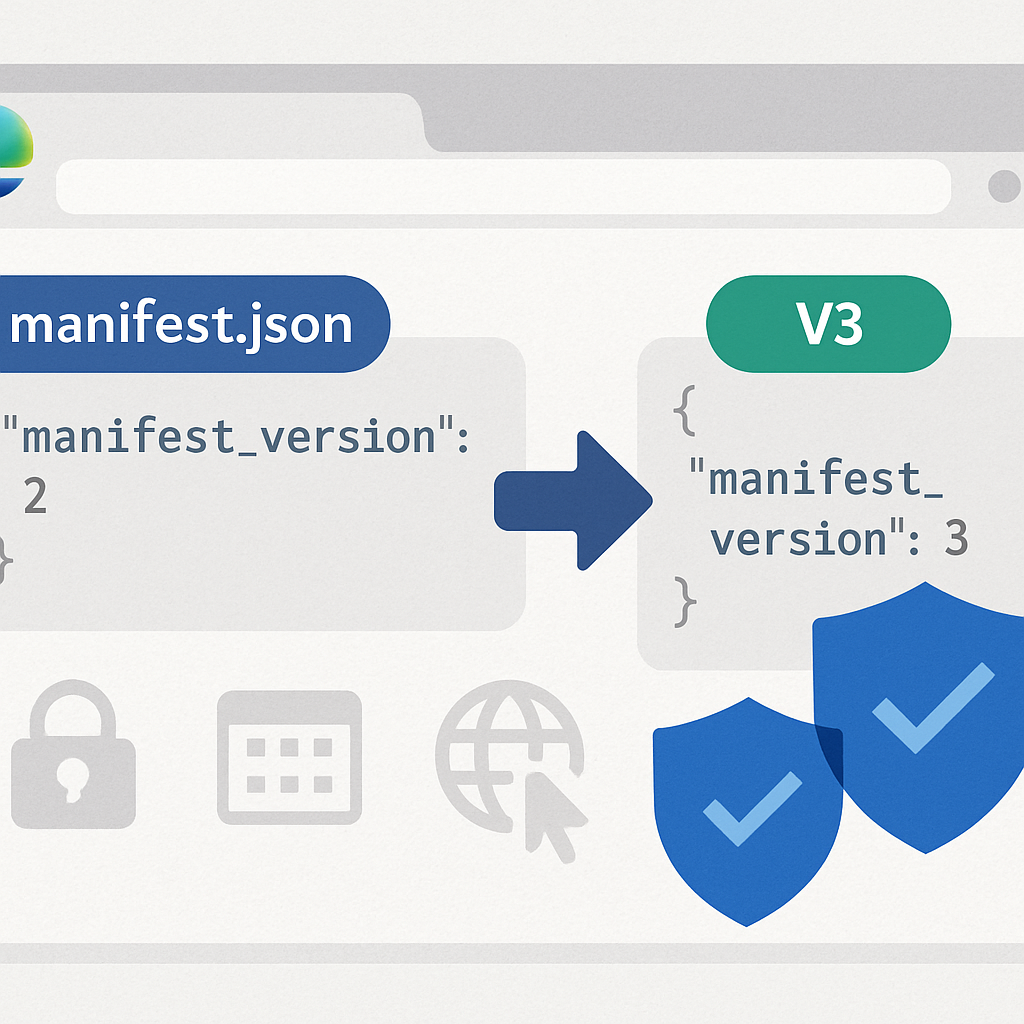
Microsoft is preparing to retire support for Manifest V2 browser extensions in Microsoft Edge beginning early 2027, pushing users, enterprises, and developers to migrate to Manifest V3. The move aims to enhance browser security, curb performance issues, and minimize risks tied to older extension frameworks. Manifest V2 will be phased out across Edge’s major channels including Canary, Dev, Beta, and Stable on Windows, macOS, and Linux. It is planned to be fully enforced by late April 2027.
Why Microsoft Is Dropping Manifest V2
Manifest files define what browser extensions can do—permissions, background processes, remote code execution, and more. While Manifest V2 gave developers a broad set of capabilities, that breadth also made it easier for malicious or overly powerful extensions to operate. Manifest V3 tightens control over these aspects, limiting permissions, blocking remotely hosted code execution, and reducing the overall attack surface exposed by legacy extensions.
Aside from security, performance is a core concern. Manifest V3 reworks how background tasks run, aiming to limit unnecessary resource consumption and decrease system overhead tied to outdated extension processes. These changes are expected to deliver smoother operation and better efficiency for end users.
Timeline and Impact for Users and Enterprises
Microsoft published the retirement notice via Message Center (MC1467356) on September 4, 2026. The enforcement timeline is structured with enterprise rollout starting in early January 2027 and full transition by late April 2027.
For consumers, existing Manifest V2 extensions will initially display warnings in Edge’s extensions manager (via edge://extensions) and on their pages in the Microsoft Edge Add-ons store. The company will also remove V2 extensions from search results and block new installations from the store. Over time, even the option to manually re-enable V2 extensions will be phased out. Eventually, any remaining V2 extensions will be disabled altogether.
Businesses get temporary grace. Enterprise devices will be allowed to keep using Manifest V2 through a policy setting named ExtensionManifestV2Availabilityuntil enterprise-wide deprecation begins. Once that phase starts, no policy exceptions will remain—Manifest V2 support will end completely. Policies that control forced extension installs or allowlists will also need revision ahead of the deadline.
Microsoft’s guidance urges enterprises to take stock of any Manifest V2 extensions already deployed, check if Manifest V3 alternatives exist, and update both internal and commercial extensions. As of July 2022, no new Manifest V2 extensions have been accepted in the Microsoft Partner Center. Only V2-to-V3 upgrade submissions are permitted. Organizations are encouraged to begin notifying users and planning support as legacy extensions wind down.
This shift marks a major step in modern browser security. Manifest V2 has been a standard for years, but its permissiveness has increasingly become a liability. Manifest V3’s tighter policies and stricter security model align Edge with broader industry trends toward reducing privilege creep in browser extensions.
Analytically, this transition isn’t just about compliance—it reflects a wider push in the tech industry toward more secure, efficient, and privacy-conscious platforms. Developers will face some migration pain, especially those with V2 extensions lacking clear V3 equivalents. Enterprises must strategize policy changes now to avoid disruptions. What to watch for: how third-party developers adapt, whether Manhattan-style anti-SDK code loads are blocked smoothly, and how the phased deprecation—especially after April 2027—actually impacts legacy workflows.