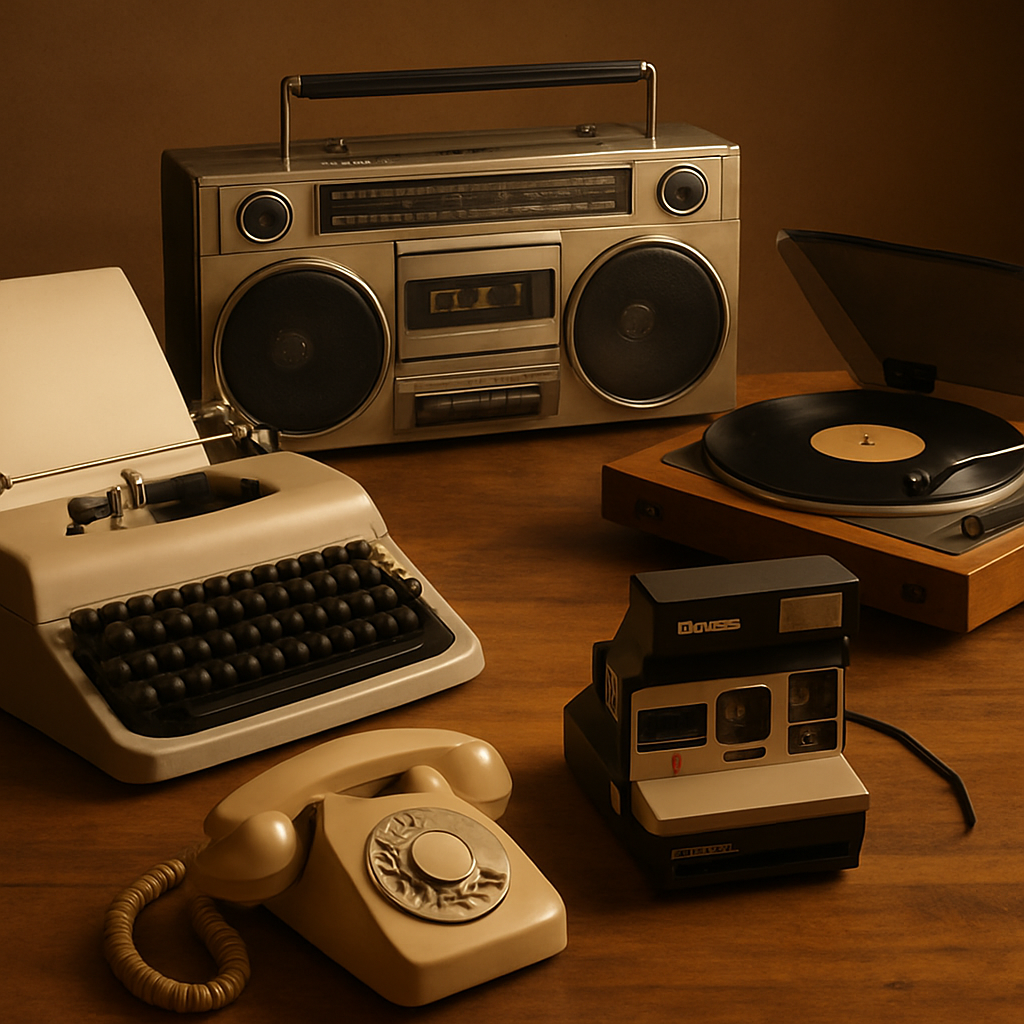
The appeal of tech from decades past is making a strong comeback. From analog aesthetics to physical interfaces, these revived gadgets offer experiences smartphones and sleek laptops can’t replicate. Tech firms are reinterpreting retro design through modern lenses, merging style with performance. Here’s what’s resonating in the wave of nostalgia this year.
Typewriters—with a Modern Edge
In a digital world overflowing with pings, tabs, and endless scrolling, devices that simplify the writing process are regaining popularity. Smart typewriters bring back the focus: words, keyboards, minimal distraction. One such model, priced around $699, takes cues from classic typewriters, pairing tactile keys with a small display; it syncs your work to the cloud for edits and exports. Another, at roughly $549, resembles a small laptop yet retains essentials: spell check, document folders, useful tools, and a battery life extending up to 20 hours.
Boom Boxes, Cassettes & Vinyl Revival
Retro audio gear isn’t just a decor throwback—it’s evolving. Boom boxes are showing up with chunkier buttons, built-in cassette decks, and oversized speakers, upgraded with Bluetooth and rechargeable batteries. A standout model boasts 104 watts of power and includes woofers, tweeters, and even recording capability. Another debut features dual cassette decks, a CD player, USB recording, and multiband radio, all wrapped in an ’80s silhouette. Walkman-style cassette players are returning, pared down to basics but modernized for USB-C power; turntables and vintage suitcase designs are making aesthetic waves too.
Instant Cameras That Blend Analog & Digital
There’s renewed fascination around cameras that let you print a photo moments after you take it. Hybrid models allow you to shoot digitally, share to social media, and still hold a physical print. One recent variant adds USB-C, another prints directly from your smartphone. Even dedicated single-use cameras are seeing revivals—one miniature keychain camera combines instant print vibes with basic video capture and USB file transfers.
Phones Without Notifications, Full of Intent
There’s a subtle shift toward devices that favor connection over distraction. Landline-inspired phones are appearing for people who want design-forward decor and minimal digital noise. One device built for kids works over Wi-Fi, enables calls only from a curated contact list, and is managed via a companion app. Another smartphone alternative, inspired by the aesthetic of early BlackBerry devices, includes essential productivity tools like email—but filters out mobile games and social media apps entirely. Models aimed at home use expand parental controls, emergency features, and even “Quiet Hours,” with monthly plans that limit contact access.
The retro tech trend isn’t just about longing for simpler times—it’s a reaction to oversaturation. For many, there’s a growing hunger for analog tangibility, physical interaction, and devices that don’t compete for attention. As nostalgia-driven design matures, we’ll see more hybrids—vintage form with selective functionality. Keep an eye on how these products evolve: will the balance between charm and utility hold up, especially as digital fatigue deepens across all age groups?