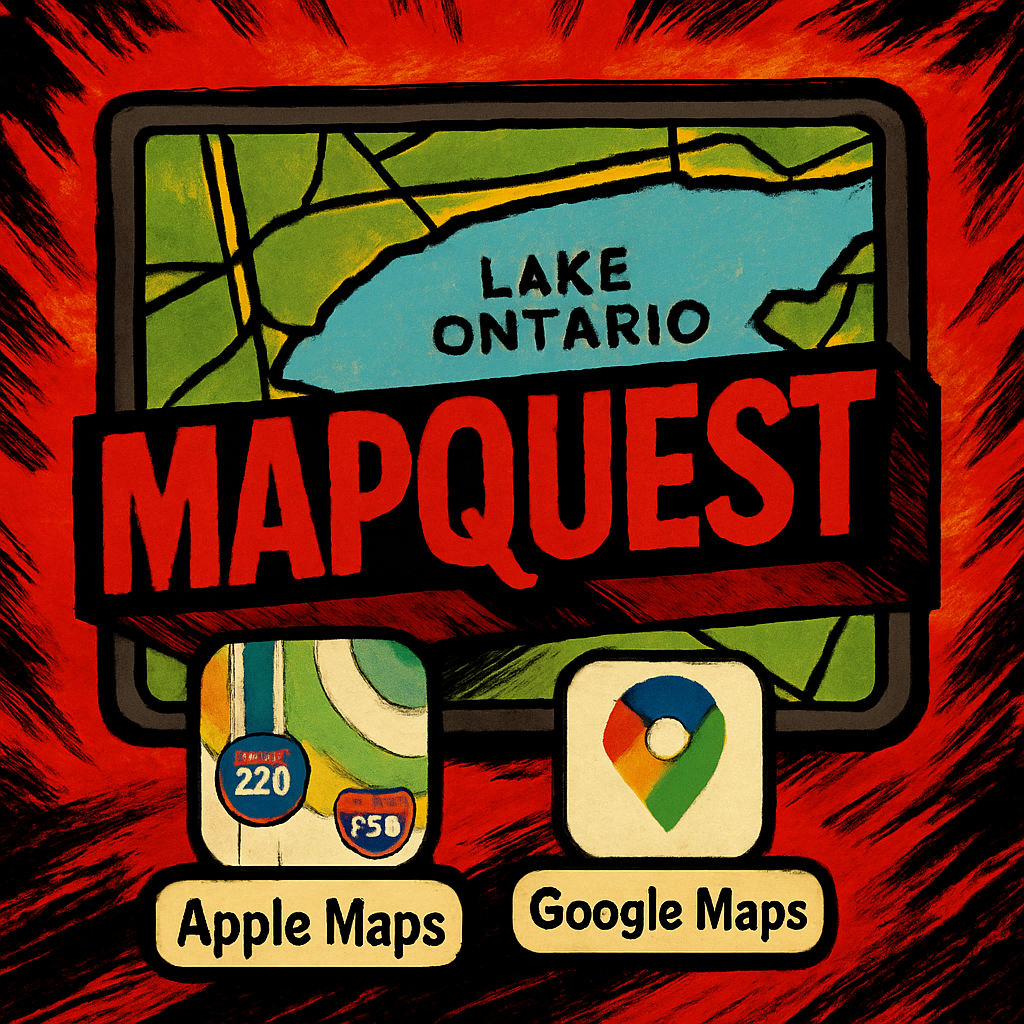
MapQuest has shot up to the No. 1 spot on the U.S. App Store, after rejecting a controversial renaming effort pushed by a presidential executive order. What kicked off the surge was MapQuest’s refusal to rename Lake Ontario to “Lake America,” a directive laid out in the August 27 order aimed at changing U.S. geographic names. The company stood its ground while Google Maps and Apple Maps agreed to make the change. The public response was swift: people flocked to MapQuest in support.
From Underdog to Unstoppable Download Surge
Just days after the executive order, MapQuest’s ranking soared. On August 28 it sat at No. 128 in the U.S., barely noticed. The following day it rose to No. 92. By August 31, it had hit No. 3 overall and claimed the top spot in the Navigation category. On September 1 it took the lead across all apps and games in the App Store. In the span since the proclamation, the app has amassed an estimated 632,000 U.S. downloads, with total downloads across the U.S. and Canada exceeding 1.5 million.
What’s more, this isn’t just a one-off boost. User involvement spiked too—as people submitted feature requests, bug reports, and app reviews, MapQuest saw a jump in engagement. [General Manager] Doug Berger reported that the company’s small team has been racing to respond. These recent days have accounted for more than half of MapQuest’s yearly downloads in the U.S.—a 123% day-over-day gain, and over 50× growth versus the same stretch last year.
Why This Stance Cut Through
MapQuest’s defiance hit a chord precisely because its rivals rolled over. Google Maps pointed to its reliance on official government sources like the Geographic Names Information System when explaining compliance; Apple did not comment. MapQuest, smaller and less beholden to Big Tech’s governance processes, was able to resist and brand itself as principled and independent.
This isn’t the first time. MapQuest has similarly resisted renaming the Gulf of Mexico to “Gulf of America,” and even launched an online tool mocking the idea—letting users whimsically rename Lake Ontario however they choose. The brand identity of MapQuest—historic, somewhat nostalgic, and now contrarian—served it well here.
The roots of MapQuest go back to its founding as one of the first mainstream mapping apps. After years of decline, it’s now under System1, which acquired MapQuest from Verizon in 2019. The journey from pioneer to niche player makes this moment—beating Google and Apple in downloads—even more symbolic.
This weeks-long drama grapples with deep questions: What control do corporations have over names? How does consumer sentiment align with political decisions? And can a company win its way back by aligning with public values?
What we’re witnessing with MapQuest isn’t merely a viral spike. It’s proof that in today’s app market, taking a stand can be as powerful as features or polish. MapQuest’s rise after defying a federal order shows consumer behavior still responds to perceived integrity. Bigger players will be watching closely—because the cost of agreement may be higher than the cost of dissent.